
 Aksh
Aksh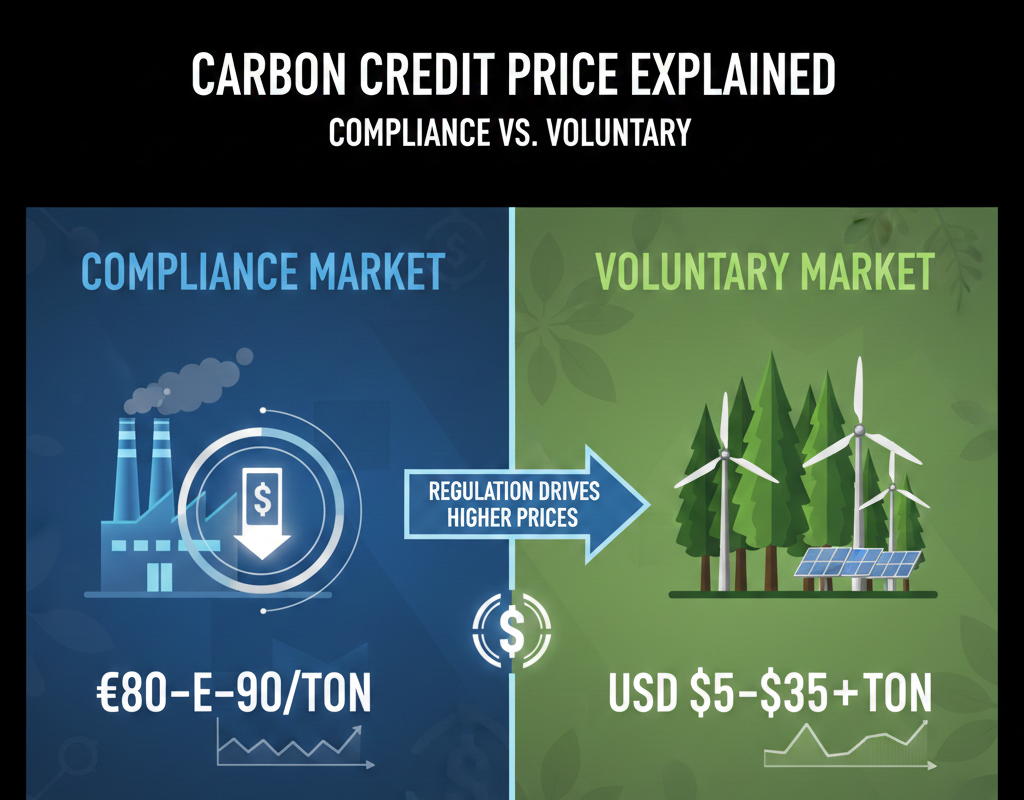
Carbon Credit Price Explained for Climate Action
Carbon Credit Price Explained for Climate Action
A key component of international initiatives to cut greenhouse gas emissions and quicken climate action is carbon credits. Understanding the price of carbon credits has become essential as governments, businesses, and investors place a greater emphasis on environmental sustainability. The pricing of carbon credits, the variables influencing price changes, the operation of carbon markets, and the significance of these prices for successful climate policies are all covered in this article.
The right to emit one metric ton of carbon dioxide or other comparable greenhouse gases is represented by carbon credits, which are financial assets. By allowing businesses to invest in initiatives that lower or eliminate greenhouse gas emissions from the atmosphere, they help to balance emissions.

Carbon Credits: What Are They?
Carbon credits are exchangeable licenses that let organizations to release a certain quantity of greenhouse gases into the atmosphere. One ton of carbon dioxide (CO₂) or similar emissions that are avoided, reduced, or eliminated is equivalent to one carbon credit. The foundation of carbon markets, which come in two primary forms, are these credits:
- Carbon markets that are regulated and in which corporations are given carbon allowances by governments are known as compliance carbon markets. Among these are emissions trading schemes in which companies are required to give up credits equivalent to their emissions.
- Voluntary carbon markets are unregulated marketplaces where businesses and individuals purchase carbon credits on their own initiative to improve their environmental credentials or reach internal sustainability targets.
Supply and demand, market dynamics, certification requirements, and the perceived value and impact of carbon reduction initiatives all affect how much carbon credits cost.
The Operation of Carbon Markets
The purpose of carbon markets is to provide financial incentives for cutting emissions. Fundamentally, they make use of the economic idea that carbon emissions have a cost, which makes lowering them profitable.
- Markets for Compliance
In compliance systems, governments provide polluters allowances and cap the overall amount of emissions that can be produced. By the end of each compliance period, businesses must have allowances equivalent to their total emissions. They have to buy more credits from the market or risk fines if they emit more than their allotted amount.
- Markets that are voluntary
Businesses can buy carbon credits through voluntary carbon markets, which are not subject to regulations. As businesses make commitments to sustainability and net-zero goals, these marketplaces have expanded quickly.
What Affects the Cost of Carbon Credits
Interpreting market dynamics and predicting future trends require an understanding of the factors that affect the price of carbon credits. The following are the main determinants of carbon pricing:
- Government Action and Regulatory Policy
Carbon credit markets are directly impacted by government policies including carbon taxes, emissions trading schemes, and climate pledges. By decreasing excess supply and raising demand for credits, stricter laws and well-defined decarbonization plans typically result in higher carbon credit prices.
- Dynamics of Supply and Demand
Prices for carbon credits are heavily influenced by supply and demand, just as in any other market. Prices increase when credit demand exceeds supply. On the other hand, when supply is plentiful, prices may decline or remain unchanged. The quantity of carbon projects, project kinds, and issuance volumes all affect supply.
- Co-benefits (environmental and social)
Carbon initiatives that offer extra social or environmental advantages, such community development, wildlife preservation, or water conservation, are frequently more expensive. Impact-focused consumers find credits more appealing because to these co-benefits.
- Trading Volume and Market Liquidity
Prices are typically more stable in markets with strong trading infrastructure and considerable liquidity. Volatile price swings can result from low liquidity, particularly when the market is influenced by big buyers or sellers.
Present Prices for Carbon Credits
The cost of carbon credits varies greatly depending on the project’s quality, location, and market type. Emissions limitations and regulatory frameworks typically have an impact on carbon prices in compliance markets. Price differentiation frequently reflects buyer priorities and project characteristics in voluntary marketplaces.
Projects with afforestation, nature-based solutions, and community benefits, for instance, can fetch higher prices than large-scale renewable energy projects with less desirable social characteristics.
With a renewed emphasis on sustainability pledges, emission reduction programs, and conformity to international climate frameworks, the carbon credit markets in India have been changing. Growing corporate interest and global market integration are reflected in Indian carbon credit price indicators.
Price Trends and Forecasts for Carbon Credits
- Worldwide Patterns
As countries embrace carbon neutrality commitments and net-zero ambitions, carbon pricing has accelerated globally. The growth of carbon credit prices is directly impacted by governments raising emissions limits and developing emissions trading schemes.
- Expanding the Market voluntarily
As businesses embrace science-based goals and net-zero pledges, the voluntary carbon market keeps growing quickly. There is an increasing demand for premium carbon credits, particularly those that offer co-benefits. Premium credit prices are rising as a result of this tendency.
- Effects of Climate Policy Measures
The dynamics of the carbon market are influenced by climate policy initiatives such advanced emissions trading systems, updated Nationally Determined Contributions (NDCs), and carbon border adjustment mechanisms. These policies often tighten carbon budgets, reducing credit oversupply and pushing prices upward.
Conclusion: Carbon Credit Price Explained for Climate Action
Global climate action requires an understanding of the price of carbon credits. In addition to supply and demand, prices also take into account the quality of carbon projects, the efficacy of climate regulations, and the dedication of corporations and investors to sustainability.
Carbon credit prices offer a financial framework that makes emissions reduction quantifiable, tradeable, and significant in a variety of contexts, including voluntary markets and compliance systems.
High-integrity carbon credits are anticipated to fetch higher prices as markets develop, particularly those that provide quantifiable social and climate benefits. Involving governments and corporations in carbon pricing schemes offers chances for economic innovation, strategic climate leadership, and significant contributions to global emissions targets.
Carbon Credit Price India vs USA: Current Rates, Trends, and Market Insights
Carbon Credit Price India vs USA: Current Rates, Trends, and Market Insights
1 Comment