
 Aksh
Aksh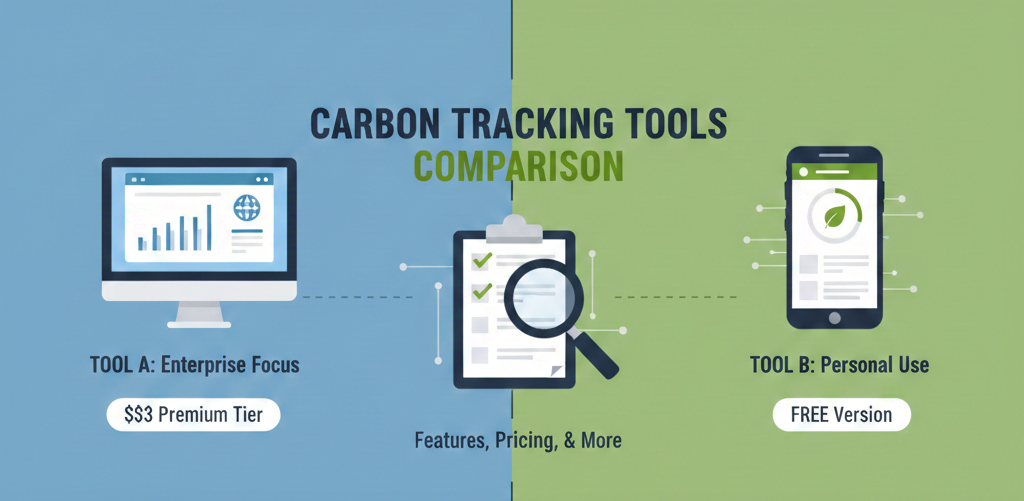
Carbon Tracking Tools Comparison
Carbon Tracking Tools Comparison
Accurately monitoring carbon emissions has become crucial in a time when sustainability and climate change are top concerns for both individuals and corporations. In order to quantify, track, and lessen their environmental impact, businesses, governments, and individuals are looking for trustworthy carbon tracking solutions more and more. Choosing the best carbon management instrument is more important than ever as climate-conscious legislation and carbon neutrality gain traction.

The Significance of Carbon Tracking
Measuring the greenhouse gas (GHG) emissions from transportation, energy use, waste production, and industrial processes is known as carbon tracking. Beyond ensuring legal compliance, carbon tracking is crucial because it gives businesses and individuals useful information for sustainability projects. Businesses can find areas for improvement, put reduction plans into place, and provide stakeholders with reliable emissions data by knowing their carbon footprint.
Furthermore, companies that exhibit proactive carbon management frequently obtain a competitive edge as investor and customer awareness grows. Monitoring one’s own carbon emissions helps people make more environmentally friendly decisions about anything from home energy use to transportation.
Important Considerations for Carbon Tracking Instruments
It is crucial to comprehend the key components of carbon footprint software before beginning the comparison:
- Accuracy and Transparency: To guarantee accurate reporting, tools must follow accepted greenhouse gas accounting standards like ISO 14064 or the Greenhouse Gas Protocol.
- Ease of Use: Regular use and precise tracking are encouraged via user-friendly interfaces and simple data input procedures.
- Integration Capabilities: Data collection is made easier by tools that interface with ERP, transportation, and energy management systems.
- Reporting and Analytics: In order for organizations to produce insights for sustainability planning, advanced analytics and configurable reporting are essential.
- Scalability: A scalable solution makes sure the tool expands to meet your needs, whether you’re a major organization, SME, or individual.
India’s Carbon Tracking: Prospects and Difficulties
India is become a major force in the world’s carbon markets. Indian companies are using carbon tracking technologies more frequently in order to comply with regulations and pursue voluntary carbon offset programs as a result of their ambitious environmental goals. There are still issues, though, such as uneven data reporting, a lack of defined assessment procedures, and the requirement for scalable, reasonably priced solutions for small and medium-sized businesses.
To guarantee accurate carbon footprint tracking, organizations in India need to carefully consider technologies based on industry-specific emissions, local energy usage trends, and reporting standards. Over the upcoming years, it is anticipated that the integration of blockchain, AI, and IoT technologies would improve carbon management systems in India.
Factors Influencing the Selection of Carbon Monitoring Instruments
- Organization Size and Complexity: While major firms require enterprise-grade software with comprehensive reporting features, small businesses may select basic calculators.
- Data Availability: Reliable energy, transportation, and waste data are necessary for accurate emissions tracking. It is beneficial to use tools that can collect data automatically.
- Regulatory Compliance: Businesses must choose instruments that adhere to national and international regulations while conducting business in areas where emissions reporting is required.
- Sustainability Objectives: Companies striving for net-zero or carbon neutrality goals need systems with sophisticated analytics and scenario modeling features.
- Budgetary Restrictions: Cost-effectiveness is a crucial consideration, particularly for SMEs and startups looking for sustainable solutions.
New Developments in Carbon Monitoring
- AI-Powered Emissions Analysis: AI is being used to forecast emission patterns, find areas for reduction, and streamline processes.
- Integration with Carbon Credit Platforms: In order to enable businesses to buy or sell carbon credits effectively, carbon tracking technologies are increasingly integrating with carbon trading platforms.
- Real-Time Monitoring: Businesses can keep an eye on emissions in real-time and take prompt corrective action thanks to IoT sensors and cloud-based technologies.
- Enhanced Reporting for ESG Compliance: The development of carbon management solutions to offer comprehensive disclosures is being influenced by sustainability reporting standards like GRI, CDP, and TCFD.
In conclusion: Carbon Tracking Tools Comparison
Achieving sustainability objectives, maintaining regulatory compliance, and establishing credibility in environmental reporting all depend on choosing the appropriate carbon monitoring platform. There are several options available, ranging from basic personal calculators to enterprise software and Internet of Things-enabled solutions for industrial processes. When assessing technologies, both individuals and businesses need to take into account aspects like cost, integration, scalability, and accuracy.
Adopting efficient carbon tracking technology will help the environment, boost corporate accountability, and provide India a competitive edge as it continues to increase its emphasis on carbon neutrality and sustainable growth.
When used correctly, these technologies offer useful information that helps businesses assess, cut, and control their carbon footprint, paving the way for a more sustainable future.
Carbon Credit Price Volatility Explained: Causes, Trends, Impacts & Future Outlook
Carbon Credit Price Volatility Explained: Causes, Trends, Impacts & Future Outlook