
 Aksh
Aksh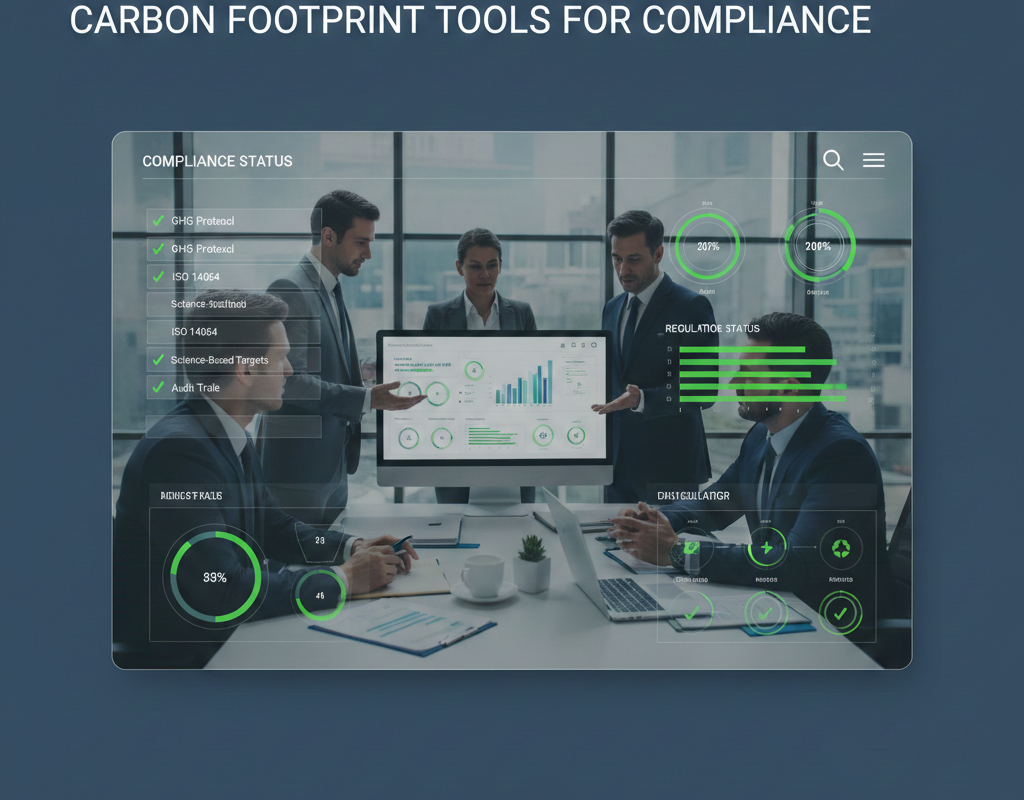
Carbon Footprint Tools for Compliance
Carbon Footprint Tools for Compliance
Modern businesses now need carbon footprint technologies for compliance as global climate regulations tighten and sustainability standards climb. Companies in India are facing mounting pressure to precisely measure, monitor, and disclose greenhouse gas (GHG) emissions as the country’s industrial boom collides with aggressive climate targets. Compliance is now strategic, economical, and reputational; it is no longer optional.
Domestic environmental laws, international supply chain standards, investor scrutiny, and frameworks like the Securities and Exchange Board of India’s (SEBI) required Business Responsibility and Sustainability Reporting (BRSR) are all influencing the shift to low-carbon operations. Businesses must use cutting-edge carbon footprint solutions in this dynamic regulatory environment to guarantee precise emissions tracking, open reporting, and smooth compliance.

Carbon Compliance’s Growing Significance in India
India has pledged to drastically lower carbon intensity and reach net-zero emissions by 2070. Stronger regulatory frameworks and corporate disclosure requirements are the result of these national promises.
Indian businesses, particularly listed corporations and manufacturers focused on exports, are being asked to:
- Monitor emissions from Scope 1, Scope 2, and Scope 3.
- Under BRSR, disclose sustainability metrics.
- Conform to international reporting guidelines
- Get ready for market-based tools and carbon pricing mechanisms.
- Engage in developing carbon markets
Organizations run the danger of erroneous reporting, fines from the government, removal from the supply chain, and harm to their reputation if they don’t have trustworthy carbon accounting systems.
The digital infrastructure required to precisely and confidently fulfill these responsibilities is provided by carbon footprint tools.
How Regulatory Compliance Is Guaranteed by Carbon Footprint Tools?
- Calculating Emissions Accurately
Accurate carbon accounting is required by regulators. Spreadsheets created by hand raise the possibility of errors in computation and inconsistent data. Standardized procedures in line with recognized frameworks are guaranteed by automated carbon compliance software.
- Monitoring in Real Time
Businesses can detect compliance risks ahead of reporting deadlines by conducting continuous emissions monitoring. Supply chains, divisions, and facilities can all be seen via real-time dashboards.
- Records and Audit Trails
Compliance tools preserve thorough audit trails by keeping track of emission parameters, calculation methods, and raw data. Third-party audits and regulatory inspections are made easier by this transparency.
- Conformity to a Variety of Standards
Aligning with international norms and Indian rules at the same time is made possible by modern carbon management software. Multinational operations require this dual compliance capabilities.
Advantages of Using Software for Carbon Compliance
- Mitigation of Regulatory Risk
Penalties and damage to one’s reputation may arise from noncompliance with environmental disclosure requirements. This risk is considerably decreased by automated compliance systems.
- Effectiveness of Operations
Businesses can lower operating expenses and increase energy efficiency by locating pollution hotspots.
- Confidence of Investors
ESG performance is being assessed by institutional investors more and more. Access to sustainable finance and investor trust are enhanced by transparent carbon reporting.
- Competitiveness of the Supply Chain
Global consumers demand suppliers to be transparent about pollution. Advanced carbon accounting systems give businesses a competitive advantage.
- Planning for Strategic Sustainability
Long-term decarbonization efforts are guided by the information that compliance tools offer.
Applications Particular to India’s Industry
- Producing
Granular emissions tracking is necessary for heavy businesses to monitor electricity consumption, process emissions, and fuel combustion. Multi-facility reporting is made easier using carbon accounting systems.
- Services and IT
Scope 2 emissions from power and Scope 3 emissions from travel and procurement are the main concerns of service-based businesses. ESG platforms make BRSR disclosure easier.
- Construction and Infrastructure
Lifecycle emissions and embodied carbon are computed by project-based emissions accounting techniques.
- The Energy Sector
To comply with regulations, energy producers need to have systems for tracking emissions intensity and real-time monitoring.
India’s Prospects for Carbon Compliance Technology
The following will be included in the upcoming generation of carbon footprint tools:
- Forecasting emissions with artificial intelligence
- Carbon credit verification using blockchain technology
- Automated exchange of supplier emissions data
- Real-time energy monitoring enabled by IoT
- Advanced modeling for lifecycle assessments
- Risk alerts for predictive compliance
Digital compliance solutions will play a key role in corporate environmental strategy as India fortifies its climate governance framework.
Conclusion: Carbon Footprint Tools for Compliance
Voluntary climate reporting is coming to an end. Global supply chain norms, investor expectations, and regulatory scrutiny are making carbon accounting a crucial company function. Adopting strong carbon footprint tools for compliance is important for Indian businesses because it goes beyond simply fulfilling legal requirements; it also helps them become more resilient, seize market opportunities, and take the lead in a low-carbon economy.
The correct technologies enable firms to measure precisely, report transparently, and strategically cut emissions. These tools range from automated GHG reporting software to integrated ESG platforms and sophisticated carbon management systems.
Businesses that invest in digital carbon compliance infrastructure now will be better positioned to prosper tomorrow as India speeds up its environmental drive and creates carbon market mechanisms.
Carbon Credit Price Explained: Factors, Trends, and Market Insights in India
Carbon Credit Price Explained: Factors, Trends, and Market Insights in India