
 Aksh
Aksh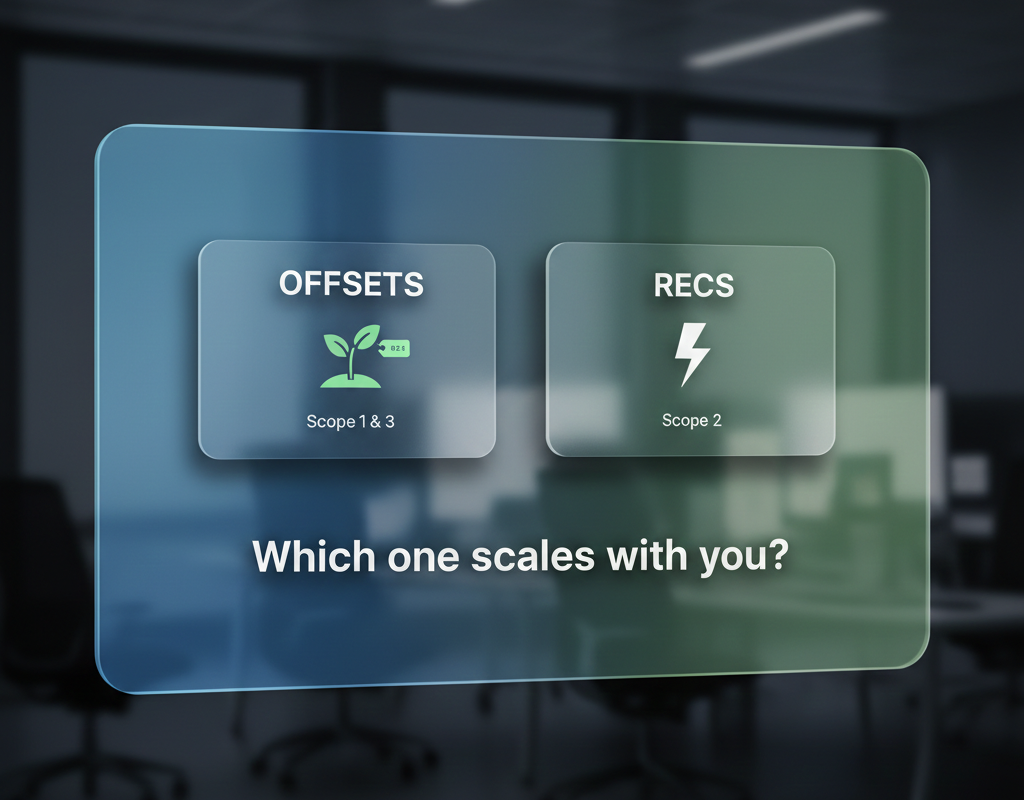
How Startups Can Navigate Carbon Credits vs RECs?
How Startups Can Navigate Carbon Credits vs RECs?
Startups in India are starting to consider a crucial question: Should we invest in carbon credits or renewable energy certificates (RECs) as climate restrictions tighten and investors place a higher priority on sustainability?
Startups creating ethical, forward-thinking companies must comprehend the distinction between carbon credits and RECs. Although both tools encourage climate action, they work differently, accomplish various voluntary and compliance objectives, and complement distinct sustainability plans.
Making the correct decision can have a big influence on a startup’s long-term profitability, compliance readiness, and brand reputation as they navigate tight finances, unpredictable regulations, and investor scrutiny.

Comprehending Carbon Credits
The decrease or removal of one metric ton of carbon dioxide (or other comparable greenhouse gases) from the atmosphere is represented by tradable certificates known as carbon credits. Verified projects like this produce these credits.
- Afforestation and replanting
- Installations of renewable energy
- Methane capture initiatives
- Initiatives for energy efficiency
- Technologies for removing carbon
To offset their inevitable emissions and work toward carbon neutrality or net-zero goals, organizations buy carbon credits.
In India, the government is regulating the development of its own domestic carbon trading environment, whereas compliance markets have grown globally under frameworks such as the United Nations Framework Convention on Climate Change.
Understanding Certificates of Renewable Energy (RECs)
Proof that one megawatt-hour (MWh) of electricity was produced using a renewable energy source, such as solar, wind, biomass, or hydropower, is provided by Renewable Energy Certificates (RECs).
To encourage renewable energy and assist obligated firms in fulfilling Renewable Purchase Obligations (RPOs), the Central Electricity Regulatory Commission of India established the REC mechanism.
Electricity generated by a renewable energy source can be sold to:
- The grid’s actual electrical power
- The environmental characteristic independently as a REC
In order to assert that the electricity they use comes from renewable sources, businesses buy RECs.
The Significance of Startups
Startups frequently think that big businesses are the only ones who need sustainability tools. This isn’t true anymore.
Today’s early-stage businesses are under pressure from:
- ESG disclosures are required by venture capital firms.
- Global customers requesting carbon transparency
- Frameworks for government reporting on sustainability
- Green compliance is a requirement for corporate procurement departments.
Expectations for sustainability in India are changing quickly as the nation complies with the Paris Agreement’s global climate commitments.
Environmental risk management is becoming a more important factor for investors when assessing businesses. The decision between RECs and carbon credits becomes one of compliance and branding strategy.
When Carbon Credits Are a Good Option for Startups?
Carbon credits work best when:
- You’re interested in carbon neutrality
Carbon credits are crucial if your firm wants to become carbon neutral. They reduce emissions from transportation, fuel use, manufacturing, and supply chain operations in addition to power.
- You Work with Clients From Around the World
Many multinational companies demand that suppliers reveal their carbon emissions and provide offset plans that comply with global regulations.
- Your Ability to Control Emissions Is Limited
Manufacturing endeavors, logistics-intensive companies, and IT firms that use cloud infrastructure might offset emissions that are challenging to completely eradicate right away.
- You’re Getting Ready for Upcoming Compliance
Future compliance requirements may increase, according to India’s evolving carbon market rules. Early involvement increases preparedness.
When to Select RECs for Startups?
RECs work better in situations where:
- Your primary source of emissions is electricity.
Electricity use may be the biggest source of carbon emissions for co-working spaces, SaaS firms, and IT startups.
- You Desire Claims for Renewable Energy
With RECs, you can legitimately claim green electricity sourcing if your brand strategy emphasizes the utilization of renewable energy.
- You Have to Fulfill Your Renewable Purchase Requirements
Under Indian regulations, certain organizations are required to adhere to Renewable Purchase Obligations. RECs assist in carrying out these mandates.
Outlook for the Indian Market
The carbon market in India is developing quickly. Startups who enter the sustainability ecosystem early will have a competitive edge because legislative direction favors emission accountability and the expansion of renewable energy.
- Businesses of all sizes are expected to take part in emission reduction routes as India strives to achieve its 2070 net-zero objective.
- While carbon credit trading is become more organized and regulated, the renewable energy industry is growing dramatically.
- Startups that support national sustainability goals present themselves as progressive and competitive on a global scale.
Concluding remarks: How Startups Can Navigate Carbon Credits vs RECs?
The decision between carbon credits and RECs for Indian startups is influenced by their long-term goals, investor expectations, operational footprint, and compliance requirements.
- Carbon credits are crucial if you want to achieve carbon neutrality.
- RECs are essential if you want to promote the use of renewable energy.
- If leadership is your aim, strategically combine the two.
Startups who grasp these techniques early on will have a significant advantage as India fortifies its sustainability reporting standards and climate framework.
Carbon Credit Glossary for Carbon Markets | IndianCarbonCredit.com
Carbon Credit Glossary for Carbon Markets | IndianCarbonCredit.com