
 Aksh
Aksh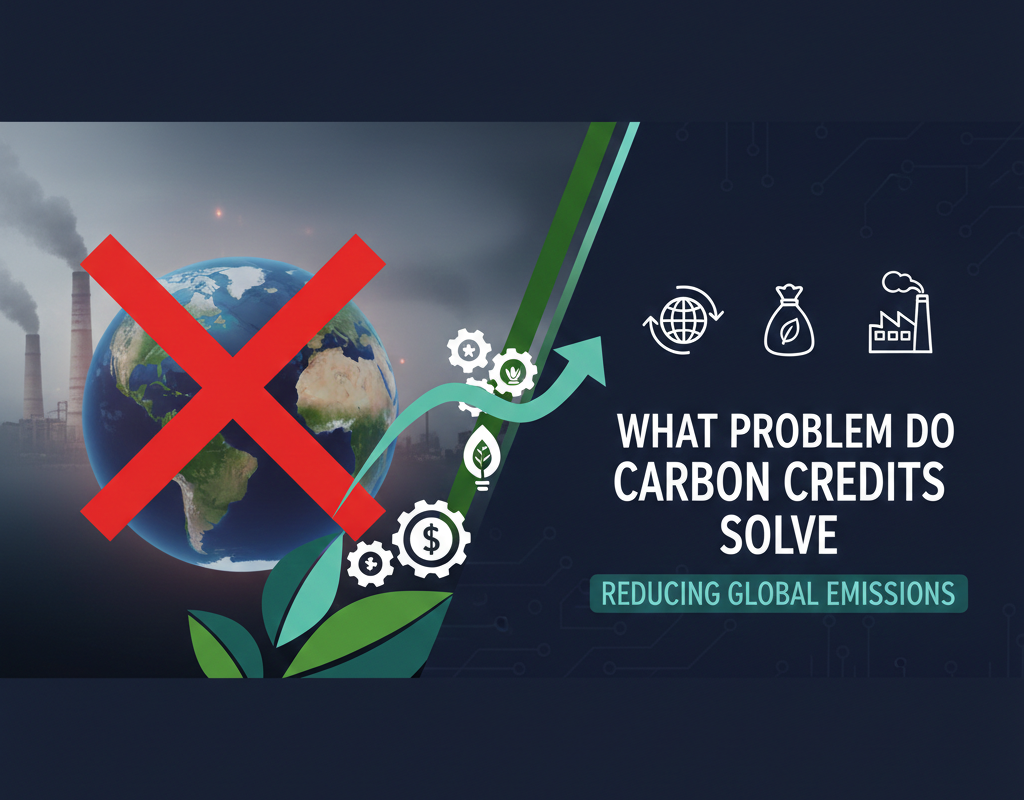
What Problem Do Carbon Credits Solve?
What Problem Do Carbon Credits Solve?
The idea of global warming is no longer theoretical. Extreme weather events, melting glaciers, and record global temperatures have elevated climate change to the forefront of public attention. In order to cut emissions and move toward a sustainable low-carbon future, governments, businesses, and civil society organizations are desperately looking for efficient instruments. The carbon credit system, a market-based strategy intended to address the issue of greenhouse gas emissions while promoting economic activity, is one of the most extensively discussed climate policy ideas.
However, what specific issue are carbon credits meant to address? How do they actually function? How do they affect economies, emissions, and sustainable development? This in-depth news analysis looks at carbon credits from a variety of perspectives, including environmental, political, economic, and scientific.

Recognizing the Issue: Growing Emissions of Greenhouse Gases
The term “greenhouse effect” refers to the warming caused by greenhouse gases (GHGs), which include carbon dioxide (CO₂), methane (CH₄), and nitrous oxide (N₂O). Human actions, mainly the burning of fossil fuels, deforestation, and industrial processes, have increased atmospheric concentrations of greenhouse gases to levels not seen in hundreds of thousands of years since the Industrial Revolution. The primary source of global warming and climate disruption, according to scientists, is this rise.
The fundamental problem is simple but significant: how to lower the amount and rate of greenhouse gas emissions while maintaining economic expansion. Although they work well, traditional regulatory methods like direct limits and carbon quotas are politically challenging to universally adopt.
An explanation of carbon credits as a market-based solution
Fundamentally, a carbon credit is a permission or certificate that permits the bearer to emit one metric ton of greenhouse gasses that are equivalent to carbon dioxide (CO₂e). One ton of emissions avoided, decreased, or eliminated from the environment is essentially what each credit represents. Carbon credits are utilized voluntarily by businesses aiming for net-zero commitments or for compliance in regulated emissions trading programs.
- How Carbon Credits Work
Carbon credits are produced by actions that either remove carbon from the atmosphere (like reforestation) or reduce emissions (like renewable energy projects). These credits can be purchased and sold on carbon markets following certification and verification. Businesses that surpass their emissions goals can buy credits to make up the difference.
What Issues Are Addressed by Carbon Credits? Key Concerns Resolved
- Cutting Greenhouse Gas Emissions Netly
Enabling a quantifiable decrease in net emissions is the main issue that carbon credits address. Carbon credits accelerate climate mitigation efforts by allowing emissions reduction where they are most cost-effective, as opposed to depending only on direct legislation. Verified carbon credits are linked to actual efforts to reduce emissions, like:
- Promoting Clean Technology and Innovation
Pricing carbon encourages innovation. Businesses are encouraged to invest in greener, cleaner technologies when emissions are subject to a cost in the form of carbon taxes or credits. This changes the competitive environment and increases the economic appeal of energy-efficient technologies, sustainable industrial processes, and renewable energy.
- Encouraging Climate Responsibility in Business
Investors and consumers alike are calling for greater climate accountability. Carbon credits assist businesses in offsetting emissions that they are unable to instantly eradicate internally. This enables them to continue operating while making believable progress toward net-zero goals.
Carbon Credits in Practice: International and Domestic Views
- Worldwide Carbon Markets
Frameworks such as the Paris Agreement and the Kyoto Protocol led to the emergence of international carbon markets. Carbon credits can be traded on markets like the European Union Emissions Trading System (EU ETS) and voluntary marketplaces. Through credit trading, these systems provide for flexibility while assisting with emissions caps and allowance distribution.
- India’s Contribution to Carbon Credit Options
With a variety of mitigation initiatives producing premium carbon credits, India has emerged as a major player in the global carbon markets. These initiatives, which range from massive solar parks to methane capture at urban garbage sites, promote sustainable development and the reduction of emissions.
Misconceptions, Criticisms, and Protections
Every tool used in climate policy is controversial. Critiques of carbon credits have focused on things like:
Criticism 1: Issues with Verification and Quality
Not all carbon credits, according to some detractors, reflect actual decreases in emissions. In order to guarantee environmental integrity, this issue highlights the necessity of stringent regulations, open monitoring, and reliable third-party verification systems.
Criticism 2: Reducing Emissions vs. Offsetting
Carbon credits, according to critics, let polluters avoid actually cutting back on their own activities. As a result, carbon credit schemes are forcing businesses to reduce their direct emissions before using offsets.
Criticism 3: Volatility of the Market
Credit prices are subject to the impact of economic swings and policy changes on carbon markets. To preserve trust, stabilization procedures and well-defined regulatory frameworks are essential.
Prospects for the Future: The Ongoing Development of Carbon Credits
Systems for carbon credits are changing quickly. Market transparency and trust are rising as a result of new technical developments like blockchain for credit tracking, high-resolution satellite monitoring for forestry projects, and digitally verifiable climate activities.
While business net-zero commitments are increasing voluntary market demand, governments are growing regulatory carbon markets. In the future, we might witness:
- Combining nature-based solutions and biodiversity
- Sector-specific methods for pricing carbon
- Greater public disclosure of business carbon plans
- Increased conformity between domestic regulations and international market norms
In conclusion: What Problem Do Carbon Credits Solve
Although they are not a panacea, carbon credits are an essential component of the global climate solution. Carbon credits assist in bringing environmental objectives into line with commercial reality by addressing important issues pertaining to greenhouse gas emissions, financial incentives, and investment impediments. Their influence will be further enhanced by ongoing advancements in standards, verification, and policy alignment.
Carbon credits will remain essential in achieving global emissions targets, funding sustainable solutions, and guiding the world toward a low-carbon future as nations and businesses step up their climate action.