
 Aksh
Aksh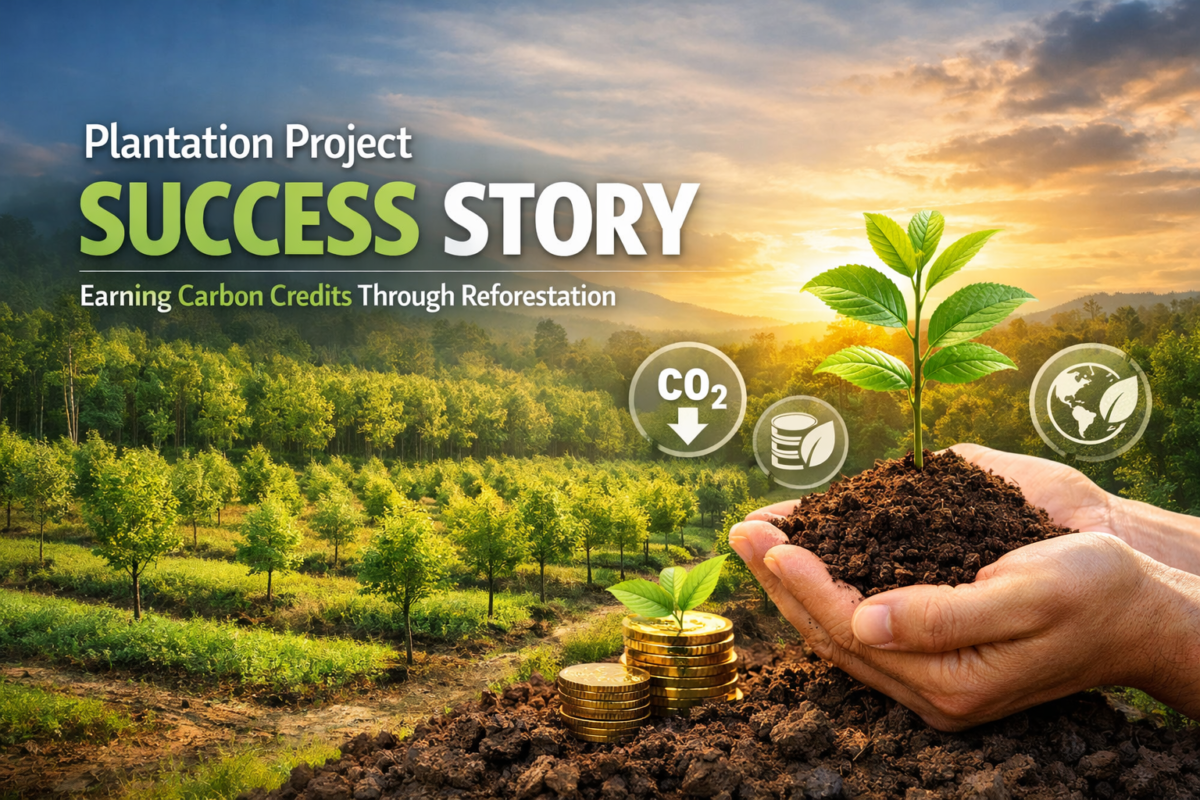
Sustainable Plantation Projects in India
Sustainable Plantation Projects in India
The need to fight climate change has become much more urgent in recent years. Local communities, businesses, and governments are shifting their focus to sustainable solutions that improve environmental resilience and lower carbon emissions. The creation and growth of plantation projects for carbon credits, which combine ecological restoration with financial incentives, has proven to be one of the most promising avenues.
This thorough success story details how plantation projects in India have improved livelihoods, empowered stakeholders, and helped meet global climate targets while also producing substantial carbon credits and major environmental benefits.

The Growth of Carbon Credit Plantation Projects in India
Plantation projects entail the deliberate planting of trees through reforestation and afforestation on areas that were previously devoid of forest cover or degraded environments. The goal of these programs is to absorb carbon dioxide (CO₂), a greenhouse gas that contributes to global warming. Project developers receive carbon credits that can be exchanged in voluntary and regulated carbon markets in exchange for verifiable carbon reduction.
- Comprehending Carbon Sequestration and Credits
A quantifiable decrease of one metric ton of CO₂ or comparable greenhouse gasses is represented by carbon credits. Because trees are natural carbon sinks that store carbon in biomass and soil and absorb CO2 through photosynthesis, plantation operations are essential. We call this process “carbon sequestration.”
The Plantation Success Story’s Origins: Vision and Objectives
The plantation project started with a specific goal and has since grown to be a model for carbon credit schemes:
- Restore damaged areas with focused afforestation
- Produce superior carbon credits
- Provide sustainable livelihood possibilities to empower local communities.
- Boost ecological balance and biodiversity
Beyond simply planting trees, these objectives established a framework for comprehensive environmental management that is based on community involvement and scientific rigor.
Organizing and Executing: A Strategic Method
Careful planning and execution are essential to the success of any large-scale environmental project. Important components included:
- Land assessment and site selection
The first step was choosing the appropriate land. The project team found deteriorated areas that might be restored with little interference with current land usage. To guarantee excellent survival rates for recently planted seedlings, evaluations of the soil’s quality, hydrology, and ecological compatibility were conducted.
- Species Selection and Enhancement of Biodiversity
Tree species were chosen with purpose. While mixed-species plantings increased biodiversity, native species were given priority to guarantee resilience and adaptability. This strategy promoted the development of wildlife habitat in addition to carbon sequestration.
- Monitoring via Technology Integration
Technology was very important. Accurate tracking of plantation growth and carbon sequestration rates was made possible using remote sensing, GIS mapping, and drone surveillance. Transparency, a crucial prerequisite for obtaining carbon credits, was made possible by digital records.
- Building Capacity and Involving the Community
From the beginning, local communities were involved. Training programs equipped landowners and farmers with best practices for plantation maintenance, tree care, and nursery management. This cooperative approach improved the sustainability of the project.
Reaching Significant Milestones: Development of Plantations and Creation of Carbon Credits
Important milestones were reached over the project’s lifecycle:
- Huge Footprint of Plantations
Millions of saplings were successfully planted over hundreds of hectares as part of the initiative. Once-degraded fields were transformed into vibrant green ecosystems by this extensive coverage, which significantly increased vegetation density.
- Verification of Carbon Sequestration
The initiative established reliable carbon sequestration measurement using third-party verification procedures. Every ton of CO2 sequestered was precisely recorded and verified thanks to these thorough assessments.
- Superior Carbon Credits
High-quality carbon credits were produced from the confirmed carbon sequestration. These credits can be traded on international carbon markets since they adhere to international criteria. For the project developers, this created business prospects, which helped to keep plantation operations going.
Difficulties and Acquired Knowledge
There are obstacles in every success tale. The main challenges were:
- Hazards to the Environment
Tree survival was threatened by severe weather conditions and droughts. Adaptive management tactics were used, including drought-tolerant plants and methods for preserving soil moisture.
- Views of the Community
Sustained outreach efforts were necessary to overcome some landowners’ initial mistrust. Deeper engagement and trust were fostered by consistent communication and openness.
- Extended Observation
Over time, maintaining data integrity requires reliable procedures. Accurate monitoring and reporting were maintained through the use of technological solutions and the development of local capabilities.
These difficulties provided important teaching moments that shaped better procedures for upcoming plantations and carbon credit initiatives.
Conclusion: Sustainable Plantation Projects in India
An example of integrated climate action is the carbon credit planting project. Its development from idea to completion shows how carbon markets, community cooperation, and sustainable plantations come together to create tangible effects.
In addition to celebrating success, this narrative encourages investment, creativity, and replication of nature-based climate solutions. Plantation initiatives are an essential component of the solution as the globe looks for ways to achieve net zero and ecological restoration.