
 Aksh
Aksh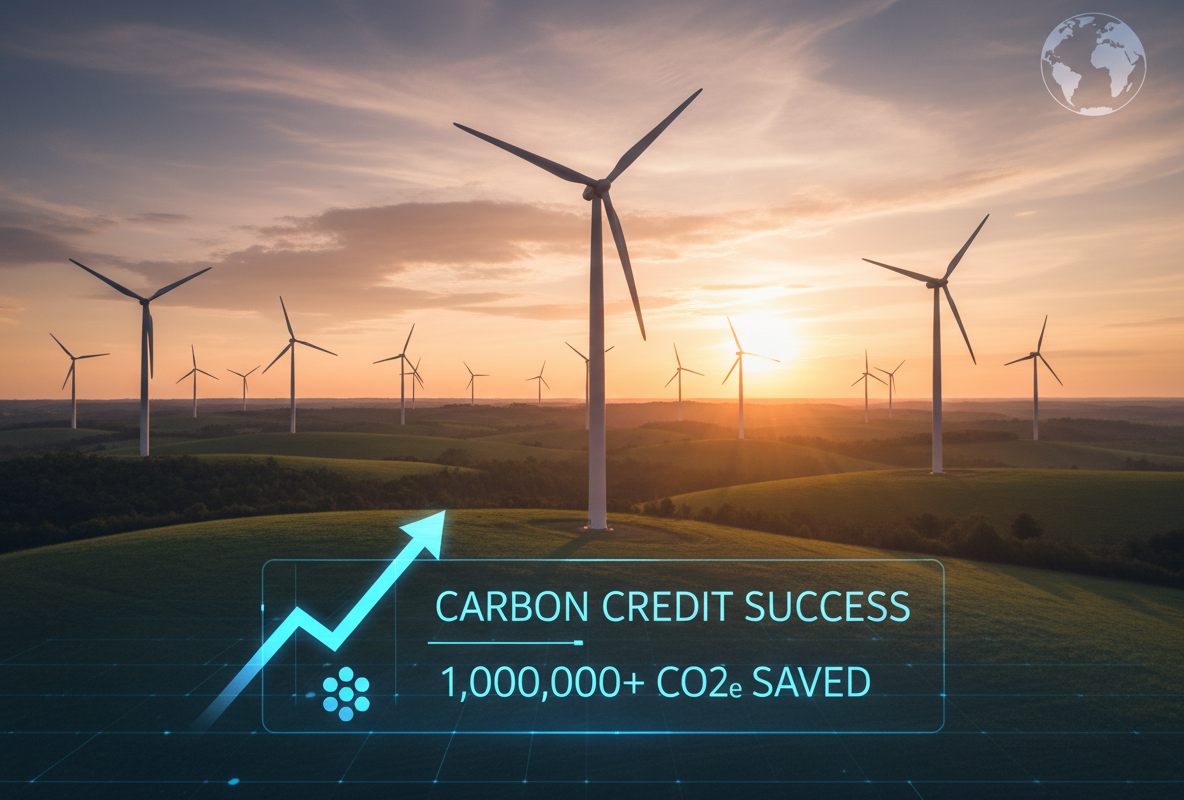
Wind Power Meets Carbon Trading
Wind Power Meets Carbon Trading
Introduction: A Success Story of a Wind Farm for Climate Progress and Carbon Credit
One specific wind farm success story for carbon credit has surfaced as a potent illustration of how clean power generation may provide both environmental and economic benefits in the quickly changing landscape of renewable energy projects and carbon markets. Wind farms in India, especially in places with significant wind energy potential, have produced lucrative carbon credits in addition to lowering greenhouse gas emissions, making them appealing contributions to both national and international climate goals.

Recognizing the Wind Energy Carbon Credit Opportunity
Without utilizing fossil fuels, wind energy projects use wind turbines to capture wind energy and produce electricity. This indicates that wind farms greatly reduce carbon dioxide (CO2) emissions when compared to traditional power facilities. Emissions reduction is essential to mitigating climate change, and projects that successfully prevent or cut greenhouse gas emissions are rewarded via carbon finance systems.
The idea behind carbon credit creation is straightforward but revolutionary: a project can receive a verified carbon credit for each tonne of CO2 emissions averted. Project owners can then earn more money by trading these credits in carbon markets.
The Wind Farm Project: Site, Goals, and Execution
- Project Origins and Goals
This wind farm was built with several goals in mind, including producing clean electricity, lowering India’s carbon footprint, and taking advantage of carbon trading opportunities. It is situated in one of the country’s high-wind potential regions. The project’s creators believed that increasing demand for carbon credits around the world would significantly boost the company’s worth beyond power sales.
Project planners used carbon credit optimization techniques into its design from the beginning. The implementation of effective turbine technology, careful site evaluation, and reliable data collection systems that may facilitate future carbon credit certification were all part of this.
Methodology and Certification for Carbon Credit
The process of creating carbon credits is difficult and must follow stringent international guidelines. To guarantee compliance, the project team worked with independent auditors and certifiers for this wind farm success story for carbon credit.
- Keeping an eye on and reporting
Modern sensors and control systems installed on wind turbines capture performance data in real time. In order to precisely quantify emission reductions and measure electricity generation, the project implemented extensive monitoring techniques.
Transparency and credibility were ensured by structuring reporting in accordance with international carbon accounting standards. The issuance of carbon credits was made possible by the regular submission of monitoring reports to certifying agencies.
- Verification and Issuance of Carbon Credits
The foundation of carbon credit certification is third-party verification. The project’s methodology, baseline estimates, and monitoring data were examined by independent auditors.
The project obtained certified carbon credits in proportion to its emission reductions following a successful verification process. This was a turning point in the wind farm carbon credit success story, demonstrating that renewable energy can produce measurable financial and climate benefits.
Financial Impact: Investment Returns and Carbon Credit Revenue
The wind farm’s economic profile was changed by producing carbon credits. The project profited from sales of carbon credits on voluntary and compliance markets in addition to earnings from selling electricity to the grid.
- Cutting Down on Financial Risk
Revenue from carbon credits served as a buffer against changes in market circumstances and electricity prices. The project exhibited resiliency in a competitive energy market and decreased financial risk by diversifying its sources of income.
- Case Comparison: Carbon Credits Included and Not
When carbon credits were taken into account during financial planning, the wind farm’s economic model changed dramatically. This wind farm’s quicker payback was largely made possible by the added value of carbon finance, while projects without carbon credit revenue frequently struggle to do so.
Benefits to the Environment and the Community
The wind farm produced quantifiable environmental and social benefits in addition to financial returns:
- Diminished Carbon Emissions
By preventing thousands of tonnes of CO2 emissions every year, the project helped India meet its climate pledges under international accords and met national emission reduction targets.
- Local Jobs and Economic Development
Local communities benefited from jobs produced by construction and ongoing operations. Opportunities for employment benefited both skilled and unskilled persons, and local companies experienced an increase in economic activity.
- Endorsing Eco-Friendly Ways of Living
The existence of a high-impact, successful renewable energy project raised locals’ understanding of environmental issues. Schools, civic associations, and community groups participated in the project to gain knowledge about climate change and clean energy.
Support Systems and the Policy Environment
This wind farm success story for carbon credits was made possible in large part by government legislation. India’s policy framework for renewable energy was favorable and comprised:
- Commitments for renewable purchases and feed-in tariffs,
- Tax breaks for investments in clean energy,
- Frameworks for carbon markets and the voluntary adoption of carbon norms.
Project developers were able to confidently explore carbon credit opportunities because to these policies.
The Wider Consequences for India’s Renewable Energy Industry
This tale of a wind farm is not unique. Its accomplishments are indicative of more general patterns in India’s carbon credit and renewable energy landscape:
- Growing Demand for Carbon Credits: In order to achieve climate goals, businesses, governments, and organizations are looking for carbon credits more and more.
- Scaling Clean Energy Projects: These kinds of success stories show how wind farms may be used as platforms for both clean energy and climate action.
- Enhanced Investor Confidence: International sustainable finance is drawn to carbon credit demonstrations of returns.
This wind farm success story serves as a model for future projects, and India is well-positioned to take the lead in financing renewable projects using carbon credits.
Conclusion: Wind Power Meets Carbon Trading
This carbon credit wind farm success story shows how renewable energy projects may provide quantifiable climate effect and economic benefit in addition to power output. In addition to lowering emissions, the wind farm’s use of carbon credit mechanisms produced a sustainable financial model that boosts investor trust, helps local people, and advances India’s climate goals.
This tale highlights the revolutionary potential of integrating wind energy, carbon markets, and sustainability strategy for stakeholders throughout the renewable energy value chain, including project developers, financiers, legislators, and environmental advocates.