
 Aksh
Aksh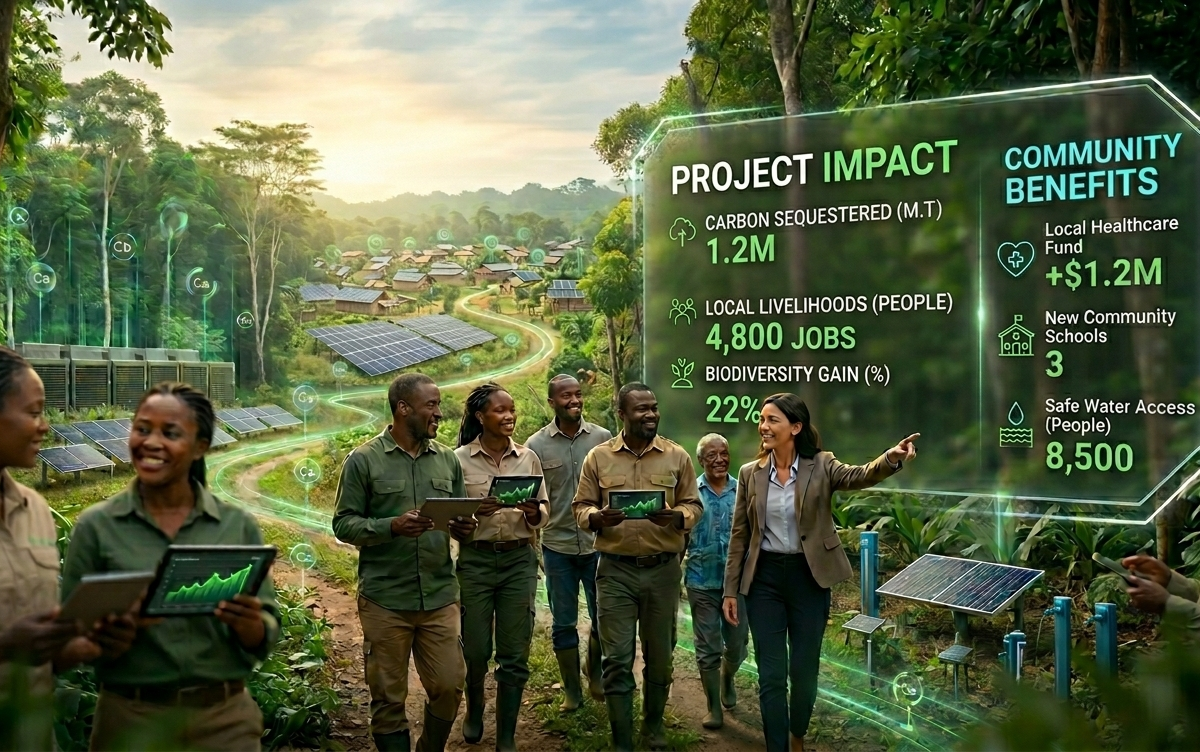
Innovative Carbon Project Success Story
Innovative Carbon Project Success Story
One outstanding creative carbon initiative is becoming a major success story in the fields of carbon credits, sustainable development, and community empowerment in a world that is desperately looking for scalable solutions to climate change. This project serves as an example of how comprehensive carbon credit systems can produce long-term socioeconomic advantages in addition to demonstrating quantifiable reductions in greenhouse gas emissions.
This in-depth study explores the beginnings, methods, implementation, and results of this creative carbon project success story, demonstrating how carbon credits are opening doors for economic inclusion and environmental restoration on a local and national scale.

Introduction: Carbon Credits’ Increasing Significance
From being a specialized tool for climate finance, carbon credits have become a common way to promote climate action. To put it simply, a carbon credit is the amount of carbon dioxide equivalent (CO₂e) that is reduced, avoided, or removed from the atmosphere. To satisfy sustainability goals, fulfill net-zero obligations, and promote regenerative practices, governments, businesses, and individuals are investing more and more in carbon credits.
As one of the fastest-growing major economies in the world, India is under increasing pressure to promote sustainable growth while lowering greenhouse gas emissions. In this regard, creative carbon projects are crucial to coordinating climate reduction with economic growth and community resilience.
Background: The Significance of Carbon Projects in India
India has experienced both extraordinary development and serious environmental issues as a result of its rapid economic growth. Concerns include industrial greenhouse gas emissions, agricultural emissions, air pollution, and deforestation. As a result, there has never been a greater need for climate finance tools like carbon credits.
In India, carbon initiatives can take many different forms, such as:
- Renewable energy sources like biomass, wind, and sun
- Initiatives related to forestry and reforestation
- Waste management and methane extraction from landfills
- Better cookstoves and technologies that use less energy
- Carbon sequestration in soil in agriculture
One cutting-edge carbon project sticks out among these various project kinds because of its quantifiable effects on community development and carbon reduction.
An Overview of the Innovative Carbon Project
With the audacious goal of combining cutting-edge carbon sequestration techniques with socioeconomic empowerment for nearby villages in rural India, the creative carbon project featured in this success story was initiated.
Among the project’s salient characteristics are:
- Application of carbon sequestration techniques based on nature
- Participation of the community and production of shared value
- Using state-of-the-art technologies for monitoring, reporting, and verification (MRV)
- Conformity to global carbon credit standards
- Put long-term sustainability and reproducibility first.
Through this effort, a previously environmentally degraded region became a paradigm for regenerative climate action. Let’s examine how this achievement came about.
Participation of the Community from Day One
This project’s emphasis on community co-ownership and participation was a key factor in its success. Project managers placed a higher priority on interacting with local stakeholders to learn about their needs, cultural values, and current means of subsistence than they did on enforcing foreign solutions.
Important Community-Centered Techniques
- Workshops on Participatory Planning
Village leaders, farmers, youth organizations, and women’s cooperatives were all brought together for the project’s initial inclusive seminars. By helping to define project goals, these forums made sure that local priorities and expertise were at the heart of carbon reduction plans.
- Structures for Shared Decision-Making
Community members formed steering committees to direct project management, budgetary choices, and benefit allocation. Transparency and trust were maintained throughout the implementation process.
- Training in Skills and Developing Capabilities
Training in agroforestry practices, carbon monitoring techniques, sustainable land management, and enterprise development in relation to project operations was provided to local communities.
The project laid the groundwork for long-term involvement and quantifiable environmental effect by encouraging empowerment and ownership.
Innovative Technology Fulfills Verification Requirements
Robust measurement and transparency are essential for success in carbon offset markets, in addition to actual emissions reduction. Modern monitoring, reporting, and verification (MRV) technologies were used in this project, such as:
- Monitoring vegetation using remote satellite imagery
- Ground-based instruments for measuring carbon
- IoT sensor networks to collect environmental data in real time
These developments made it possible to confirm the results of carbon sequestration against strict international standards, giving the carbon credits produced legitimacy and trust.
Crucially, open data exchange made it possible for community members to observe quantifiable signs of environmental advancement and attracted investors in the carbon market.
The Significance of Innovative Carbon Projects for India’s Climate Objectives
The significance of fair, scalable, and resilient carbon mitigation measures is highlighted by India’s national climate action policy and its climate pledges under the Paris Agreement. In a number of crucial sectors, creative carbon programs complement governmental priorities:
- Supporting India’s efforts to achieve net-zero
- Including sustainable rural development
- Developing green financial systems
- Maintaining and replenishing the biodiversity of ecosystems
- Encouraging women and underrepresented groups to participate inclusively
In addition to providing social and environmental co-benefits, the success story featured in this article shows how carbon credits can be produced ethically.
Conclusion: Innovative Carbon Project Success Story
There is more to this creative carbon project’s tale than just a decrease in emissions. It is a tale of cooperation, creativity, and a common goal. This project has paved the way for equitable and successful climate action by combining cutting-edge technology, inclusive governance, regenerative ecological practices, and financial incentives.
Models such as this will be crucial as India tries to marshal resources and expertise to accomplish its climate targets. They show that carbon credits are a tool for regenerative transformation as well as a financial tool, enhancing communities, bolstering ecosystems, and promoting a sustainable future for everybody.
Charts & Graphs of Carbon Credits vs RECs in India 2026 – Market Trends, Prices & Policy Analysis
Charts & Graphs of Carbon Credits vs RECs in India 2026 – Market Trends, Prices & Policy Analysis