
 Aksh
Aksh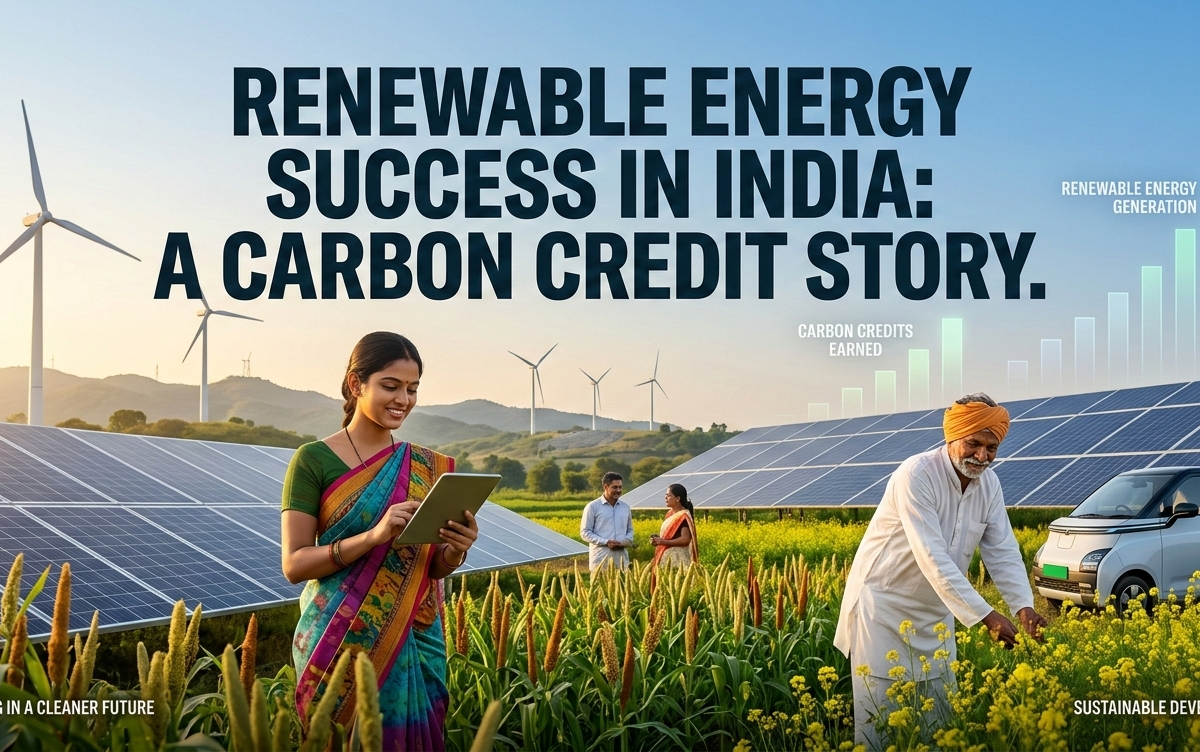
Renewable Energy NGO Success Story
Renewable Energy NGO Success Story
India is on the verge of a worldwide revolution in sustainable energy. India, one of the fastest-growing economies in the world, has quickly become a success story in the deployment of renewable energy and the expansion of the carbon credit market thanks to its aggressive climate goals and commitment to sustainable development. This change is the result of years of deliberate investments, legislative changes, business leadership, and community involvement.
This article explores the development of renewable energy in India, the emergence of carbon credits as a crucial tool for climate finance, and how the combination of carbon markets and green energy is changing the country’s economic and environmental landscape.

-
Overview: The Transition to Renewable Energy in India
One of the most notable global shifts of this century is India’s move toward renewable energy. Ten years ago, India relied mostly on fossil fuels, but today it has a strong capability for renewable energy. Today, the landscape is dotted with solar farms, wind parks, and hybrid renewable energy systems that contribute to lowering carbon emissions, increasing access to electricity, and promoting socioeconomic development.
Carbon financing, particularly carbon credits, which have developed into a potent incentive for sustainable investment, is at the center of this change. By allowing projects that reduce greenhouse gas emissions to obtain financial value, carbon credits—which are verifiable emission reductions—support other green initiatives.
-
The Growth Rate of Renewable Energy in India
India is expanding its use of renewable energy in many different ways. Utility-scale solar farms and dispersed rooftop installations have contributed to energy resiliency, and solar power capacity has increased rapidly. With high-yield turbines, wind power in India—which has historically been strong in areas like Tamil Nadu, Gujarat, and Rajasthan—continues to grow. Additionally, India has entered cutting-edge fields including energy storage, offshore wind, and green hydrogen preparedness.
The government’s goal of having net-zero emissions by 2070 has further spurred private investment and policy support. India is a key player in the global clean energy scene, with some of the highest renewable energy capacity in the world today.
-
Comprehending India’s Use of Carbon Credits
One metric ton of carbon dioxide or similar greenhouse gas emissions can be reduced or eliminated with the use of carbon credits, which are tradable certifications. Projects that actively lower or avoid emissions, like methane capture programs, energy efficiency improvements, renewable energy projects, and forestry activities, can produce these credits.
For a number of years, India has actively participated in the carbon markets. Indian sustainable energy projects have produced a significant amount of carbon credits, from sustainable Development Mechanism (CDM) projects under international frameworks to voluntary carbon markets that are forming both domestically and internationally.
-
How Carbon Credits Help Developers of Renewable Energy
Carbon credits have revolutionized the development of renewable energy. Due to their high initial expenses, renewable energy projects have historically had financial difficulties. Carbon credits, which monetize environmental benefits, aid in closing this gap.
Carbon credits give developers the following advantages:
- Improved Project Sustainability
The selling of carbon credits in both domestic and foreign markets can bring in money for developers of renewable energy projects. These profits frequently increase a project’s bankability, allowing developers to obtain funding more quickly and on more favorable conditions.
- Putting Money Back into New Technology
Carbon credit revenue can be used to fund the development of cutting-edge renewable technology. In order to further cut emissions, this comprises energy storage devices, grid integration technologies, and hybrid clean energy installations.
-
The Carbon Credit Market in India: Developments and Outcomes
The carbon credit market in India has developed considerably. Indian carbon projects have produced quantifiable climate impact, from early participation in global carbon markets to voluntary carbon market participation. Among the success markers are:
- A significant amount of certified carbon credits
Thousands of projects have been filed in India, which together represent an annual reduction in emissions of millions of tons. One of the biggest sources of certified carbon reductions is renewable energy projects, especially wind and solar farms.
- A Wide Range of Qualified Projects
In India, carbon credits aren’t just for energy. The carbon credit ecosystem is also influenced by forestry projects, biogas installations, agricultural waste-to-energy facilities, and industrial energy efficiency retrofits. The economic benefits of this variety are distributed across sectors.
-
Policies Driving the Growth of Carbon Credits and Renewable Energy
The Indian government has put in place strategic measures to encourage the growth of renewable energy sources and carbon financing. Important policy motivators consist of:
- The National Solar Mission
India’s uptake of solar energy has accelerated thanks in large part to the National Solar Mission. It gives distributed solar deployment, cost reduction, and capacity expansion first priority. India is now one of the solar markets with the quickest rate of growth in the world as a result of the mission’s success.
- RPOs, or Renewable Purchase Obligations
RPO regulations mandate that electricity providers buy a specific proportion of their energy from renewable sources. This stimulates investments in renewable energy projects and generates steady demand for clean power.
-
The Effects of Carbon Credits and Renewable Energy on the Economy and Society
The ecology of carbon credits and renewable energy has had significant social and economic effects in India in addition to environmental ones.
- Local Development and the Creation of Jobs
Solar farms and wind turbines are examples of renewable energy systems that demand a lot of labor during construction and long-term maintenance and operating staff. In nearby communities, this has resulted in the creation of thousands of jobs.
- Boosting the Rural Economy
Mini-grids and solar irrigation pumps are examples of distributed renewable energy solutions that empower rural farmers by lowering energy costs and boosting agricultural output. Carbon credit revenue also goes toward education, skill development, and community projects.
-
Conclusion: Renewable Energy NGO Success Story
More than just numbers, India’s renewable energy story represents a deeper dedication to economic resilience, sustainable development, and climate justice. Incorporating carbon credits into India’s renewable energy ecosystem has stimulated innovation, opened up financial incentives, and produced quantifiable environmental benefits.
Renewable energy and carbon markets are changing the story of India’s prosperity, from wind-rich areas to solar deserts, from rural villages to industrial corridors. For other countries attempting to strike a balance between development and environmental care, this success story offers a reproducible blueprint.
How Indian SMEs Are Driving Profit and Sustainability Through Carbon Credit Initiatives
How Indian SMEs Are Driving Profit and Sustainability Through Carbon Credit Initiatives