
 Aksh
Aksh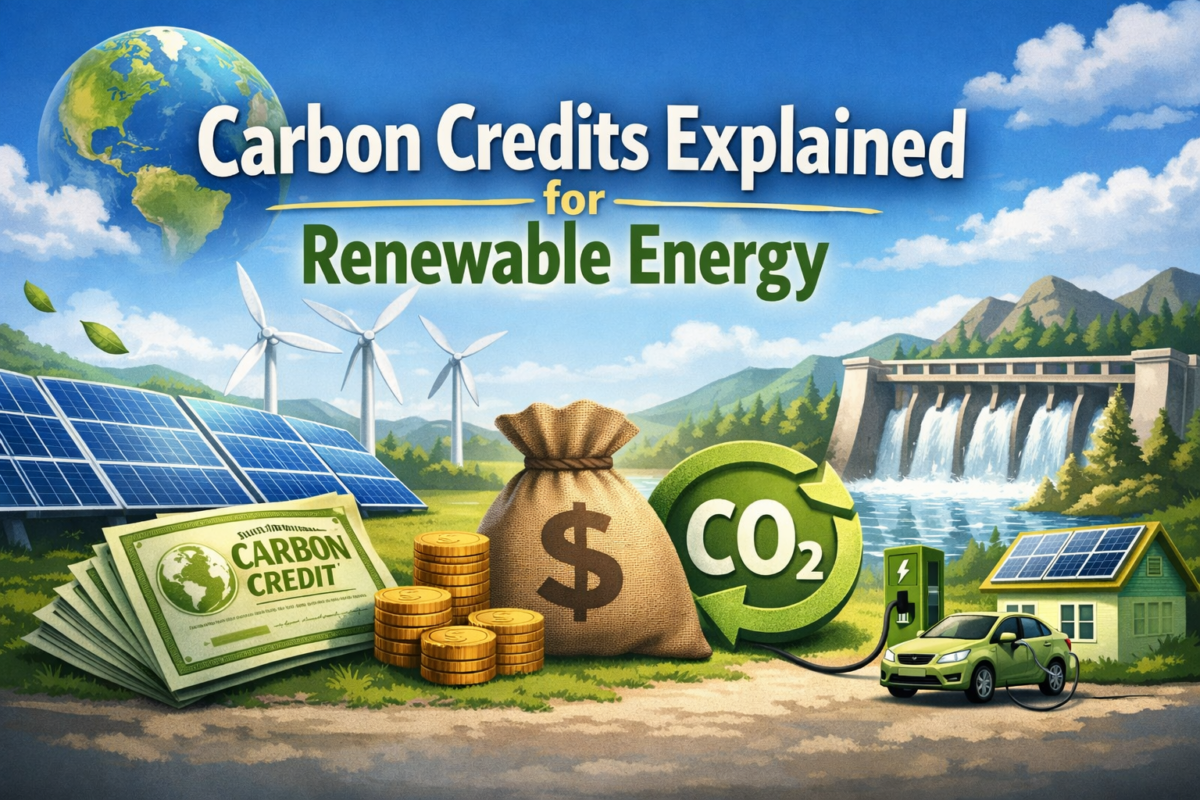
Renewable Energy Carbon Credits in India
Renewable Energy Carbon Credits in India
One of the most important worldwide issues of the twenty-first century is climate change, and India is at a crucial juncture in striking a balance between environmental responsibility and economic progress. Carbon credits have become a potent market-based tool to lower greenhouse gas emissions and promote investment in renewable energy as the globe moves faster toward cleaner energy systems. Businesses, legislators, investors, and individuals that wish to take part in India’s green revolution must comprehend how carbon credits operate, particularly in relation to renewable energy.
Carbon credits have evolved from a purely technical environmental idea. They have developed into a strategic financial instrument that helps countries reach global emission reduction goals, bolsters climate pledges, and promotes renewable energy projects.

The Fundamentals of Understanding Carbon Credits
One metric tonne of carbon dioxide or its equivalent greenhouse gas is reduced or removed from the atmosphere to create a carbon credit. Projects that either avoid emissions, cut emissions, or collect carbon that would otherwise be emitted are responsible for these reductions.
To put it simply, an entity receives carbon credits when it invests in initiatives that lower emissions elsewhere or reduces emissions over the legally mandated limits. Other organizations that need to offset their emissions can purchase or exchange these credits.
Carbon markets, which can be broadly divided into two categories, are where carbon credits function. While voluntary markets enable businesses and individuals to choose to offset emissions, compliance markets are governed by international agreements and governments.
The Significance of Renewable Energy in Carbon Credits
One of the best and most scalable ways to earn carbon credits is through renewable energy projects. Renewable energy sources including solar, wind, hydro, and biomass generate electricity with little to no greenhouse gas emissions, in contrast to fossil fuel-based power generation.
Carbon emissions are directly decreased when fossil fuel-based energy is replaced by renewable energy. It is possible to measure, validate, and turn these averted emissions into carbon credits. As a result, renewable energy is essential to international emission reduction plans.
Carbon credits based on renewable energy provide a method for India, whose coal has long dominated the energy mix, to move toward cleaner electricity while drawing in both domestic and foreign climate investment.
How Renewable Energy Projects Produce Carbon Credits?
There is a systematic and open mechanism for producing carbon credits from renewable energy projects. First, a project is planned to replace traditional energy sources with sustainable energy. Approved baseline procedures are used to calculate the anticipated reductions in emissions.
Real emission reductions are tracked and recorded after the project is up and running. The data is then checked by impartial third-party auditors to make sure it is accurate and complies with accepted standards. Following verification, carbon credits are given out in accordance with the confirmed decreases in emissions.
One tonne of carbon dioxide equivalent is avoided or reduced for every carbon credit that is awarded. Companies, governments, or individuals looking to offset their emissions can then purchase these credits.
Carbon Credit-Eligible Renewable Energy Project Types
Carbon credit-eligible renewable energy projects use a variety of technologies. One of the main sources of carbon credit creation is solar power projects, such as utility-scale solar farms and rooftop installations. Onshore and offshore wind energy projects are important as well.
Small and run-of-the-river hydropower projects, in particular, provide carbon credits by producing clean electricity devoid of significant emissions. By using organic matter and agricultural waste to produce energy, biomass and biogas projects lower emissions.
As methods advance, emerging renewable technologies like hybrid renewable systems and green hydrogen are also anticipated to become significant suppliers of carbon credits.
India’s Renewable Energy Goals and Carbon Credits
As part of its national climate pledges, India has set aggressive goals for renewable energy. The nation wants to lower its economy’s emissions intensity while greatly increasing its non-fossil fuel energy capability.
Carbon credits help achieve these objectives by giving producers of renewable energy new sources of income. This financial incentive speeds up the adoption of sustainable energy technologies, lowers investment risk, and increases project viability.
Carbon credits, which monetize emission reductions, aid in filling the financial gap for renewable energy projects, particularly in poor and rural areas where access to capital may be restricted.
Carbon Credits’ Financial Advantages for Renewable Energy Developers
Carbon credits are an important source of additional revenue for developers of renewable energy. Carbon credit sales revenue can increase overall financial sustainability, shorten payback periods, and boost project returns.
This extra revenue frequently determines whether a project is feasible or not, especially for small and medium-sized renewable energy installations. By boosting investor trust and lowering perceived risk, carbon credits can make funding more accessible.
Carbon credit revenue boosts the business case for renewable energy and promotes innovation in the industry in India’s cutthroat energy market.
Carbon Credits’ Place in Business Sustainability Plans
Businesses from all sectors are progressively committed to carbon neutrality and net-zero objectives. Carbon credits derived from renewable energy are essential to reaching these goals.
Businesses can promote the development of sustainable energy while offsetting inevitable emissions by acquiring carbon credits from renewable energy plants. Environmental responsibility, corporate social responsibility, and environmental, social, and governance goals are all in line with this strategy.
Engaging in carbon markets helps Indian companies become more globally competitive, build their brand, and show leadership in climate change.
India’s Carbon Trading and Market Dynamics
With the help of legislative initiatives and rising demand for emission reductions, India’s carbon market is developing quickly. Because of the nation’s growing clean energy potential, a sizable portion of available credits are carbon credits for renewable energy.
International climate policy, demand-supply dynamics, certification requirements, and project type all affect carbon credit market pricing. Demand for premium renewable energy carbon credits is predicted to rise as global climate commitments become more stringent.
India’s climate goals can be supported and significant economic value can be unlocked by a transparent and well-regulated carbon market.
In conclusion: Renewable Energy Carbon Credits in India
An effective way to fight climate change and promote economic opportunity is through carbon credits, as seen through the lens of renewable energy. Carbon credits offer concrete incentives for the development of sustainable energy by turning emission reductions into tradable assets.
Carbon credits for renewable energy are essential to India’s transition to a more resilient and environmentally friendly economy. They help communities and businesses take part in global climate action, boost markets for renewable energy, and support national climate goals.
Carbon credits will continue to influence renewable energy and sustainable development in India as markets develop and awareness rises.
Carbon Credit Basics Everyone Should Know: A Complete Guide to Carbon Markets and Climate Action
Carbon Credit Basics Everyone Should Know: A Complete Guide to Carbon Markets and Climate Action
2 Comments