
 Aksh
Aksh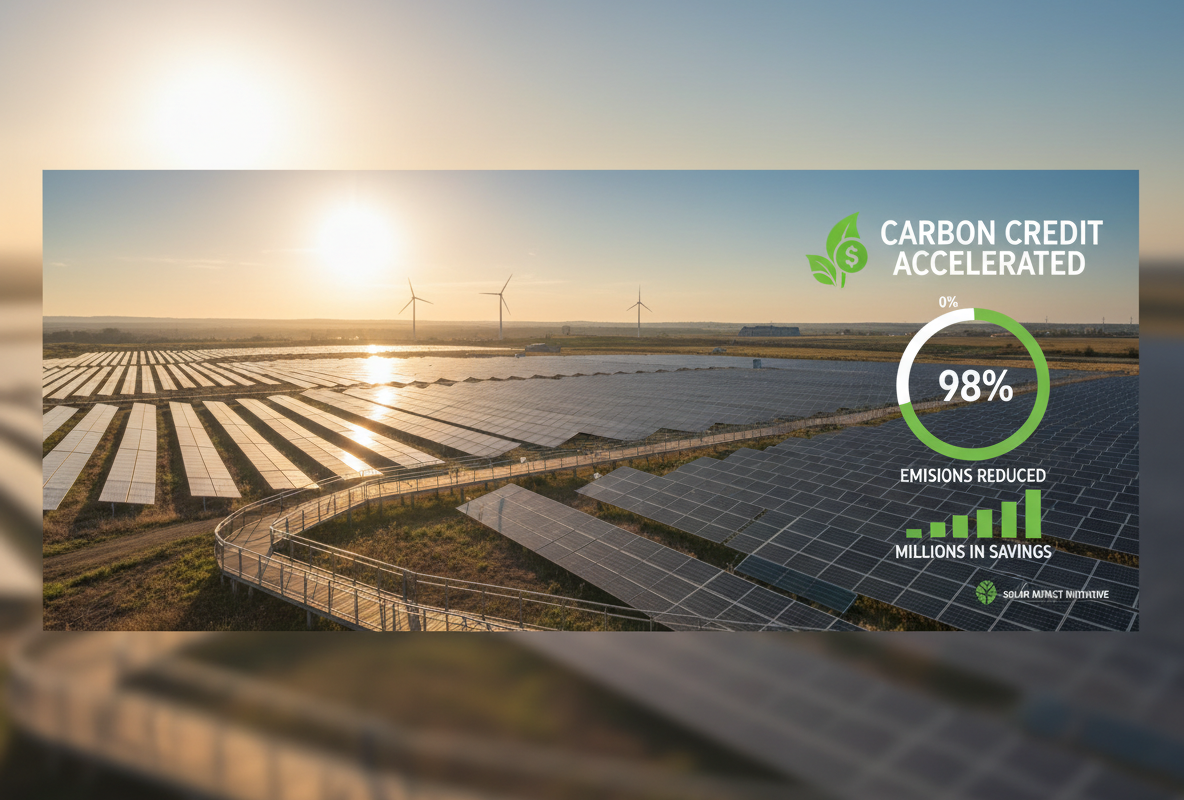
Carbon Credit Generation Through Solar Parks
Carbon Credit Generation Through Solar Parks
Introduction: Carbon Credits and India’s Solar Park Revolution
With one of the most ambitious and successful deployments of large-scale solar energy infrastructure, India is at the vanguard of the global clean energy revolution. The intersection of carbon credit markets and solar parks is a remarkable success story at the center of this shift. In addition to producing clean, renewable energy, solar parks also produce verified carbon credits that encourage climate action, strengthen local economies, and draw in sustainable investment.
Large solar parks have come to represent both economic opportunity and environmental advancement throughout the Indian subcontinent. Homes, businesses, and towns are powered by solar panels that capture an abundance of sunshine amid parched plains and sun-drenched agricultural areas. These solar parks offer a novel method to profit from environmental impact through carbon credits, contributing to considerable reductions in carbon emissions with each megawatt of clean energy created.

Driving India’s Renewable Development with Solar Parks
Over the past ten years, India’s solar energy story has accelerated due to the country’s energy independence ambitions, climate pledges, and quick technology advancements. Because of their effectiveness, scalability, and affordability, solar parks—large, utility-scale installations with concentrated photovoltaic arrays—became the go-to option.
Usually built on hundreds or thousands of acres of land, solar parks integrate several solar power producers. Efficient grid connectivity, simplified permitting, and coordinated operation that reduces expenses and increases output are made possible by this shared infrastructure.
Some of the biggest solar parks in the world are now located in India. These facilities greatly lessen dependency on fossil fuels and help meet the country’s renewable energy capacity requirements.
What Are Carbon Credits and Why Are They Important?
We need to look at the function of carbon credits in order to fully comprehend the effects of solar parks. A measurable decrease in greenhouse gas emissions brought about by particular climate-friendly initiatives is represented by carbon credits. Generally speaking, one metric ton of carbon dioxide equivalent (CO₂e) that is not released into the atmosphere or extracted is equivalent to one carbon credit.
There are voluntary or compliant markets for carbon credits. Both markets are developing in India thanks to business pledges to achieve net zero, carbon trading platforms, and government policy frameworks.
Case Study: Northern India’s Solar Park Success Story
A significant solar park is a shining example of achievement on the sun-drenched plains of northern India. This project, which covered thousands of hectares, brought together local communities, commercial investors, and governmental organizations to create a sustainable energy powerhouse.
The project was planned from the beginning to create measurable carbon credits in addition to renewable electricity. In order to ensure transparency and trust in carbon accounting, the developers made a commitment to strict measurement and reporting criteria.
When the solar park was up and running, it directly replaced the production of fossil fuels by providing clean electricity to the national grid. Accredited third parties confirmed annual reductions of hundreds of thousands of metric tons of CO2.
How Solar Park Economics Are Supplemented by Carbon Credits
For developers of renewable energy, striking a balance between long-term revenue sources and upfront capital expenses is a crucial task. The creation of solar parks necessitates large investments in infrastructure, technology, and land acquisition. Sales of electricity generate steady income, but carbon credits add another aspect of the economy.
An incremental return on environmental value is provided by carbon credits. Operators of solar parks can increase project bankability and diversify their revenue streams by obtaining and selling credits for confirmed emission reductions. This enhances financing conditions, draws investors focused on sustainability, and facilitates future growth.
Impact on the Local Community: Employment, Education, and Self-determination
Solar parks assist the local population in real ways and are not just about technology and carbon markets. Solar parks are becoming accelerators for socioeconomic advancement as project developers increasingly integrate community development activities.
Local workers, engineers, and technicians now have jobs thanks to the building and upkeep of solar parks in numerous areas. Training programs give locals skills related to renewable energy, which enhances their employability and long-term employment opportunities. Better power supplies and electrification frequently benefit schools and community facilities next to solar parks, enhancing education and quality of life.
Data and Technology: Ensuring Reputable Carbon Accounting
Accurate measurement, reporting, and verification (MRV) is a crucial component of carbon credit markets. To monitor energy output and measure emission savings, solar parks use satellite data, performance analytics, and sophisticated metering systems. These mechanisms guarantee that claims for carbon credits are legitimate, verifiable, and compliant with international norms.
Transparency is further improved by innovations like automated data gathering platforms and carbon registries enabled by blockchain technology. These solutions support the issuing of high-integrity carbon credits, lower risk, and boost buyer trust. Solar parks in India maintain international trust in the quality of carbon credits by implementing best-in-class MRV systems, which attracts both domestic and foreign purchasers.
Support for Policies and Regulatory Structures
Carbon credits and solar parks flourish in settings that are backed by progressive legislative frameworks. An enabling ecosystem is produced by India’s clean energy incentives, carbon market programs, and renewable energy targets.
Solar park expansion has been fueled by government initiatives including mandates for renewable energy purchases and financial incentives for solar investments. Carbon credit issuance is further supported by complementary frameworks pertaining to carbon markets, emissions reporting regulations, and sustainable financing principles.
The deployment of renewable energy is more closely aligned with climate mitigation outcomes when energy and environmental ministries work together effectively on policy. Policymakers are investigating standardized procedures for the issuance of solar carbon credits as carbon markets grow in order to guarantee uniformity and confidence among projects.
Opportunities and Difficulties to Come
There are still difficulties in spite of the success tale. Ongoing priorities include ensuring accurate carbon accounting, avoiding double counting, and managing regulatory complexity. To keep buyers and investors confident, the voluntary carbon market needs to retain honesty and openness.
To guarantee fair results, land acquisition and community involvement need to be carefully planned. Designing a sustainable solar park requires taking social effect, biodiversity preservation, and environmental care into account.
But there are plenty of opportunities. Expanded solar park deployment and carbon credit generation are made possible by technological progress, regulatory backing, and growing climate commitments. Governments, businesses, and communities working together can uncover scalable solutions that strengthen India’s position as a leader in low-carbon.
Conclusion: Carbon Credit Generation Through Solar Parks
The Indian solar park success story illustrates a climate-smart development approach that offers social, economic, and environmental benefits, making it more than just a renewable energy accomplishment. In addition to producing clean energy and lowering carbon emissions, solar parks also produce tradable carbon credits that are advantageous to businesses, communities, and investors.
Solar parks and carbon credit markets will be crucial in determining sustainable growth as India moves closer to a low-carbon future. Their accomplishments serve as a reminder of how creativity, teamwork, and climate action can come together to create resilient energy systems and fair advancement.