
 Aksh
Aksh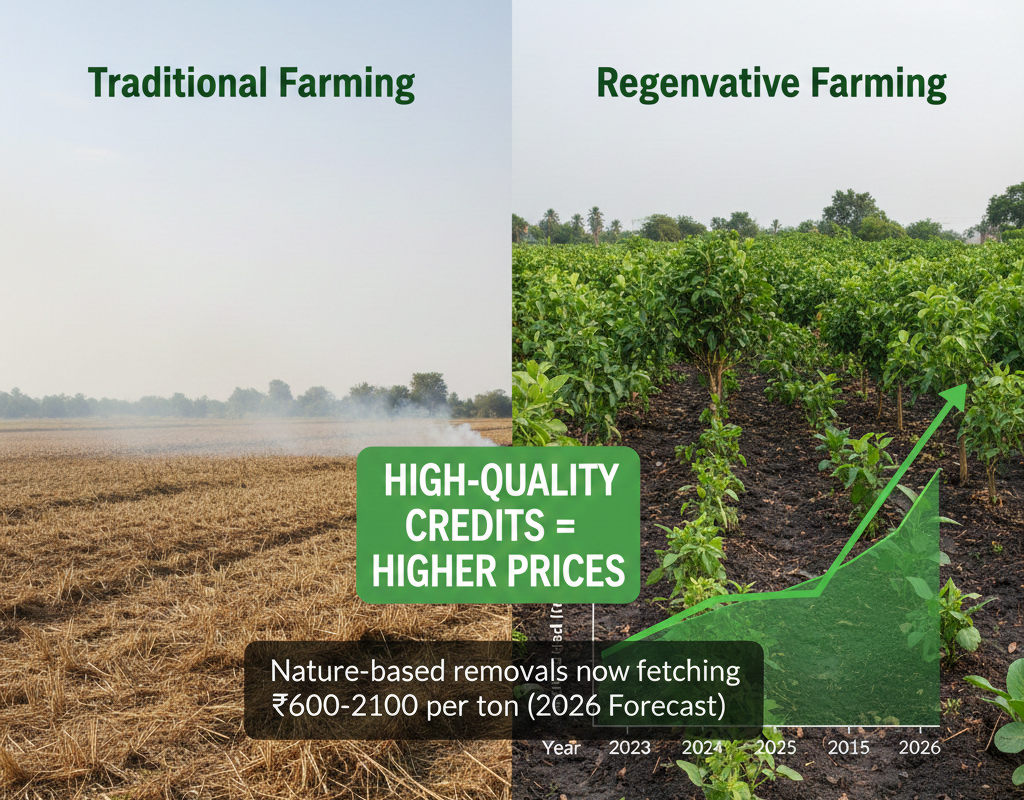
Carbon Credit Price Explained: Factors, Trends
Carbon Credit Price Explained: Factors, Trends
In India and around the world, the idea of carbon credits has drawn a lot of attention as nations, businesses, and individuals work to slow down climate change. One metric ton of carbon dioxide (CO2) or an equivalent quantity of other greenhouse gases can be reduced via carbon credits, which are tradable certificates. For investors, legislators, and companies engaged in environmental preservation, knowing the price of carbon credits has become essential due to the increased focus on sustainability and net-zero objectives.
The mechanics of carbon credit pricing, the variables that affect its value, Indian market trends, and the potential for those involved in the carbon trading ecosystem will all be covered in this article.

Carbon Credits: What Are They?
One component of a market-based system intended to lower greenhouse gas emissions is carbon credits. A quantifiable, provable reduction of one ton of CO2 or its equal is represented by each credit. Businesses that surpass their emission goals can buy carbon credits from organizations that have cut emissions above and beyond legal limits. Investment in renewable energy and green technology ventures is encouraged by this framework.
Carbon credits, for example, can be earned by a forest conservation project that absorbs CO2 or a renewable energy project that produces clean electricity. These credits can then be sold on the market. These credits are used by the buyer, usually a business that exceeds its emission allowance, to offset its carbon footprint.
Comprehending the Price of Carbon Credits
In essence, the price of carbon credits is what it costs to purchase or sell them. Numerous elements influence it, such as supply and demand, legal frameworks, project kinds, and international environmental regulations.
Factors Influencing the Cost of Carbon Credits
- Supply and Demand: The fundamental economic concept of supply and demand is crucial in establishing the cost of carbon credits. Prices typically rise in response to increased demand for credits brought on by more stringent emission standards or corporate sustainability goals. On the other hand, too many credits may result in a decrease in price.
- Regulatory Policies: The price of carbon credits is greatly influenced by government regulations and carbon pricing schemes. As part of its commitment to the Paris Agreement, the Indian government is aggressively promoting carbon markets, which has an impact on credit pricing in both compliance and voluntary markets.
- Project Type and Quality: The quality and verification requirements for carbon credits produced via methane collection, forest conservation, and renewable energy projects vary. Certified, higher-quality credits are usually more expensive.
- Global Trends and Market Sentiment: Global carbon trading trends, corporate ESG (Environmental, Social, and Governance) activities, and international climate regulations all have an impact on carbon markets. Higher loan rates are frequently the result of positive feeling regarding sustainability.
The Advantages of Knowing Carbon Credit Prices
For a number of stakeholders, knowing carbon credit pricing is crucial:
- Companies: Assists in creating budgets for carbon offsets and reaching sustainability goals.
- Investors: Offers information on new green investment prospects.
- Policymakers: Assists in the development of efficient carbon pricing systems.
- Environmentalists: Encourage accountability and openness in efforts to reduce carbon emissions.
Stakeholders can find lucrative projects, make well-informed decisions, and aid in the worldwide battle against climate change by examining carbon credit prices.
Mechanisms for Trading Carbon Credits in India
Businesses can offset emissions and make money from environmental projects by exchanging carbon credits between buyers and sellers.
Procedures Associated with Trading
- Project Registration: Initiatives including waste management, afforestation, and renewable energy must register with an accredited certifying organization.
- Verification: The quantity of CO2 lowered or sequestered is confirmed by independent auditors.
- Credit Issuance: Tradable carbon credits are created from verified emission reductions.
- Purchasing and Selling: Credits are offered for sale at the going rate in voluntary or compliance markets.
Platforms for the Market
India is taking steps to create standardized trading systems that facilitate the exchange of carbon credits. These platforms lower the possibility of fraud or double counting, guarantee price discovery, and improve transparency.
In conclusion: Carbon Credit Price Explained: Factors, Trends
One important measure of the worth of emission reductions and environmental initiatives is the price of carbon credits. Understanding pricing trends, market dynamics, and trading systems is essential for stakeholders hoping to support climate action while taking advantage of financial opportunities, as India is becoming a major player in the global carbon market.
Monitoring carbon credit prices can help you make smarter decisions and increase your involvement in India’s expanding carbon economy, whether you are a company looking to offset emissions, an investment investigating green finance, or a person interested in sustainability.
It is evident from graphic insights, market patterns, and regulatory awareness that carbon credits are becoming a significant financial asset in India’s developing green economy in addition to being a tool for environmental responsibility.
Why Carbon Credit Prices Change: Key Factors Driving Volatility in Global and Indian Carbon Markets
Why Carbon Credit Prices Change: Key Factors Driving Volatility in Global and Indian Carbon Markets