
 Aksh
Aksh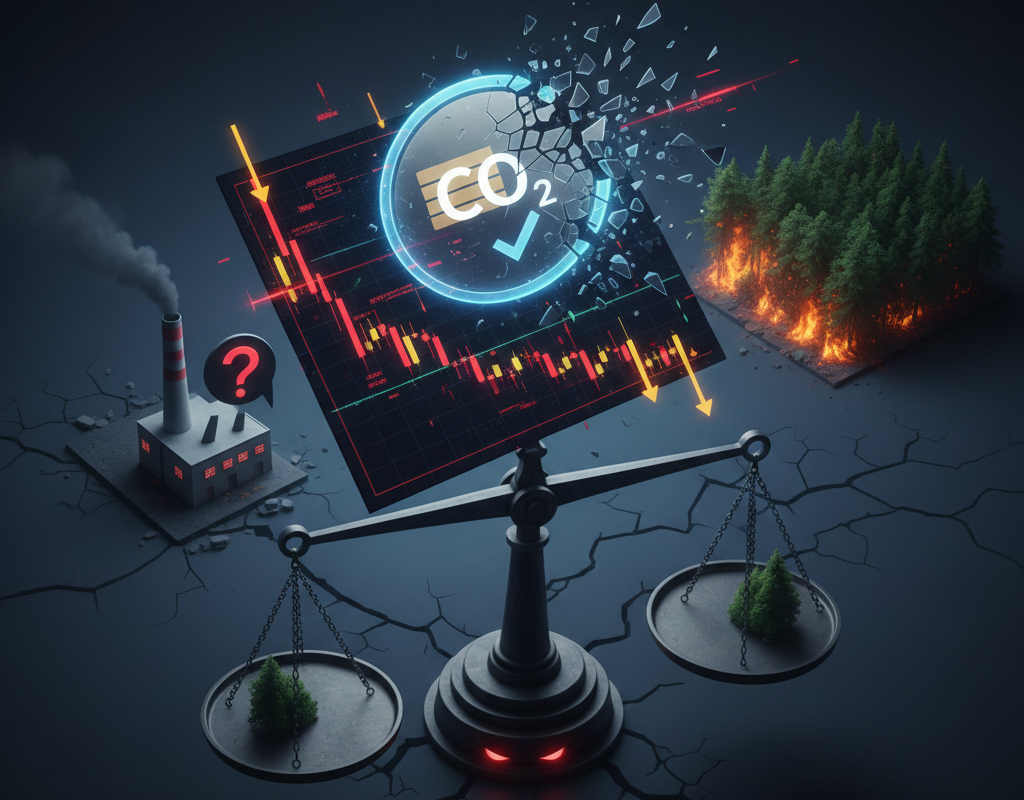
Carbon Credit Trading Risks Explained
Carbon Credit Trading Risks Explained
A potent market-based tool for addressing climate change and providing financial incentives for reducing emissions is carbon credit trading. Carbon markets are becoming more and more important to governments, businesses, and investors in order to satisfy climate targets, adhere to legal requirements, and promote sustainability initiatives. Carbon credit trading is not risk-free, nevertheless, despite its potential.
Knowing the risks involved in selling carbon credits has become essential as carbon markets grow in size and complexity. These risks include market volatility, regulatory uncertainty, fraud vulnerability, operational inefficiencies, reputational harm, verification difficulties, and long-term climate integrity issues.

Knowing How Carbon Credits Are Traded?
Companies that cut or eliminate greenhouse gas emissions can create marketable credits through carbon credit trading. One metric tonne of carbon dioxide or its equivalent that has been avoided, reduced, or extracted from the atmosphere is usually represented by each carbon credit. Carbon markets allow for the purchase and sale of these credits.
Two primary categories of carbon markets exist:
- There are voluntary carbon markets, where businesses buy credits to fulfill their own climate pledges, and compliance markets, which function under laws and mandated emissions caps.
- Although the efficient reduction of emissions is the goal of both systems, participants must carefully manage the different risk profiles they present.
Policy and Regulatory Risks
- Uncertainty in Regulation
Regulatory uncertainty is one of the biggest hazards associated with trading carbon credits. Government actions, international agreements, and changing climate rules all have a significant impact on carbon markets. Credit value can be impacted and market stability disrupted by abrupt changes to regulations, eligibility rules, or compliance standards.
Both project developers and buyers may become concerned in emerging nations where carbon trading systems are still being developed due to ambiguous regulations or delayed implementation.
- Changes in Policy and Political Risk
Political discussion frequently surrounds carbon pricing schemes, emissions caps, and trading regulations. Carbon market systems can be made stronger or weaker overnight by a change in the direction of government or policy. Long-term market confidence, pricing, and demand may all be impacted by this political risk.
- Differences in Cross-Border Regulations
Every nation has its own set of regulations governing carbon markets. International participants face greater compliance complexity and legal risk due to variations in accounting regulations, credit recognition, and reporting requirements.
Risks of Price and Market Volatility
- Changes in the Price of Carbon Credits
The dynamics of supply and demand, changes in regulations, corporate climate pledges, and general economic conditions all affect the cost of carbon credits. Significant price fluctuations put traders, investors, and project developers at risk financially.
- Uncertainty in Demand
The demand for carbon credits by corporations is strongly correlated with economic success, sustainability objectives, and reputational factors. Businesses may cut back on discretionary offset expenditure during recessions, which would weaken demand.
- Risk to Liquidity
The liquidity of carbon credits varies. It could be challenging to sell some project-based credits rapidly at fair market value since there may not be many purchasers. Investors may experience valuation losses due to capital trapping caused by illiquidity.
Risks to Project Quality and Verification
- Additionality Issues
Additionality, or the idea that emissions reductions would not have happened in the absence of carbon market incentives, is a cornerstone of the integrity of carbon credits. Projects that don’t show genuine additionality lose confidence with the market.
- Challenges of Measurement and Verification
It is technically difficult to measure emissions reductions accurately. It might be challenging to confirm assumptions, models, and baseline scenarios that are used in many projects with complete certainty.
Overissuance of credits due to measurement or verification errors might raise systemic risk in carbon markets.
- Risk of Permanence
Permanence hazards are present in certain carbon offset initiatives, especially those that use natural solutions like forestry. Fires, pests, illicit logging, and changes in land use can all release carbon held in soil or forests.
Risks of Fraud and Market Integrity
- Fraud involving Carbon Credit
False credits, double counting, misrepresenting project results, and unapproved credit sales are among the fraudulent activities that have been drawn to carbon markets as they have expanded.
- Risk of Double Counting
When a project developer, a host nation, or many purchasers all claim the same emissions reduction, this is known as double counting. This can result in compliance violations and damages the credibility of emissions reductions.
- Risk of Greenwashing
Businesses that use a lot of dubious or low-quality carbon credits risk being accused of greenwashing. Reputational risk is a big worry because of the rising public scrutiny of business climate claims.
Investment and Financial Risks
- Uncertainty in Return on Investment
Investments in carbon credits carry some risk, but they can also yield alluring profits. Profitability can be impacted by market downturns, regulatory changes, project delays, and verification errors.
- Risk to the Counterparty
Registries, purchasers, developers, and brokers are all involved in carbon credit trades. Financial losses could happen if a counterparty defaults on payments, stops delivering credits, or goes bankrupt.
- Long-Term Sustainability of the Market
Public trust, corporate involvement, and consistent policy backing are essential for the future of carbon markets. Long-term demand may suffer if trust in carbon credits wanes as a result of problems with their integrity.
In conclusion: Carbon Credit Trading Risks Explained
Though it is not a risk-free option, carbon credit trading is essential to the worldwide shift to a low-carbon economy. Risks to one’s reputation, financial vulnerability, fraud, project integrity, market volatility, and regulatory uncertainty are all major obstacles.
Businesses, investors, and legislators can all take part in carbon markets more successfully if they comprehend and actively manage the risks associated with selling carbon credits. To guarantee that carbon credit trading provides both environmental and financial benefits, responsible participation, openness, and a dedication to actual emissions reduction are crucial.
Carbon Credits Explained: How India is Leading the Way in Carbon Trading
Carbon Credits Explained: How India is Leading the Way in Carbon Trading