
 Aksh
Aksh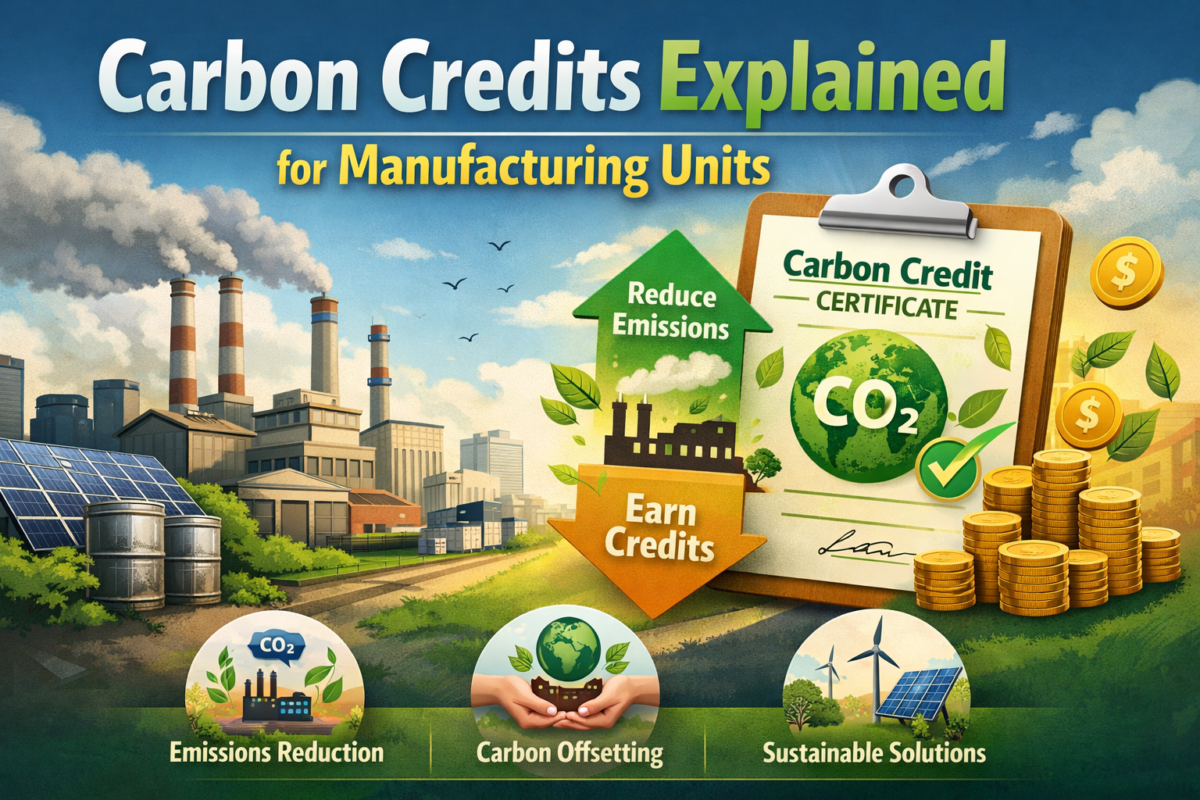
Carbon Credits for Manufacturing Industries
Carbon Credits for Manufacturing Industries
Businesses, industries, and governments are facing mounting pressure to cut greenhouse gas emissions as climate change emerges as one of the world’s most urgent issues. Manufacturing facilities are currently at the forefront of sustainability considerations because of their substantial energy, fuel, and industrial operations that result in carbon emissions. The carbon credit system is one of the most effective instruments that are being developed to deal with this issue.
The idea of carbon credits is no longer limited to the environment. They have developed into a strategic and financial opportunity for Indian manufacturing facilities. Carbon credits are changing how industries function, from enhancing compliance and company reputation to opening up new revenue sources.

Comprehending Carbon Credits
The right to emit one metric tonne of carbon dioxide or its equivalent in other greenhouse gases is represented by a carbon credit. A manufacturing facility can receive carbon credits when its emissions fall below a predetermined threshold. Organizations that surpass their emission limits or wish to mitigate their carbon footprint can then purchase or exchange these credits.
To put it simply, carbon credits turn the decrease of emissions into a quantifiable and exchangeable asset. By offering cash rewards for sustainability initiatives, this mechanism incentivizes industries to use cleaner technologies.
The Significance of Manufacturing Facilities in Reducing Carbon
Although they are among the biggest sources of industrial emissions, manufacturing facilities are essential to economic expansion. Usually, these emissions originate from:
- Using fossil fuels to generate electricity
- Industrial procedures involving high temperatures
- Utilization of furnace oil, diesel, and coal
- Antiquated technology and ineffective machinery
- Process emissions from textiles, chemicals, steel, and cement
This high emission intensity means that even modest efficiency gains can result in significant carbon reductions. Because of this, manufacturing facilities are perfect candidates for carbon credit schemes.
Carbon Credits’ Main Advantages for Manufacturing Facilities
- Monetary rewards
By monetizing pollution reductions, carbon credits generate an extra source of revenue. This can greatly increase profitability for energy-intensive industries.
- Regulatory Readiness
Manufacturing facilities that have experience with carbon credits will find compliance easier and less expensive as environmental requirements tighten.
- Enhanced Efficiency in Operations
Fuel usage, energy expenses, and operational waste are frequently decreased via emission reduction strategies.
- Improved Image of the Brand
Manufacturing facilities with a sustainability focus draw clients, investors, and international supply chain partners.
- Green Financing Availability
Businesses with quantifiable environmental measures are being given preference by banks and other financial institutions.
Typical Manufacturing Carbon Credit Opportunities
Through a number of programs, manufacturing facilities across all industries can produce carbon credits:
- Adoption of Renewable Energy
Reliance on fossil fuels is decreased by installing power systems based on biomass, solar, or wind.
- Enhancements in Energy Efficiency
Emissions can be considerably reduced by upgrading lighting, boilers, compressors, and motors.
- Recovery of Waste Heat
Fuel consumption is decreased by collecting and recycling waste heat from industrial activities.
- Switching Fuels
Emissions are reduced when natural gas, biomass, or other fuels are used in place of coal or diesel.
- Optimization of Processes
Enhancing manufacturing procedures to cut down on energy and material waste.
India’s Sector-Wise Carbon Credit Potential
- Manufacturing of Cement
Cement plants are excellent candidates for carbon credit projects using blended cement and other fuels because of the high emissions from the manufacturing of clinker.
- Metal and Steel Industries
Significant reduction opportunities are provided by waste heat recovery, energy-efficient furnaces, and renewable integration.
- Manufacturing of Textiles and Clothing
Credits are produced by switching to greener fuels, solar thermal systems, and efficient boilers.
- Pharmaceutical and Chemical Units
Energy-saving techniques and process optimization lower production costs and emissions.
- Manufacturing of Food and Drink
Common carbon credit methods include biomass boilers, biogas plants, and effective refrigeration systems.
Carbon Credits’ Prospects for Indian Manufacturing
As political frameworks change and industrial participation rises, carbon credits in India appear to have a bright future. Manufacturing facilities of all sizes will have easier access to carbon credits because to digital monitoring, uniform procedures, and enhanced market transparency.
Carbon credits will evolve from an environmental project to a vital financial and operational instrument as sustainability is incorporated into corporate strategy.
In conclusion: Carbon Credits for Manufacturing Industries
Carbon credits are a potent tool for manufacturing companies in India to cut emissions, boost productivity, and make money. Industries may maintain their competitiveness in a low-carbon economy by being aware of how carbon credits operate and proactively implementing emission reduction techniques.
By adopting carbon credits now, manufacturing facilities are not only safeguarding the environment but also securing their future.
Carbon Credit Basics Everyone Should Know: A Complete Guide to Carbon Markets and Climate Action
Carbon Credit Basics Everyone Should Know: A Complete Guide to Carbon Markets and Climate Action