
 Aksh
Aksh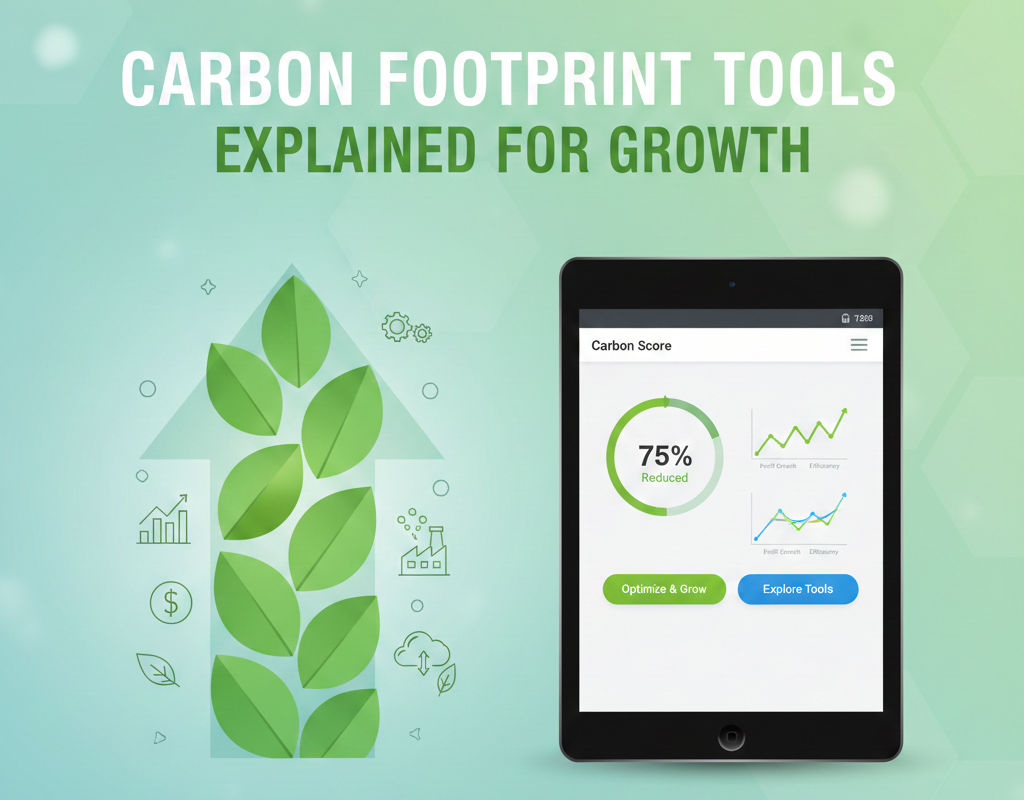
Carbon Footprint Tools Explained for Growth
Carbon Footprint Tools Explained for Growth
Businesses are under growing pressure from stakeholders, such as consumers, investors, regulators, and communities, to assess and lessen their environmental impact in a period characterized by climate urgency. The carbon footprint—the entire amount of greenhouse gas emissions that a company, product, or individual directly or indirectly causes—is a key idea in this change. But acknowledging carbon emissions alone is no longer sufficient. Businesses need to use carbon footprint systems that allow for precise measurement, useful insights, and continuous management. These instruments are increasingly necessary for risk reduction, sustainable growth, and involvement in new carbon markets, such as the trading of carbon credits in India.

The Significance of Carbon Footprint Tools
Businesses can measure greenhouse gas emissions from their supply chains, operations, goods, and services by using carbon footprint technologies. These technologies help with strategy formulation and decision-making by converting complex data into insightful knowledge. It is impossible to overestimate the significance of precise measurement in a world where many countries are making emissions reporting mandatory.
- Enterprise Development and Sustainability
By taking part in emissions reduction initiatives and carbon credit markets, businesses can lower expenses, increase operational efficiency, build their brand, and unlock value with accurate carbon accounting. Transparent carbon data is becoming a valuable asset as investors incorporate environmental, social, and governance (ESG) factors into their decisions more and more. Credible ESG reporting is based on carbon footprint tools.
- Mitigation of Risk
Supply chains, tangible assets, and regulatory compliance are all under danger from climate change. Businesses that are able to quantify and comprehend their emissions are better able to manage climate risks, predict changes in regulations, and comply with international agreements on temperature objectives and net zero by 2050.
The Functions of Carbon Footprint Tools
Fundamentally, carbon footprint tools assist businesses in:
- Monitor emissions data from a variety of sources, including waste, fuel consumption, transportation, energy use, and purchased items.
- Determine greenhouse gas emissions by applying established techniques.
- Report emissions in accordance with national reporting regimes and international standards like ISO 14064 and the Greenhouse Gas Protocol.
- Determine areas for reduction by analyzing trends over time.
- Forecast future performance and model reduction strategies.
- Oversee carbon offsets and credits as a component of sustainability initiatives.
Data processing, analytics, reporting, and strategy formulation are all combined in these competences, which are essential for efficient carbon management.
Obstacles and Things to Think About
Despite the obvious advantages of carbon footprint instruments, organizations nevertheless face obstacles:
- Availability and Quality of Data
Accurate data is necessary for accurate emissions measurement. Inconsistent data sources, missing digital tracking, or insufficient records are problems for many firms. It is essential to invest in internal procedures and data systems.
- Methodology and Standardization
Methodologies or emissions factors may vary throughout tools. Credibility depends on choosing a tool that complies with accepted standards. Businesses need to be aware of the underlying assumptions in their estimates.
- Connectivity with Current Systems
Complex legacy systems are frequently found in large businesses. It can be difficult and resource-intensive to integrate carbon tools with supply chain, financial, and operational systems.
The Best Ways to Select Carbon Footprint Instruments
When choosing a carbon tool, organizations should take the following factors into account:
- Alignment of Standards
Select solutions that are in line with established reporting frameworks.
- Scalability
Choose tools that adapt to the complexity of your business.
- Capabilities for Data Integration
Assure smooth communication with suppliers and internal systems.
- Interfaces that are easy to use
Sustainability teams should be able to use tools without too many technical obstacles.
- Analytical Skills
Strategic insights and scenario planning are made possible by advanced analytics capabilities.
In conclusion: Carbon Footprint Tools Explained for Growth
Carbon footprint tools have evolved from optional calculators to strategic platforms that impact climate leadership, corporate performance, and growth. Comprehending, quantifying, and controlling emissions has become a crucial component of business strategy for companies in India and elsewhere. Companies may increase sustainability performance, run more effectively, adhere to regulations, and take part in carbon markets with the use of the appropriate carbon footprint instruments.
Businesses may use these tools to transform their environmental responsibilities into a competitive advantage, promoting growth and helping to create a future with lower carbon emissions.
Carbon Credit Price Explained: Complete Guide to Carbon Market, Trading, and Benefits
Carbon Credit Price Explained: Complete Guide to Carbon Market, Trading, and Benefits