
 Aksh
Aksh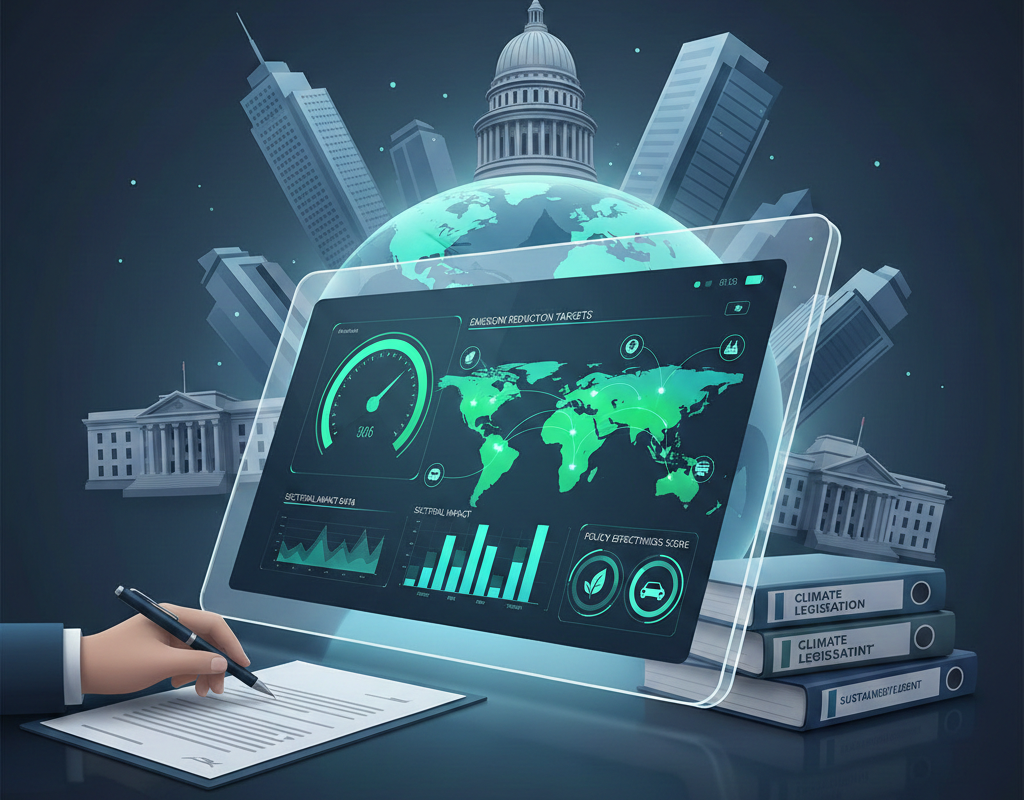
Carbon Footprint Tools Explained for Policy Makers
Carbon Footprint Tools Explained for Policy Makers
As governments look for ways to cut greenhouse gas emissions and move toward sustainable economies, climate change remains at the top of both national and international agendas. Effective policymaking requires precise carbon emission measurements as well as knowledge of the environmental effects at the national and sectoral levels. Carbon footprint tools are more than just technical tools for policymakers; they are fundamental systems that facilitate evidence-based decision-making, open reporting, climate compliance, and strategic planning.
This in-depth news article examines the various types of carbon footprint instruments, their functions, worldwide standards, difficulties, best practices, and how policymakers may use them to expedite climate action and sustainable development.

A Carbon Footprint: What Is It?
A carbon footprint, measured in carbon dioxide equivalent (CO₂e) units, is the total amount of greenhouse gas (GHG) emissions that a person, organization, process, event, or product causes, both directly and indirectly. It includes emissions from the burning of fossil fuels, manufacturing, transportation, power use, industrial processes, and frequently indirect sources like supply chains.
Because they measure environmental impact in a way that can be monitored, compared, and decreased over time, carbon footprints are essential.
Carbon Footprint Tools: What Are They?
Software programs, approaches, and measurement frameworks called carbon footprint tools are made to compute and examine greenhouse gas emissions. These resources offer policymakers:
- Reliable emissions information
- standardized procedures
- The ability to benchmark
- Policy decision support
- Reporting in accordance with global standards
- Analyzing scenarios for upcoming planning
Carbon footprint tools essentially assist in converting complicated environmental data into useful insights that aid in the development of climate policy.
The Need for Carbon Footprint Tools for Policymakers
The environment in which policymakers work demands accuracy, accountability, openness, and trust. Without a strong emissions baseline or accurate forecasts, climate policy initiatives run the danger of regulatory failure, ineffectual objectives, and public mistrust.
Policymakers need carbon footprint tools for the following reasons:
- Formulating policies based on evidence
Designing practical, significant climate goals is aided by measuring baseline emissions.
- Monitoring Development Toward National Goals
With the use of these instruments, progress toward net zero pledges and nationally determined contributions (NDCs) may be continuously tracked.
- Adherence to International Standards
Countries can comply with reporting obligations, such as the United Nations Framework Convention on Climate Change (UNFCCC) transparency frameworks, by using carbon accounting schemes that are in line with international protocols.
The Operation of Carbon Footprint Tools
Generally speaking, carbon footprint tools operate in three main phases:
- Information Gathering
Gathering activity data via manual entry, sensors, or data linkages, including fuel use, energy consumption, industrial emissions, mobility data, and electricity usage.
- Estimation of Emissions
Using formulas and emission factors to determine total GHG emissions expressed in CO2e.
- Reporting and Analysis
Producing reports, trend analysis, insights, and visualizations to show emissions trends and guide policy choices.
Types of Policymakers’ Carbon Footprint Tools
- Inventories of national emissions
Based on sectoral data, governments create emissions inventories to evaluate overall national emissions. Policy planning, international reporting requirements, and climate commitments all heavily rely on these inventories.
- Calculators Particular to a Sector
Tools for certain industries, such as waste management, construction, transportation, agriculture, and energy. These aid in the understanding of the concentration of emissions by policymakers.
- Tools for Life Cycle Assessment (LCA)
LCA tools assess emissions at every stage of a product or infrastructure’s lifecycle, from the extraction of raw materials to manufacture, use, and disposal.
- Tools for Organization and Business
Used by government departments or public organizations to calculate internal carbon footprints, which aids in coordinating administrative processes with sustainability objectives.
Examples of Public Sector Uses for Carbon Footprint Tools
These instruments are used by policymakers in a variety of ways:
- Planning for Transportation
Modeling vehicle emissions to guide fuel economy requirements, public transportation spending, and electrification.
- Policy for Energy
Calculating power generation emissions in order to promote the use of renewable energy sources and grid decarbonization.
- Strategy for Agriculture
Designing sustainable farming practices by measuring emissions of nitrous oxide and methane.
- Urban Design
Evaluating infrastructure and building emissions to inform smart city projects and green building regulations.
In conclusion: Carbon Footprint Tools Explained for Policy Makers
Carbon footprint tools are essential for policymakers to track emissions, formulate climate policy, and direct sustainable development. These technologies, which range from sophisticated forecasting systems to national emissions inventories, offer the data foundation for evidence-based decision making. Governments can achieve significant climate outcomes that benefit the economy, society, and environment by comprehending how carbon footprint instruments operate, adhering to international norms, and overcoming implementation obstacles.
Policymakers with strong carbon footprint tools are better positioned to spearhead significant climate action and promote a resilient, low-carbon future as climate risks increase on a global scale.