
 Aksh
Aksh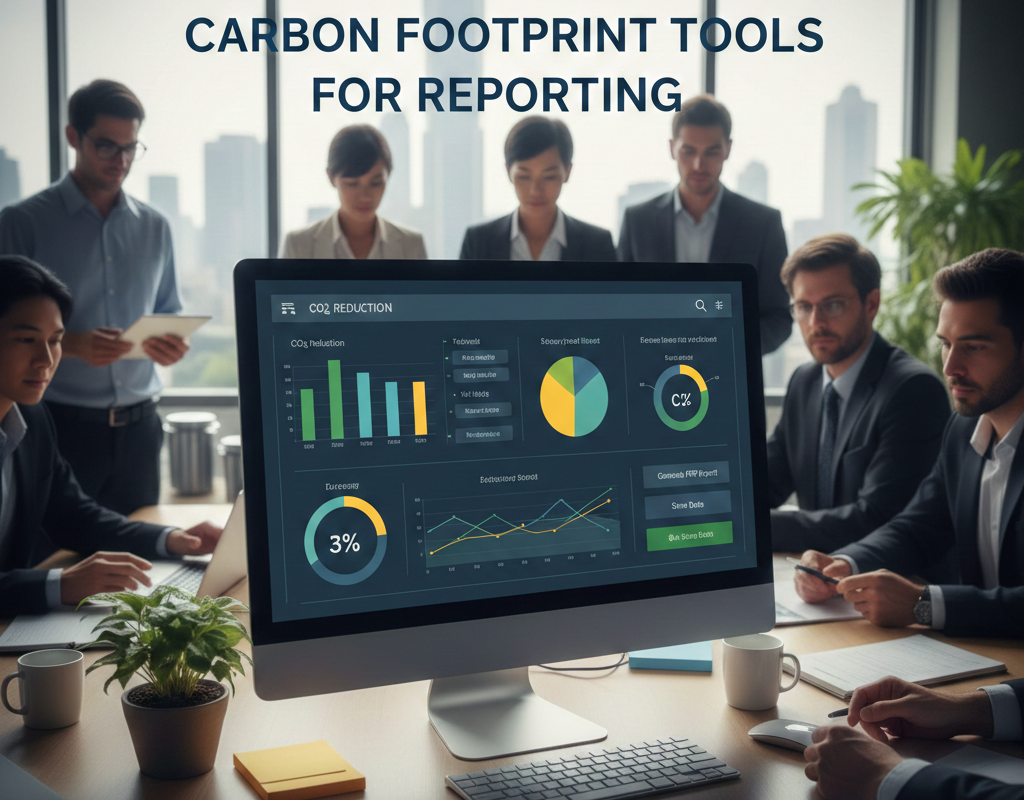
Carbon Footprint Tools for Reporting
Carbon Footprint Tools for Reporting
Businesses are facing mounting pressure to precisely measure, control, and report their carbon emissions as climate action picks up speed in international marketplaces. Transparent environmental reporting supported by verifiable data is now required by investors, authorities, consumers, and supply chain partners. Carbon footprint reporting solutions have become essential for businesses of all sizes in this changing sustainability environment.
Carbon reporting software and sustainability management systems are revolutionizing the way emissions are computed, monitored, and reported, from startups looking to establish green credibility to huge corporations aiming for net zero targets. This handbook examines the features, implementation tactics, legislative drivers, and expanding significance of carbon footprint reporting technologies as well as their contribution to long-term climate goals.

The Importance of Reporting Carbon Footprints in 2026
Accountability for climate change is now mandatory. Companies must contend with rising expectations brought on by:
- National climate policies and international climate agreements
- Sustainability indices and investors with an emphasis on ESG
- Decarbonization criteria for the supply chain
- Demand from consumers for brands that practice environmental responsibility
- Climate-related disclosures are required.
Credible climate action is based on the reporting of carbon footprints. It enables businesses to measure their greenhouse gas (GHG) emissions throughout value chains and activities. Sustainability initiatives lack quantifiable standards and audit-ready documentation in the absence of strong carbon accounting technologies.
What Are Reporting Carbon Footprint Tools?
Digital platforms for measuring, analyzing, managing, and reporting greenhouse gas emissions are known as carbon footprint tools. These programs use established approaches to transform activity data into carbon equivalents and combine environmental data from various sources.
They include enterprise-level carbon management systems with automated data integration, artificial intelligence (AI) analytics, and regulatory reporting modules, as well as simple carbon footprint calculators for small enterprises.
Current carbon reporting instruments facilitate:
- Automated gathering of data
- Libraries of emission factors
- Consolidation across multiple locations
- Mapping the regulatory framework
- Verification assistance and audit trails
- Integration of carbon credits
- Alignment of ESG reporting
Essential Elements of Cutting-Edge Carbon Reporting Software
When assessing carbon accounting tools, organizations should search for the following features:
- Thorough Coverage of Scopes 1, 2, and 3
Scope 3 emissions, which frequently make up more than 70% of a company’s overall footprint, are calculated in depth by top sustainability reporting systems. Value chain transparency is improved via lifecycle assessment tools and supplier engagement modules.
- Business System Integration
ERP systems, energy management systems, procurement platforms, and Internet of Things sensors are all integrated with enterprise carbon reporting platforms. This guarantees precise and automated data flow.
- Real-Time Analytics and Dashboards
Sustainability teams may assess reduction performance against targets, identify hotspots, and monitor emissions trends with the help of visual dashboards.
- Assistance with Audit and Verification
Traceable paperwork is necessary for reporting carbon compliance. Prominent solutions offer third-party verification workflows, evidence archives, and data audit trails.
- Management of Carbon Credit and Offset
Nowadays, a lot of carbon footprint systems have carbon credit reporting features, which let businesses monitor offset transactions and guarantee openness in compliance or voluntary markets.
The Development of Platforms for ESG Reporting
Beyond voluntary disclosures, environmental, social, and governance (ESG) reporting has grown. Tools for reporting climate risk are becoming more and more necessary for financial institutions and regulators as part of larger ESG compliance.
Since climate risk has a direct impact on investor confidence, supply chain resilience, insurance costs, and asset valuations, carbon accounting techniques are becoming essential to ESG reporting platforms.
A comprehensive sustainability reporting environment is offered by integrated ESG compliance systems, which combine social indicators, governance measurements, and carbon footprint tracking.
Regulatory Factors Hastening the Adoption of Carbon Reporting
Many jurisdictions are requiring carbon reporting due to changes in global policy. Important motivators include:
- Mechanisms for pricing carbon and systems for exchanging emissions
- Required financial disclosures pertaining to climate change
- Regulations pertaining to supply chain due diligence
- Green procurement guidelines
- Mechanisms for border carbon adjustment
Without enterprise carbon reporting systems, businesses run the danger of fines for noncompliance, harm to their brand, and limited access to markets.
The advantages of using carbon footprinting tools
- Increased Precision of Data
Calculation errors are more likely to occur when spreadsheets are created by hand. Standardized procedures and automated emission factor updates are guaranteed by emissions tracking software.
- Increased Trust Among Investors
ESG scores are improved and investors with a focus on sustainability are drawn in by transparent carbon disclosure reporting.
- An edge over competitors
Businesses that show quantifiable progress toward decarbonization are rewarded with preferred supplier status and increased brand credibility.
- Efficiency in Operations
Carbon management systems lower operating costs by identifying resource waste and energy inefficiencies.
- Making Strategic Decisions
Long-term investments can be guided by decarbonization strategy tools and scenario modeling made possible by climate data.
In conclusion: Carbon Footprint Tools for Reporting
Reporting tools for carbon footprints are now essential components of contemporary corporate operations, not just optional sustainability extras. With the changing legal environment and the growing importance of climate accountability in corporate governance, carbon accounting techniques offer the basis for clear, reliable, and useful emissions reporting.
Organizations may precisely assess Scope 1, Scope 2, and Scope 3 emissions, comply with international regulations, confidently involve stakeholders, and develop strong decarbonization programs by utilizing sophisticated carbon management systems.
There must be quantifiable progress made in the shift to a low-carbon economy. Businesses may turn environmental responsibility from a compliance burden into a competitive advantage with the correct sustainability reporting tools.
Carbon Credit Price Explained Step by Step: Complete Guide to Carbon Credit Pricing in India
Carbon Credit Price Explained Step by Step: Complete Guide to Carbon Credit Pricing in India