
 Aksh
Aksh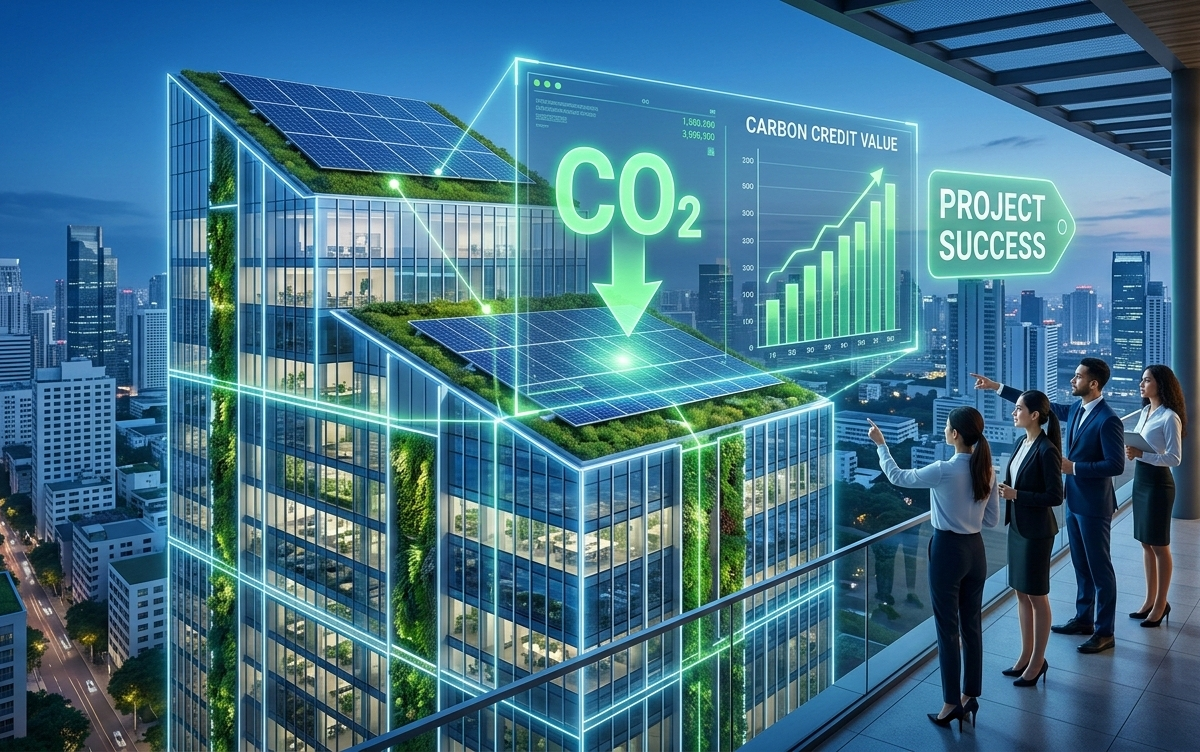
Green Building Success: Inspiring Carbon Credit Success
Green Building Success: Inspiring Carbon Credit Success
The green construction movement has become a significant force in the global pursuit of sustainability in the face of growing climatic issues. An amazing success story about carbon credits changing how buildings are planned, built, and run is at the center of this movement. By showcasing how carbon credit systems may speed environmental advancement and uncover financial benefits for developers, stakeholders, and communities alike, this green building success story is redefining sustainable construction.
The success of carbon credits has emerged as a key component of the global climate strategy, particularly in the real estate and construction industries. Carbon credit schemes are changing industrial standards and facilitating a more sustainable future by rewarding eco-efficient actions and encouraging fewer carbon emissions.

Comprehending Green Building Carbon Credits
One metric ton of carbon dioxide or other comparable greenhouse gasses can be reduced or eliminated via carbon credits, which are tradable certifications. By offering a financial means of rewarding emission-reduction initiatives, they act as a link between conventional development methods and sustainable innovation. When construction projects show quantifiable reductions in carbon emissions through design decisions, material selection, energy systems, and operational efficiency, they are awarded carbon credits in the green building industry.
Green building and carbon credit achievements have become increasingly popular, especially in areas where environmental effect and legal compliance are top priorities. Modern technologies like solar panels, high-performance insulation, passive heating and cooling systems, water recycling, and green roofs are encouraged by these frameworks.
The Importance of Green Buildings in the Climate Crisis
A large amount of the world’s carbon emissions are caused by buildings. The built environment has a significant environmental impact due to the energy used for heating, cooling, and lighting as well as the embodied carbon in building materials. In response, the green building movement has promoted creative architectural techniques that reduce this impact by integrating renewable energy sources, managing resources sustainably, and designing with energy efficiency.
The success of carbon credits reinforces these initiatives by offering concrete acknowledgment and recompense for accomplishments in green building. Developers can assist larger sustainability projects, help achieve climate mitigation targets, and partially offset their carbon footprints through the valuation of carbon credits.
Effects in the Real World: Highlights of Green Building Success Stories
Carbon credit integration has benefited numerous green construction projects worldwide, improving stakeholder value and contributing quantifiably to sustainability goals. These success stories highlight how carbon credit frameworks can drive material change, even in traditionally conservative industries like construction.
A prominent illustration is a sizable commercial complex that sought green building certifications and operational standards that matched strict environmental performance objectives. This project significantly reduced carbon emissions by using sophisticated HVAC technology, optimizing energy systems, and integrating a large number of renewable energy sources. These quantifiable improvements resulted in a significant quantity of carbon credits, offering a profitable return that further supported sustainability improvements.
Benefits of Carbon Credits for Investors and Developers
Carbon credit schemes provide developers and investors that are dedicated to green building excellence significant financial benefits in addition to environmental benefits. The income stream from the sale or use of carbon credits in regulated or voluntary markets is a major advantage of carbon credit success. This financial component boosts the value of green assets, promotes sustainable investment portfolios, and incentivizes innovative design.
Green building success through carbon credits enhances market competitiveness in addition to providing immediate financial rewards. Developers with carbon credit credentials draw in partners, investors, and tenants who care about the environment and want to support sustainable practices. Long-term stakeholder connections are strengthened, demand is increased, and brand reputation is improved by such acknowledgment.
Improving the Environment with Green Building Innovations
The technology and design concepts that lower carbon emissions throughout the building lifespan are at the heart of every green building success story. These developments hint to all-encompassing systems that incorporate sustainability from planning to operation, going far beyond straightforward energy savings.
Energy consumption is greatly decreased by energy-efficient designs, such as high-performance insulation and optimal building orientation. Installing solar and wind energy reduces dependency on fossil fuels by producing clean power. Greenhouse gas emissions from construction and manufacturing are decreased by advanced materials with low embodied carbon. Water-efficient systems reduce energy intensity for distribution and treatment while conserving resources.
Carbon Credit Frameworks: International Best Practices and Standards
Strong frameworks and standards that guarantee transparency, legitimacy, and impact are a major aspect in the success of carbon credit programs in green building. International protocols like third-party verification procedures, registry systems that monitor the issuance and retirement of carbon credits, and standard methods for estimating emissions reductions are examples of these frameworks.
Carbon credits are guaranteed to reflect actual, further, and long-lasting emissions reductions when these international criteria are applied to green building projects. At the core of every green construction success story is this integrity, which is crucial for the carbon markets’ long-term reputation.
Regulatory Environment and Policy Support
Scaling the impact of carbon credits for the success of green buildings is mostly dependent on government policies and regulatory frameworks. Building performance requirements, carbon pricing schemes, and renewable energy incentives are examples of progressive policy tools that foster broad adoption.
Developers are further encouraged to pursue carbon credit opportunities in areas with required carbon reporting and emissions reduction targets. Governments can promote investment in green infrastructure and expedite decarbonization initiatives by coordinating policy priorities with sustainable construction objectives. Public procurement standards that favor low-carbon buildings, technical assistance, and capacity building are further forms of policy support.
Conclusion: Green Building Success: Inspiring Carbon Credit Success
A compelling vision for a more resilient, economic, and sustainable built environment is presented by the green construction success story driven by carbon payment systems. Carbon credits are facilitating revolutionary change, promoting sustainable innovation, and supporting the global climate agenda by tying carbon reduction targets to financial incentives.
Green buildings powered by carbon credit achievement are raising the bar for environmental responsibility with quantifiable carbon emission reductions and improved financial performance. This success story encourages legislative support, spurs industry action, and shows how strategic partnerships may result in long-term advantages for both people and the environment.