
 Aksh
Aksh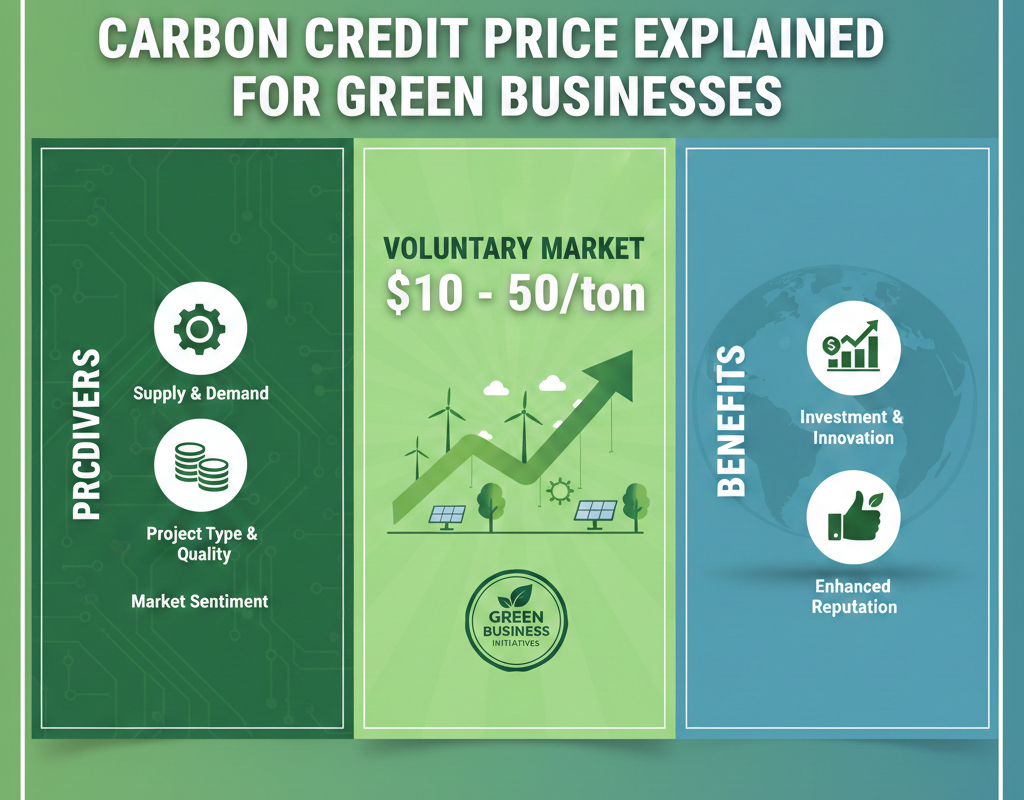
Carbon Credit Price Explained for Green Businesses
Carbon Credit Price Explained for Green Businesses
As of 2026, carbon credits rank among the most crucial elements of corporate sustainability plans across the globe. Understanding the dynamics of carbon credit prices has evolved from a specialized environmental issue to a crucial financial and strategic factor for green enterprises. In-depth information on how carbon credit prices are set, what influences them, how various markets operate, and what green firms need to know to plan, budget, and expand sustainably is provided in this comprehensive reference.

-
Overview: The Significance of Carbon Credit Prices for Eco-Friendly Companies
One metric ton of carbon dioxide equivalent (CO2e), or carbon credits, is a quantifiable unit of greenhouse gas reduction. Organizations utilize carbon credits to offset emissions, show environmental leadership, and comply with regulations in both voluntary and compliance markets.
The cost of carbon credits is more than just a figure for eco-friendly companies; it affects:
- The price of following rules
- Setting aside money for sustainability projects
- ROI (return on investment) for carbon-reduction initiatives
- Brand positioning and public trust
- Long-term risk management and financial planning
Businesses may spend more wisely in clean technologies, renewable energy projects, and emission reduction tactics when they have a better understanding of carbon credit prices.
-
Major Factors Affecting the Cost of Carbon Credits
A complicated combination of factors that fall into the following categories determine the price of carbon credits:
- Balance between supply and demand
Carbon prices fluctuate according to supply and demand, just like any other commodity. Prices typically increase when there are fewer sustainable initiatives and more commercial demand. On the other hand, prices may decrease if there are too many credits available.
- Rules and Regulations
Carbon pricing is significantly influenced by government policy. Carbon prices are usually higher in nations with stringent emissions regulations since there is less issuance and more robust enforcement.
- Expectations of the Market
International climate agreements, corporate sustainability commitments, and future policy changes all affect investor expectations, which in turn affect present pricing.
-
Examples of Carbon Prices in Important Markets
Although direct market connections are not included, it is crucial to comprehend actual pricing patterns. In 2025–2026:
- Strict emission limits have kept European compliance markets’ costs high.
- Prices on the voluntary market range greatly, from inexpensive credits for simple projects to premium rates for superior, multi-benefit programs.
- Pricing structures that take into account regional environmental concerns are being developed in emerging markets, such as those in Asia and Africa.
These disparate price points show why companies should investigate pricing norms and market conditions prior to acquiring credits.
-
Carbon Pricing and Carbon Tax: Important Distinctions
Although they are sometimes used interchangeably, carbon pricing schemes and carbon taxes are very different.
- The market-driven carbon price/credit market is where businesses purchase and exchange credits in accordance with compliance or voluntary obligations.
- A carbon tax is a fee levied by the government on emissions. Instead of letting market forces determine price, this tax establishes a fixed price per ton of CO2e emitted.
Compared to strict carbon taxes, carbon pricing through credits gives green enterprises flexibility and the possibility of cost savings.
-
How the Price of Carbon Credit Affects Green Companies
Prices for carbon credits have an impact on business choices in a number of crucial areas:
- Budgeting and financial planning
In order to include climate initiatives into their financial plans, businesses need to forecast future carbon costs.
- Investment in Strategic Sustainability
Instead of purchasing offsets, businesses may be compelled by rising carbon pricing to invest in clean technologies, energy efficiency, and internal emission reductions.
- An edge over competitors
Businesses can convey more robust sustainability pledges and increase stakeholder trust by proactively managing carbon price risk.
-
How Companies Should Project the Price of Carbon Credits
Although it can be difficult, it is feasible to forecast carbon credit prices with the correct methodology:
- Keep an eye on regulatory modifications
Pricing is influenced by the frequent changes made by governments to emissions limits, regulations, and enforcement schedules.
- Monitor Market Engagement
Particularly in voluntary markets, more buyers usually translate into price pressure.
- Project Pipeline Analysis
It is easier to predict future supply and pricing trends when one is aware of the quantity and nature of upcoming carbon projects.
- Put Scenario Planning to Use
In order to be ready for market volatility, businesses frequently estimate various pricing scenarios (low, medium, and high).
-
Prospects for the Future: Carbon Credit Prices in 2026 and Later
According to experts, the carbon credit markets will keep changing, with a number of themes emerging:
- Increased conformity to international pricing norms
- Demand from corporate net-zero pledges has increased.
- Harmonization of policies across regions
- Expansion of carbon registries and digital platforms
- Potential incorporation with derivatives and other financial instruments
Maintaining an active presence in changing marketplaces is crucial for long-term strategy for green enterprises.
In conclusion: Carbon Credit Price Explained for Green Businesses
For green enterprises looking to balance sustainability objectives with financial realities, carbon credit rates are a crucial consideration. Businesses may improve their climate leadership by knowing how prices are set, what influences market behavior, how to predict future trends, and how to include carbon pricing into business strategy.
Effective sustainability plans will be determined by well-informed decisions regarding carbon credit pricing as carbon markets continue to develop in 2026. In an increasingly carbon-conscious world, green businesses that are well-prepared with knowledge, strategy, and foresight can not only effectively manage costs but also uncover competitive advantages.
2 Comments