
 Aksh
Aksh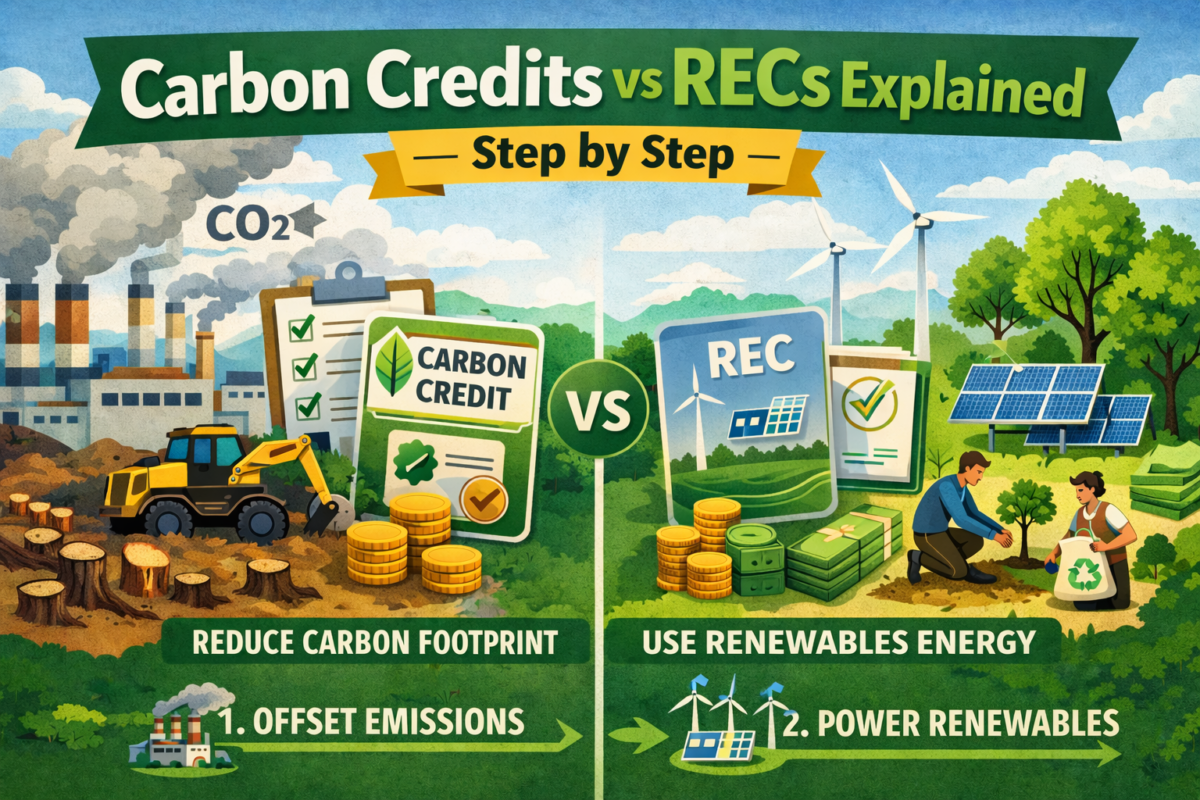
Step-by-Step Insights into Carbon Credits and RECs
Step-by-Step Insights into Carbon Credits and RECs
Businesses, governments, and individuals are increasingly looking at ways to lower carbon footprints and engage in sustainable practices as part of the worldwide effort to combat climate change. Carbon credits and renewable energy certificates (RECs) are two of the most talked-about tools. Although they are both tools for encouraging environmental responsibility, they have different functions in the carbon markets and renewable energy industries. Businesses and individuals can better grasp their role in attaining carbon neutrality and promoting renewable energy efforts in India by reading this article, which breaks down the distinctions step-by-step.

Carbon Credits: What Are They?
One metric ton of carbon dioxide (CO2) or a comparable greenhouse gas (GHG) that has been cut, eliminated, or avoided through verifiable programs is represented by a carbon credit. Companies or nations can satisfy mandated emission reduction objectives or voluntarily offset their emissions by using carbon credits, which are a component of carbon trading markets.
Carbon Credit Types
- Compliance carbon credits are used by businesses operating in regulated markets to fulfill legally required emission reduction goals.
- Purchased by businesses or people that wish to voluntarily offset their emissions, voluntary carbon credits are frequently used to improve brand image or corporate social responsibility.
Renewable Energy Certificates (RECs): What Are They?
Tradable certificates known as Renewable Energy Certificates (RECs) attest to the fact that one megawatt-hour (MWh) of electricity was produced using renewable energy sources such as hydro, wind, or solar. Even if an organization is unable to physically consume electricity produced from renewable sources at their location, they can still claim renewable energy usage through RECs.
REC types in India
- Certificates for electricity produced by solar power plants are known as solar RECs.
- RECs for wind, biomass, small hydro, and other renewable energy sources are known as non-solar RECs.
Detailed Procedure: The Creation of Carbon Credits
- Project Identification: Initiatives that have the potential to reduce carbon emissions include wind farms, solar power plants, and forest preservation.
- Baseline Assessment: To determine emissions that would have happened in the absence of the project, a baseline is set.
- Monitoring & Verification: Emissions reductions are tracked and confirmed by other organizations.
- Credit Issuance: Carbon credits, which are equivalent to one ton of CO2e reduction, are created from verified reductions.
- Trading & Retirement: Buyers purchase credits. Credits are withdrawn to avoid reuse after they have been used to offset emissions.
This methodical procedure guarantees that carbon credits reflect real, extra, and verifiable reductions in emissions.
Detailed Procedure: How RECs Are Produced
- Energy Generation: Renewable energy sources including sun, wind, and biomass are used to generate electricity.
- Metering: Accurate measurements are made of the output of renewable energy.
- Certificate Issuance: For every MWh of renewable electricity, regulatory bodies or trading platforms issue RECs.
- Trading & Compliance: Businesses buy RECs to meet voluntary targets or requirements related to renewable energy.
- Claim & Retirement: To prevent environmental benefits from being tallied twice, RECs are retired after they have been claimed.
Even if an organization does not directly use renewable power, this technique enables them to demonstrate their use of renewable energy in a credible manner.
The advantages of carbon credits
- Environmental Impact: Support initiatives that cut or eliminate greenhouse gas emissions.
- Financial Incentives: By selling carbon credits, projects make money.
- Corporate Sustainability: Assists businesses in achieving carbon neutrality.
- Market Flexibility: International climate obligations are facilitated by the ability to exchange credits globally.
RECs’ advantages
Supports clean energy infrastructure and encourages renewable energy.
- Complying with regulations aids in fulfilling Renewable Purchase Obligations (RPOs).
- Brand Reputation: Shows dedication to sustainability and renewable energy.
- Cost Flexibility: RECs can be acquired by organizations without requiring a direct investment in renewable energy.
Future Prospects: India’s Carbon Credits and RECs
A strong future for carbon credits and renewable energy certificates is guaranteed by India’s pledge to achieve net-zero emissions by 2070 and the expansion of its renewable energy infrastructure.
- Businesses will have the opportunity to offset emissions globally as voluntary carbon markets expand.
- Growing the production of renewable energy will improve RECs’ availability and legitimacy.
- Blockchain-based verification technology developments could increase transparency and lower fraud in both marketplaces.
In conclusion: Step-by-Step Insights into Carbon Credits and RECs
Businesses, governments, and individuals pursuing sustainability must comprehend the distinction between carbon credits and RECs. RECs emphasize the use of renewable energy, whereas carbon credits concentrate on reducing emissions. The two forces work in tandem to propel India’s shift to a low-carbon economy.
Organizations in India can attain carbon neutrality, improve their sustainability credentials, and support global climate goals by implementing a hybrid plan that incorporates both carbon credits and RECs.
Indian companies may both meet regulatory requirements and contribute significantly to the creation of a cleaner, greener future by making strategic investments in carbon credits and RECs.
Ultimate Carbon Credit Glossary – Terms & Definitions Explained Fully
Ultimate Carbon Credit Glossary – Terms & Definitions Explained Fully