
 Aksh
Aksh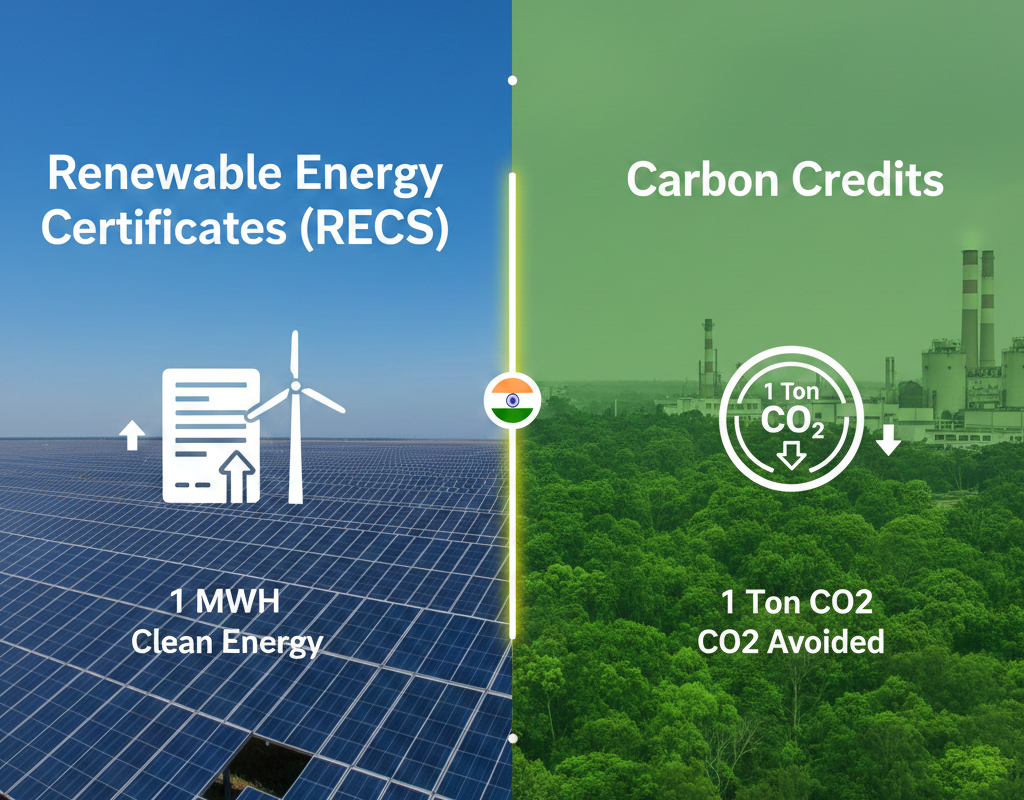
Exploring Carbon Credits vs RECs for Beginners in India
Exploring Carbon Credits vs RECs for Beginners in India
India has become a major force in environmental sustainability and renewable energy development in recent years. Carbon credits and renewable energy certificates (RECs) are two phrases that are commonly used in talks as companies, industries, and individuals become more aware of their carbon footprints. Although they both seek to lessen their negative effects on the environment and advance renewable energy, they operate differently and have different goals. The distinctions, advantages, and real-world uses of carbon credits and renewable energy certificates (RECs) in India are explained in this article in an easy-to-read manner.

Carbon Credits: What Are They?
A market-based tool for lowering greenhouse gas (GHG) emissions is carbon credits. The removal or decrease of one metric ton of carbon dioxide (CO2) or other comparable greenhouse gases from the atmosphere is represented by one carbon credit. Because these credits can be purchased, traded, or sold, businesses and organizations have a financial incentive to reduce their carbon emissions.
International guidelines like the Kyoto Protocol’s Clean Development Mechanism (CDM) and national programs promoting sustainable development regulate carbon credits in India. Installations of renewable energy, energy efficiency initiatives, reforestation, and waste management projects are some examples of projects that can produce carbon credits.
Renewable Energy Certificates (RECs): What Are They?
Renewable energy certificates (RECs) seek to encourage the production of renewable energy, whereas carbon credits concentrate on reducing greenhouse gas emissions. One megawatt-hour (MWh) of electricity produced from a renewable energy source, such as solar, wind, or biomass, and supplied into the grid is demonstrated by RECs.
RECs are a market-based tool that promotes the growth of renewable energy in India. They make it possible for power users—especially companies and industries—to fulfill their renewable purchase obligations (RPOs) without producing renewable energy on their own.
Carbon Credit Benefits in India
In India, carbon credits benefit companies and the environment in a number of ways.
- Incentives for Emission Reduction: Businesses have financial incentives to lessen their carbon impact.
- Revenue Generation: By selling carbon credits, sustainable initiatives and renewable energy can bring in extra cash.
- International Recognition: By taking part in carbon markets, Indian businesses establish credibility and conform to global environmental norms.
- Support for Climate Goals: India’s pledge to the Paris Agreement and its objective of reaching net-zero emissions by 2070 are both aided by carbon credits.
The advantages of RECs in India
RECs also have a lot to offer businesses and the renewable energy industry as a whole.
- RPO compliance: RECs assist businesses in fulfilling government requirements for renewable energy.
- Flexibility in Renewable Sourcing: Businesses don’t need to build their own renewable power plants to meet their renewable energy commitments.
- Encourage Renewable Growth: By providing financial support to producers of renewable energy, REC purchases hasten India’s shift to clean energy.
- Green branding: Businesses that use RECs can show stakeholders and consumers how committed they are to sustainability.
India’s REC Market
The Renewable Energy Certificate Mechanism governs the Indian REC market, which is overseen by the Central Electricity Regulatory Commission (CERC). This market assists businesses in meeting their renewable energy commitments, particularly in states where it can be difficult to acquire renewable energy directly.
- REC types
- Solar RECs are awarded for solar-powered electricity.
Electricity produced by other renewable sources, such as wind, biomass, and small hydro, is eligible for non-solar renewable energy certificates (RECs).
RECs’ market price varies according to supply and demand. Companies can promote the expansion of renewable energy infrastructure by purchasing RECs through power exchanges in order to satisfy their RPO targets.
How Novices in India Can Get Started with RECs and Carbon Credits?
Here is a straightforward approach for novices wishing to get into India’s carbon and renewable energy markets:
- Recognize Your Carbon Footprint: Use online calculators or consulting firms to evaluate your personal or corporate emissions.
- Establish Sustainability Objectives: Choose if you want to concentrate on renewable energy compliance, carbon offsetting, or both.
- Select the Correct Market: Find REC choices or carbon credit initiatives that fit your goals.
- Verify Authenticity: Make sure RECs are registered with CERC and carbon credits are certified (CDM or VCU).
- Track Progress: To preserve transparency and meet sustainability goals, keep a close eye on your offsetting and renewable energy compliance on a frequent basis.
In conclusion: Exploring Carbon Credits vs RECs for Beginners in India
In conclusion, RECs and carbon credits are both essential to India’s enviromental sustainability efforts. RECs are intended to encourage the production of renewable energy, whereas carbon credits are primarily focused on lowering greenhouse gas emissions. Beginners, companies, and individuals may all make significant contributions to India’s clean energy transition and climate goals by being aware of these tools, their variations, and their uses.
The first step towards responsible environmental action and compliance in India for anyone new to sustainability initiatives is to have a thorough understanding of carbon credits vs. RECs.
Analyst’s Guide to Carbon Credits: Comprehensive Glossary & Market Terms
Analyst’s Guide to Carbon Credits: Comprehensive Glossary & Market Terms
2 Comments