
 Aksh
Aksh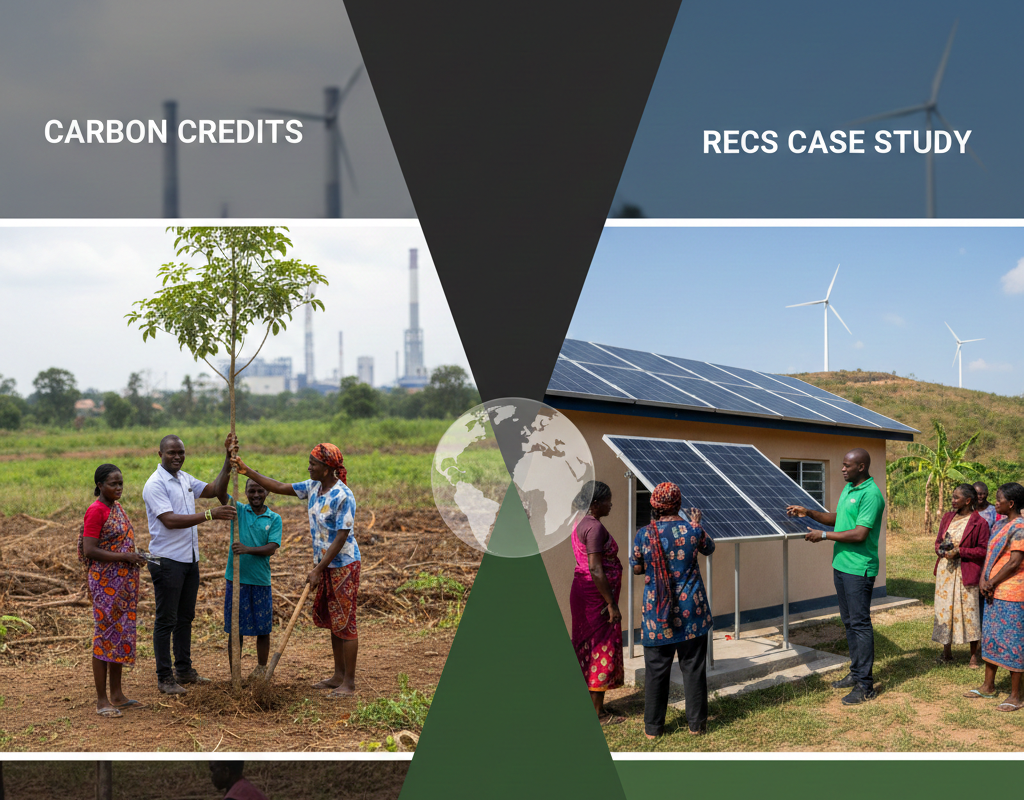
How NGOs Are Leveraging Carbon Credits and RECs?
How NGOs Are Leveraging Carbon Credits and RECs?
Carbon Credits and Renewable Energy Certificates (RECs) have become key decarbonization tools in the quickly changing world of climate finance and environmental policy. Though they function differently and have different goals, both tools are essential for lowering greenhouse gas emissions and advancing sustainable development. Understanding these distinctions is essential for local environmental NGOs to create successful projects, secure funding, and provide quantifiable climate benefits.
Using actual implementation experience, community outcomes, environmental integrity, and policy consequences, this comprehensive NGO case study compares and contrasts carbon credits and RECs. Readers will acquire strategic insights from this analysis on how to use these tools to advance climate action and promote the use of renewable energy.

Overview of RECs and Carbon Credits
It’s crucial to clarify the two mechanisms at the center of the conversation before looking at the main case study:
The decrease or removal of one metric ton of carbon dioxide equivalent (CO2e) from the atmosphere is represented via tradable certificates known as carbon credits. Verified emissions reduction initiatives, such as methane capture at landfills, reforestation, or renewable energy installations that replace fossil fuel generation, are the source of credits. NGOs frequently take part as accredited auditors, community implementers, or project developers.
One megawatt-hour (MWh) of electricity produced by renewable energy sources like wind, solar, biomass, or hydro is attested by a Renewable Energy Certificate (REC). They are a voluntary and compliance-based market instrument intended to boost demand for sustainable energy.
Why Nonprofits Must Know the Difference Between Carbon Credits and RECs?
Environmental NGOs often operate at the nexus of institutional involvement, community development, and climate mitigation. A project’s success, scalability, financial sustainability, and long-term impact can all be determined by selecting the appropriate framework, such as carbon credits vs RECs.
NGOs need clarity for the following main reasons:
- Funding and Resource Allocation: By selling credits, carbon credit initiatives can make money. RECs can generate additional revenue streams for renewable power plants or be combined with energy supply agreements.
- Benefits to the Community and Ecosystem: While RECs typically concentrate on energy markets and infrastructure, carbon mitigation initiatives frequently incorporate social co-benefits including job development, local empowerment, and biodiversity preservation.
- Regulatory and Compliance Alignment: While carbon credits may be in line with international climate frameworks, voluntary markets, or national carbon pricing mechanisms, some regions employ RECs to meet renewable portfolio standards.
An NGO viewpoint on the effectiveness of these tools in practical settings is offered by this case study.
Background of the Case Study: GreenEarth Action Foundation
In order to conduct this research, we looked at the GreenEarth Action Foundation (GAF), a medium-sized environmental non-governmental organization that ran two concurrent initiatives in semi-urban and rural areas:
- A carbon credit program built on methane capture and afforestation projects led by the community.
- Solar micro-grids and clean energy access as part of a renewable energy deployment project connected to REC.
GAF was able to compare the results, stakeholder reactions, financial returns, and scalability of work driven by carbon credits versus REC-facilitated renewable energy expansion thanks to the dual design.
Environmental Impact: Comparing Qualitative and Quantitative Approaches
- Emissions Reduction and Carbon Credits
Measurable climate benefits were obtained from the carbon credit project:
- Verified CO2e reduction by methane avoidance and sequestration.
- Participation in national climate commitments (NDCs).
- Increased biodiversity as a result of afforestation with native species.
Credibility in reporting climate effect and environmental integrity were guaranteed by the quantification procedure.
- Carbon Avoidance and Renewable Energy
RECs contributed in the following ways, even though they did not directly measure emission reductions:
- Dispensing with electricity generating based on fossil fuels
- In favor of grid decarbonization
- Increasing rural communities’ stability and access to energy
Although the energy avoidance impact was real, more modeling was needed to determine precise emissions savings than just issuing RECs.
Social and Community Results
How climate tools impact local communities is a key concern for NGOs.
- Benefits of Carbon Credit for the Community
- Creation of jobs in maintenance, MRV support, and tree planting positions.
- Improvement of skills in sustainable forestry methods.
- Improved health as a result of cleaner cookstoves and less indoor pollution.
- Empowerment of neighborhood cooperatives and women’s organizations.
- RECs and Empowerment of the Community
- Increased availability of dependable electricity stimulated the economy.
- Health, education, and quality of life were all enhanced by solar household systems.
- Local capacity was increased through technical training on renewable systems.
Although both programs had positive social effects, their main objectives were different: the REC initiative prioritized electricity access and infrastructure empowerment, while the carbon credit project focused on livelihoods and ecosystem stewardship.
Implications for Policy and Strategic Perspectives
This NGO case study provides important policy-related insights:
- Policies that acknowledge both carbon credits and RECs can offer complementing incentives, boosting the effectiveness of climate action overall. This is why integrated climate policy is essential.
- Standards of Quality Matter: Credibility is guaranteed and greenwashing is avoided by establishing strong quality standards for both instruments.
- Success Is Driven by Local Context: Choosing the right mechanisms requires an understanding of market preparedness, energy infrastructure, and community requirements.
- The most effective finance models are blended ones, which lower risk and speed up project deployment by combining carbon credits with REC-linked financing.
- Building capacity is crucial. Nonprofits and community partners need to have the technical know-how to oversee, report, and manage projects.
A Conclusion: How NGOs Are Leveraging Carbon Credits and RECs?
This NGO case study emphasizes that choosing between carbon credits and RECs is a strategic choice that is based on project goals, stakeholders, and anticipated results rather than being an either/or choice. Both tools offer beneficial routes to sustainable growth and decarbonization.
By utilizing each other’s advantages, NGOs can:
- Optimize the effects on the environment
- Boost the well-being of the community
- Make financial viability stronger
- Support more general climate goals
For significant, long-lasting impact in the face of growing climate concerns, developing innovative mixed techniques and improving carbon market strategies will be crucial.