
 Aksh
Aksh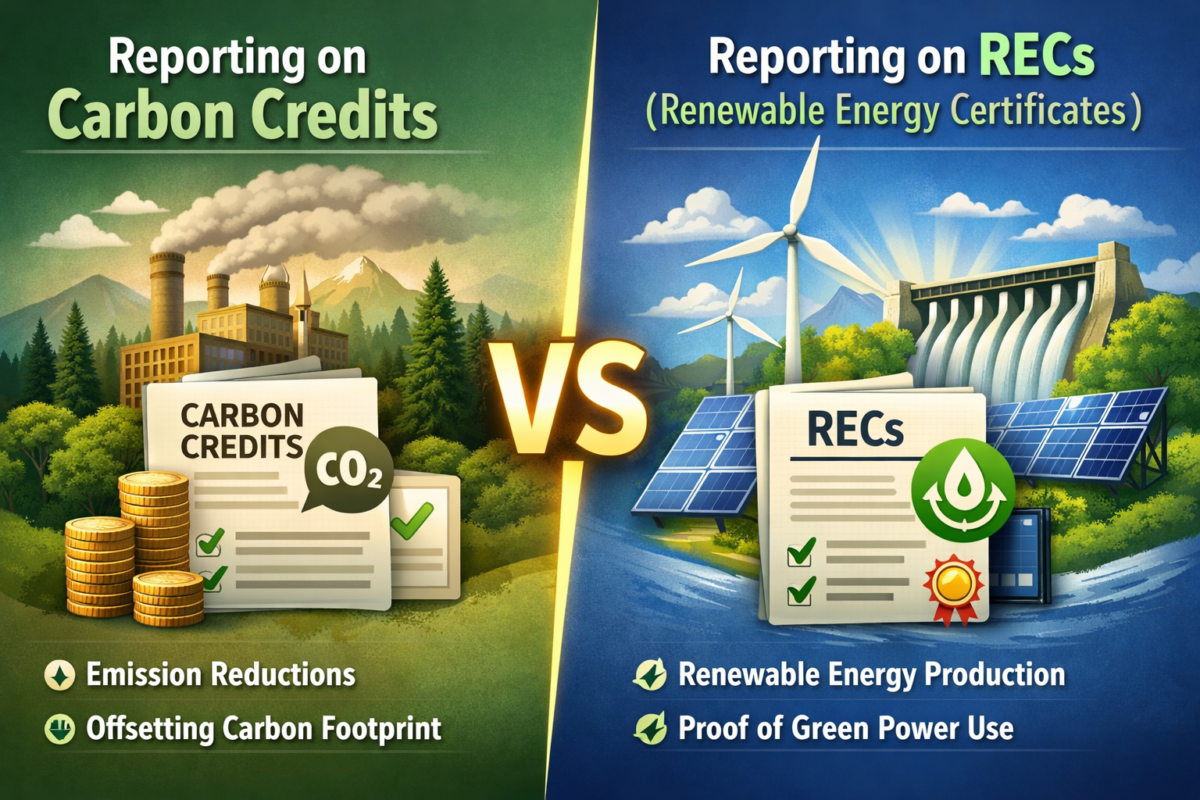
Corporate Sustainability Case Study
Corporate Sustainability Case Study
In a time of climate urgency and sustainability pledges, businesses are looking for ways to lessen their environmental effect and speed up the decarbonization process. Carbon Credits and Renewable Energy Certificates (RECs) are two key tools in this change. Although these instruments are essential to environmental reporting, business climate initiatives, and regulatory compliance, they have various functions and produce diverse results.
Through the lenses of strategy, accounting, real-world business use cases, advantages, difficulties, and best practices for adoption, this comprehensive corporate case study compares Carbon Credits vs. RECs, particularly for companies operating in India and around the world. The report demonstrates how forward-thinking businesses are using these tools to optimize their environmental effect, improve their reputation, and promote sustainable growth.

Comprehending Carbon Credits
- Carbon Credits: What Are They?
A tradable permit or certificate that permits an entity to emit one metric ton of carbon dioxide equivalent (CO₂e) is known as a carbon credit. Projects that lower, eliminate, or prevent greenhouse gas emissions through methane collection, renewable energy installations, reforestation, and energy efficiency upgrades are eligible to get carbon credits.
By purchasing carbon credits, a company can contribute to larger climate mitigation efforts by offsetting emissions that it is unable to directly eliminate.
- The Operation of Carbon Credits in Business
Verified emissions reductions are implemented via a project (such as a forest restoration campaign).
- One carbon credit is produced for each confirmed decrease.
- Companies buy these credits to make up for their emissions.
- In order to prevent resale, credits are retired on the buyer’s behalf.
Carbon credits are frequently exchanged in voluntary carbon markets and represent actual emissions avoidance or reductions.
Understanding Certificates of Renewable Energy (RECs)
- RECs: What Are They?
One megawatt-hour (MWh) of electricity produced by a renewable energy source, such as solar, wind, hydro, or biomass, is represented by a Renewable Energy Certificate (REC). RECs allow organizations to claim the associated environmental benefit by proving that renewable generating has taken place, even though electricity physically flows into the system.
Separate from the actual production of electricity, RECs are a market-based tool to demonstrate the use of renewable energy.
- How RECs Operate in Companies
- For every MWh of electricity supplied to the grid, renewable energy generators generate RECs.
- Businesses can match their electricity usage with renewable generation by purchasing RECs.
- In order to claim the environmental benefit and prevent double counting, RECs are retired.
Advantages for Businesses
- Improved Climate Leadership
Businesses improve their sustainable positioning with consumers, investors, and regulators by incorporating carbon credits and RECs.
- ESG Disclosure and Investment Attraction
Green funding and investor trust are enhanced by quantifiable climate activities that support Environmental, Social, and Governance (ESG) disclosures.
- Resilience and Risk Mitigation
Resilience against changes in regulations, carbon pricing schemes, and energy transition hazards is increased by proactive climate policies.
- Innovation and Effective Operations
Purchasing renewable energy in tandem with carbon control promotes both operational efficiency and clean technology innovation.
Top Techniques for Businesses
- Adhere to Accepted Standards
Respect credible carbon credit verification processes and renewable claim verified REC registries.
- Give Direct Emissions Reductions Top Priority
In accordance with the “reduce-before-offset” philosophy, maximize internal energy efficiency and energy transition before offsets.
- Continue to Report Transparently
In accordance with international guidelines, include information on carbon credits and REC retirements in sustainability reports.
- Comply with Roadmaps for Net Zero
Include RECs and carbon credits in long-term net zero plans with specific short-term goals.
- Make use of Integrated Climate Governance
Integrate risk and corporate governance frameworks with carbon management.
Consequences for the Indian Business Environment
India offers both special chances and difficulties.
- Expanding market for renewable energy.
- New ecosystems for carbon credits.
- Both national and international climate pledges are impacted by regulatory revisions.
Indian businesses can use RECs and carbon credits to:
- Boost your credentials for sustainability.
- Support the country’s clean energy objectives.
- Make global supply chains more competitive.
In conclusion: Corporate Sustainability Case Study
The Carbon Credits vs. RECs comparative case study shows that while neither tool can address all climate goals on its own, when combined, they provide a potent strategic arsenal for business climate leadership. Businesses can accomplish significant environmental impact, boost reputational value, and speed up decarbonization by carefully incorporating carbon credits and RECs into their sustainability frameworks.
For Indian and international businesses looking to manage complicated climate issues while producing long-term profit, this corporate case study emphasizes the significance of using carbon credits and renewable energy certifications in a transparent, credible, and strategic manner.
1 Comment