
 Aksh
Aksh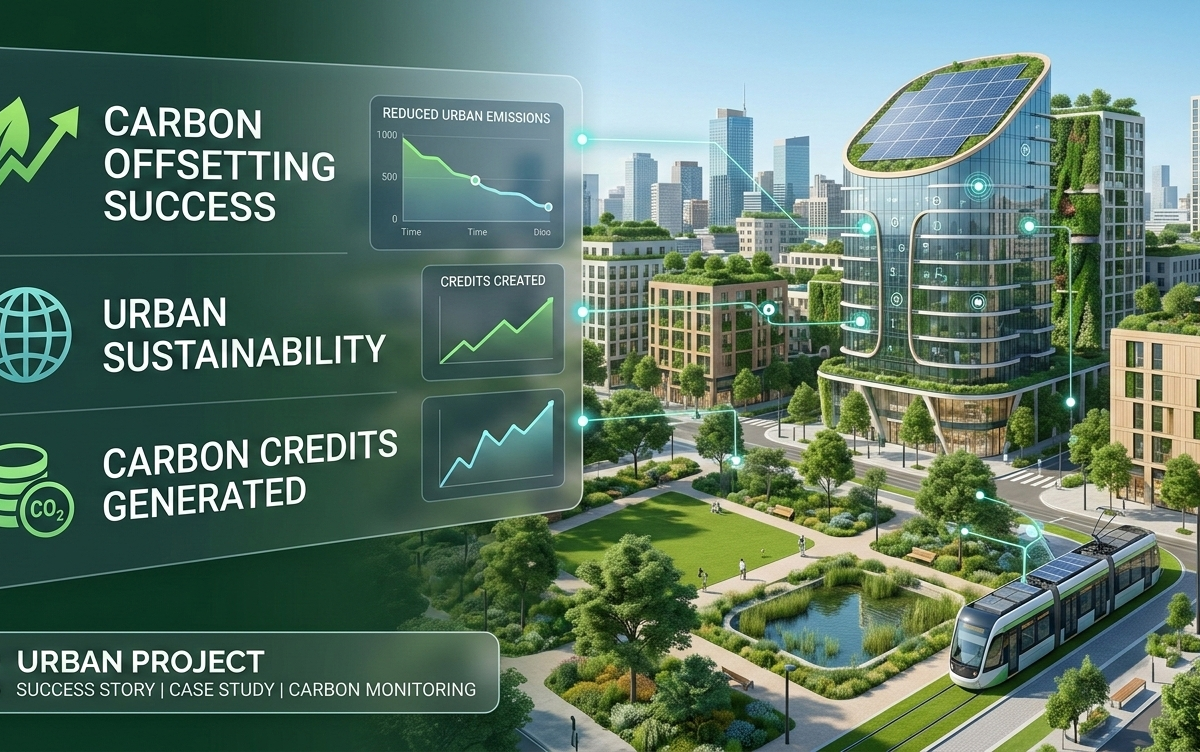
Urban Carbon Credit Success Story
Urban Carbon Credit Success Story
Overview
Urban areas around India have shown incredible success in implementing carbon credit initiatives that not only lower greenhouse gas emissions but also provide socioeconomic advantages for nearby populations, marking a historic milestone for environmental sustainability and climate action. The narrative of how Indian cities incorporated carbon credit schemes into urban planning frameworks—turning obstacles into possibilities for sustainable urban development—is revealed in this news-style case study.
Initiatives centered on the adoption of renewable energy, waste management optimization, energy-efficient public services, and community-driven environmental participation have set the standard for urban carbon credit success stories across tier-2 cities and rising metropolises. In the context of India’s rapidly urbanizing terrain, this thorough research explores the tactics, results, and lessons that characterize this urban carbon credit success story.

India’s Urban Carbon Challenge
India’s urban areas are driving the country’s economic expansion while also contributing significantly to its carbon emissions. Complex sustainability difficulties are brought forth by dense population clusters, growing transportation networks, rapid industrialization, and rising energy demand. With more than half of India’s population expected to live in cities by 2030, there is an increased need for practical climate initiatives that can lower emissions without sacrificing urban wealth.
Municipal leaders, climate experts, and sustainability advocates banded together to use carbon credit mechanisms as tactical instruments that balance financial incentives with environmental goals after realizing this dual responsibility. Urban stakeholders can obtain credit for cutting emissions through carbon credit programs, which unlock financial value and allow gains to be reinvested in additional sustainability projects.
India’s Urban Carbon Credit Frameworks
Emission reductions are measured against predetermined baselines and converted into tradeable units in order for carbon credit schemes to function. Important industries including landfill gas capture, energy-efficient retrofits, public transportation electrification, and municipal renewable power generation are all eligible to accrue carbon credits in urban settings.
Numerous urban projects in India have embraced internationally accepted carbon accounting standards, making it possible to verify and certify reductions. In order to create project designs that meet local development needs and produce quantifiable results, municipal leaders worked with carbon credit specialists, sustainability consultants, and community partners.
Metro City Zero Emission Bus Program Case Study Highlight
A significant metropolitan transit project that converted the city’s fleet of public buses to electric vehicles with zero emissions is one of the most notable examples of urban carbon credit accomplishment. City planners started a systematic transition to electrification in response to ongoing air pollution and growing emissions from transportation.
Under the scheme, conventional diesel buses were to be replaced by electric ones, backed by infrastructure for charging stations and operational training for maintenance crews and drivers. The project created a reliable system to record pollution reductions over time by combining cutting-edge telematics and emission monitoring devices.
Community Waste-to-Energy Initiative: Ecological Approaches to Emissions Management
The implementation of a waste-to-energy facility in a mid-sized Indian city that transformed municipal solid waste into renewable power is another example of an urban success story. Instead of letting waste build up and produce methane emissions, a powerful greenhouse gas, the city installed a sophisticated biogas recovery system that captured landfill emissions and turned them into useful electricity.
In addition to lowering methane emissions, this creative strategy gave municipal facilities a reliable supply of renewable energy. The waste-to-energy system produced quantifiable greenhouse gas reductions that were accepted by international carbon accounting standards, earning it certification as a carbon credit project.
Solar Rooftop Project: Facilitating Distributed Clean Energy
India’s urban carbon credit success story continues to be fascinating, with rooftops serving as key locations for solar installations. Solar rooftop incentive programs were introduced by several municipal administrations for public institutions, commercial complexes, and residential structures.
Cities greatly decreased their reliance on grid electricity, which frequently uses fossil fuels, by encouraging the adoption of distributed clean energy. Smart monitoring systems that precisely monitored energy generation and took prevented carbon emissions into account were combined with solar arrays.
Property owners and local governments had an additional financial incentive to expand renewable installations thanks to the carbon credits produced by these solar projects. The proceeds from the sale of carbon credits were used to establish community-based renewable energy cooperatives and finance local sustainability initiatives, which encouraged greater involvement in climate action.
Smart Street Lighting: Environmental Impact and Efficiency Gains
Within the carbon credit ecosystem, smart street lighting installations have become another success story in urban areas where public safety and energy usage are crucial. Energy-efficient LED lighting managed by smart sensors and adaptive dimming technologies has supplanted traditional street lamps in cities.
This remodeling project improved nighttime visibility and urban safety while significantly reducing electricity use. These energy efficiency improvements resulted in emission reductions that qualified for carbon credits, which generated financial returns that financed more improvements to urban infrastructure.
Real-time data analytics made possible by the integration of smart technology gave municipal planners the ability to track performance, determine continuous emission reductions, and optimize patterns of energy use. This digital-enabled sustainability model demonstrated how carbon credit schemes and urban innovation combine to create quantifiable
Impact Scaling: Insights and Replication Routes
Cities throughout the country can learn a lot from the success stories of Indian urban carbon credit programs. Important takeaways include the significance of investing in robust measurement and verification methods, prioritizing community engagement from the outset of the project, and beginning with scalable pilot projects.
Replication pathways place a strong emphasis on utilizing data-driven decision-making, developing institutional frameworks that support long-term climate investments, and tailoring carbon credit techniques to local settings. Cities can create customized solutions that fit their particular urban possibilities and challenges by modifying tried-and-true models from peer success stories.
In conclusion: Urban Carbon Credit Success Story
The revolutionary potential of urban carbon credit schemes in Indian cities is highlighted by this thorough case study. Urban stakeholders accomplished quantifiable emission reductions and produced real benefits for communities through anything from electric buses and solar rooftops to waste-to-energy plants and smart lighting networks.
The success stories of urban carbon credit implementation show how to match financial incentives with sustainability goals, providing a scalable model for climate action that works in both developed and developing city contexts. In addition to addressing the climate crisis, Indian cities are setting the standard for how well-thought-out carbon credit programs may create resilient, sustainable, and affluent urban futures.