
 Aksh
Aksh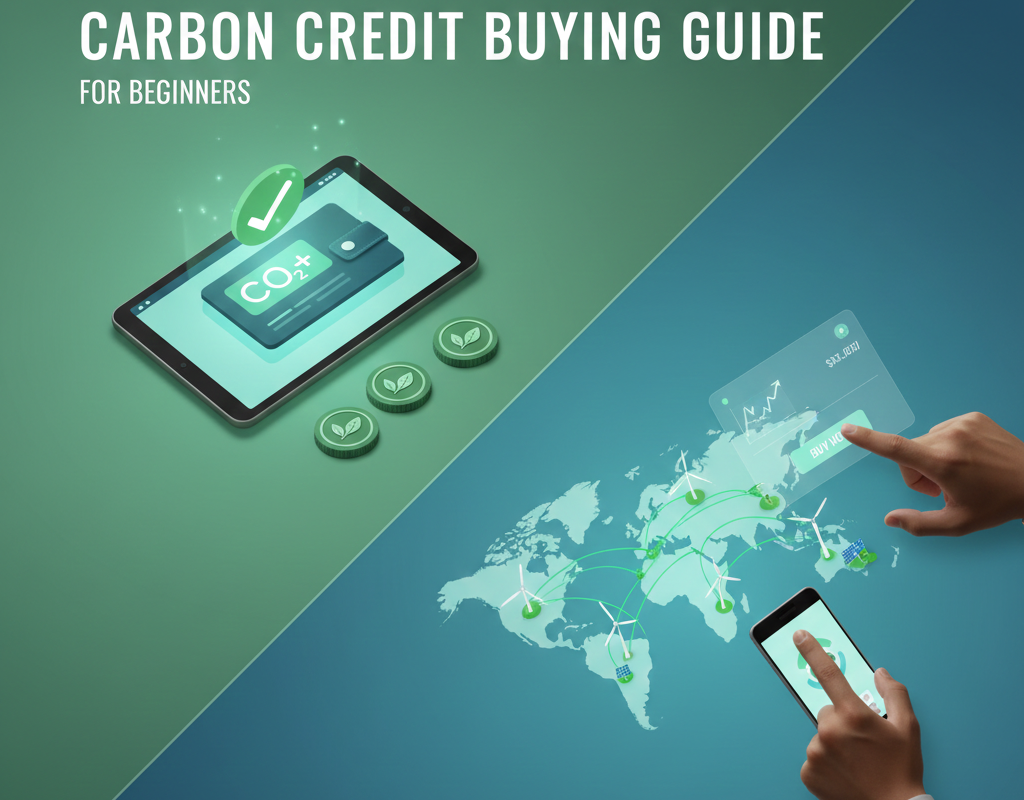
Carbon Credit Buying Guide for Beginners
Carbon Credit Buying Guide for Beginners
Carbon credits have become one of the most effective instruments for lowering greenhouse gas emissions as climate change picks up speed and sustainability gains international attention. Carbon credits are being used more and more by governments, businesses, and individuals to support ecologically conscious initiatives, reach carbon neutrality, and reduce emissions.
However, the world of carbon credits can seem complicated and perplexing to newcomers. First-time purchasers are frequently apprehensive due to concerns about pricing, verification, project types, dangers, and returns. This thorough guide on buying carbon credits is intended to make the process easier and provide newcomers a better understanding of how carbon credits operate, why they are important, and how to acquire them with assurance, particularly in the Indian context.

A Basic Understanding of Carbon Credits
One metric ton of carbon dioxide or its equivalent greenhouse gas is reduced or removed from the atmosphere to create a carbon credit. Certified projects including methane capture, forest conservation, renewable energy installations, and energy efficiency programs are used to achieve these reductions.
A project receives carbon credits when it successfully reduces or eliminates emissions. A market-based incentive to combat climate change can be established by selling these credits to consumers who wish to offset their own emissions.
To put it simply, carbon credits allow buyers to offset emissions they are unable to instantly eliminate while allowing emission reductions to occur where they are most cost-effective.
Explained: Types of Carbon Markets
Beginners need to comprehend the two primary carbon market types before purchasing carbon credits.
- Market for Compliance Carbon
International agreements and governments control compliance marketplaces. Emission caps must be met by businesses in regulated industries, and carbon credits are utilized to meet legal requirements.
Usually complicated, these marketplaces are inaccessible to small firms or individual consumers.
- Market for Voluntary Carbon
Businesses and people can voluntarily buy carbon credits through the voluntary carbon market to offset emissions, achieve ESG objectives, or improve sustainability credentials.
For novices, this market is more adaptable, reachable, and pertinent. The voluntary carbon market is where the majority of first-time purchasers take part.
Carbon Credit Costs: Essential Information for Novices
Prices for carbon credits vary greatly based on a number of factors:
- Type of project
- Standard of certification
- Where
- Co-benefits like the impact on society or biodiversity
- Supply and demand in the market
When compared to international markets, voluntary carbon credit prices in India are generally low to mid-range, which attracts buyers. However, novices should give quality, transparency, and long-term impact more weight than just price.
Advantages of Purchasing Carbon Credits
Beyond only offsetting emissions, carbon credits have other advantages.
- Impact on the Environment
Real projects that lower emissions, save ecosystems, and advance clean technologies are supported by the funds.
- Brand and Business Value
Being carbon neutral supports ESG commitments, draws in ethical customers, and improves a company’s reputation.
- Regulatory Preparedness
Early involvement enables companies to adjust and get ready for future compliance obligations as carbon policies change.
- Development of the Economy and Society
Numerous initiatives help rural areas, create jobs, and enhance health outcomes.
Hazards and Difficulties Novices Should Know About
Beginners need to be aware of the risks associated with carbon credits, notwithstanding their advantages.
- Greenwashing Issues
Credibility can be harmed and sustainability claims undermined by poor quality or unverifiable credits.
- The volatility of the market
Demand, supply, and policy changes can all affect the price of carbon credits.
- Risks of Permanence and Leakage
There are dangers associated with long-term carbon storage and emission displacement in certain projects, particularly those that are rooted on nature.
- Insufficient Knowledge
Education is crucial since novices may find it difficult to understand technical terms and the complexities of the market.
The ESG strategy and carbon credits
Emissions reductions are becoming more and more important in environmental, social, and governance frameworks. By facilitating quantifiable climate action and providing cash for sustainable development projects, carbon credits help achieve ESG goals.
Instead of depending only on offsets, businesses incorporating carbon credits into ESG strategies should provide openness, documentation, and integration with more comprehensive decarbonization plans.
India’s Place in the World Carbon Market
India’s enormous potential for renewable energy, extensive agricultural base, and increasing emphasis on sustainability are making it a significant player in the global carbon market.
India’s position as a buyer and provider of carbon credits is being strengthened by domestic policy, international collaboration, and private sector involvement. This gives newcomers the chance to get involved in a market that is impactful and changing quickly.
Conclusion: Carbon Credit Buying Guide for Beginners
Carbon credits are an effective supplementary measure, but they cannot replace cutting emissions at the source. Carbon credits provide a simple way for newcomers to get involved in ESG, sustainable investing, and climate action.
Beginners may help sustainable development in India and abroad while making significant contributions to climate mitigation by learning how carbon credits operate, selecting verified projects, and coordinating purchases with specific objectives.
Carbon credits are expected to become more significant in the worldwide shift to a low-carbon future as markets develop and awareness rises.
Carbon Credits Explained in 5 Minutes: A Complete Guide for India’s Green Economy
Carbon Credits Explained in 5 Minutes: A Complete Guide for India’s Green Economy
2 Comments