
 Aksh
Aksh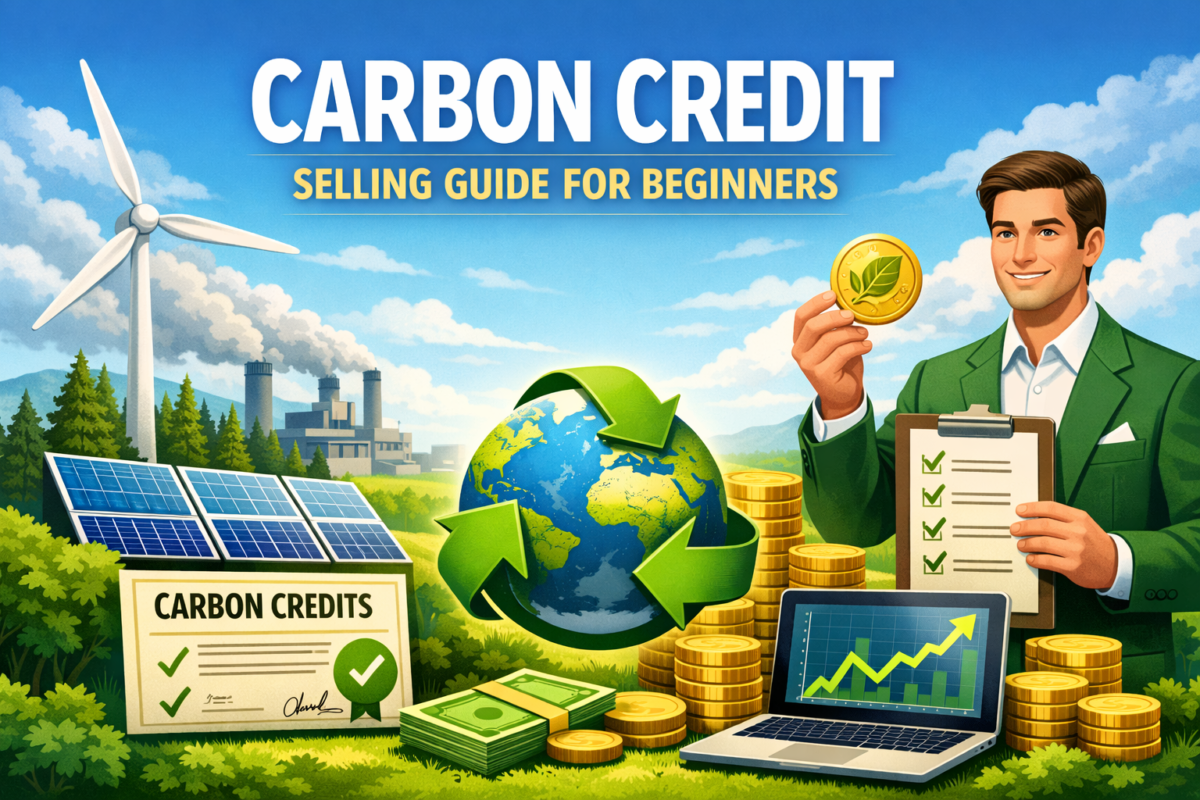
Carbon Credit Selling Guide for Beginners
Carbon Credit Selling Guide for Beginners
Carbon credits have become a potent instrument to lower greenhouse gas emissions while generating new revenue streams as climate change continues to dominate international debates. The idea of selling carbon credits may seem complicated to newcomers, but with the correct direction, anyone may successfully engage in the carbon market, including farms, individuals, startups, and companies.
Everything you need to know is covered in this beginner’s guide to selling carbon credits, from what they are to how to create, validate, and sell them successfully and legally. This guide offers a straightforward and useful road map, regardless of whether you are investigating sustainability or seeking a new source of income.

Carbon Credits: What Are They?
One metric ton of carbon dioxide or its equivalent greenhouse gas is reduced or removed from the atmosphere to create a carbon credit. These decreases are made possible by eco-friendly initiatives like methane capture, trash management, afforestation, renewable energy production, and energy efficiency upgrades.
Organizations that emit greenhouse gases can offset their emissions by buying credits from those that lower emissions thanks to the ability to sell carbon credits on carbon markets.
The Current Significance of Carbon Credits
Governments, businesses, and individuals are adopting carbon reduction initiatives as a result of the increasing urgency to tackle climate change. Carbon credits are important because they:
- Promoting initiatives to reduce emissions
- Endorsing sustainable development
- Offering monetary rewards for environmentally friendly projects
- Assisting businesses in achieving environmental objectives
- Encouragement of climate responsibility
Selling carbon credits has grown in popularity as the global and Indian carbon markets expand, making it a desirable option for new investors who want to make sustainable investments.
Carbon Credits Can Be Sold by Whom?
Many novices believe that only big businesses offer carbon credits, however this is untrue. Participants who qualify include:
- Farmers engaged in sustainable farming
- Producers of renewable energy
- Energy-efficient manufacturing facilities
- Facilities for managing waste
- Plantation and forestry initiatives
- Small and medium-sized businesses
- Green technology adoption by startups
You might be able to earn carbon credits if your activity lowers or prevents greenhouse gas emissions.
Carbon Credit Costs: Essential Information for Novices
Prices for carbon credits vary greatly based on a number of factors:
- Project type
- Where
- Standard of certification
- Demand in the market
- Co-benefits like the impact on society or biodiversity
Excellent initiatives with significant social and environmental advantages are frequently more expensive. Instead of concentrating on immediate financial gain, novices should prioritize project credibility.
Selling Carbon Credits Has Advantages
- Monetary rewards
Selling carbon credits generates extra income, particularly for small enterprises and farms using sustainable practices.
- Impact on the Environment
Projects involving carbon credits have a direct impact on lowering greenhouse gas emissions and halting climate change.
- Reputation and Brand Value
Taking part in carbon markets shows environmental concern and improves credibility.
- Encouragement of Sustainable Development
Revenues from carbon credits are frequently used to promote clean technology adoption, job creation, and community development.
Selling Carbon Credits in India: Expanding Prospects
India’s agricultural basis, sustainability initiatives, and rise in renewable energy are making it a prominent player in the global carbon market. Selling carbon credits is becoming a more attractive revenue stream for Indian farmers, businesses, and entrepreneurs.
The Indian carbon credit market has a lot of opportunity for newcomers who want to invest in environmentally friendly practices because of growing awareness and regulatory backing.
What’s the Time Frame for Selling Carbon Credits?
Selling carbon credits is a procedure that takes time. Depending on the size and nature of the project, the time frame from project registration to loan issue might vary from a few months to several years.
Carbon Credit Markets’ Future
With increased global climate pledges, the future of carbon credit markets appears bright. It is anticipated that rising environmental restrictions and business sustainability goals will increase demand for premium carbon credits.
Today’s market newcomers have the chance to create sustainable projects that eventually yield financial and environmental benefits.
Conclusion: Carbon Credit Selling Guide for Beginners
Selling carbon credits is a great way for newcomers who want to learn about sustainability and climate action. The long-term advantages outweigh the planning, compliance, and patience required for the procedure.
People and companies can successfully participate in carbon markets and help create a more environmentally friendly future by being aware of the carbon credit selling process, staying clear of frequent mistakes, and concentrating on reliable projects.
Anyone wishing to investigate the realm of carbon trading with assurance and clarity can use this beginner’s guide to selling carbon credits as a starting point.
Carbon Credits Explained in 5 Minutes: A Complete Guide for India’s Green Economy
Carbon Credits Explained in 5 Minutes: A Complete Guide for India’s Green Economy
2 Comments