
 Aksh
Aksh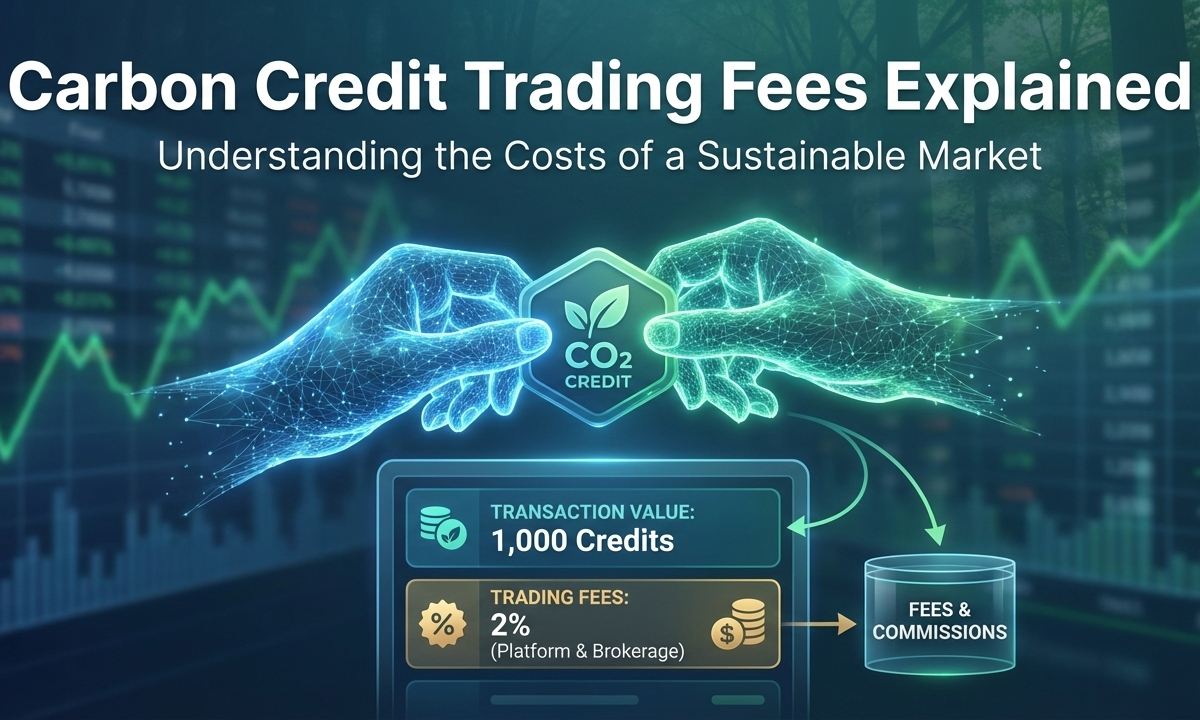
Understanding Carbon Credit Trading Costs
Understanding Carbon Credit Trading Costs
As climate change mitigation becomes a global priority, carbon credit trading has emerged as a powerful market-based mechanism to reduce greenhouse gas emissions. India is becoming more involved in voluntary and compliance carbon markets as a result of its expanding industrial base and climate pledges. Fewer organizations fully comprehend the fees and expenses associated with carbon credit trading, despite the fact that many are aware of the environmental significance of carbon credits.
Trading carbon credits is not free. Every traded carbon credit is supported by a systematic cost structure that addresses regulatory compliance, brokerage, certification, registration, verification, and exchange activities. These charges guarantee trust, openness, and market integrity. Businesses, project developers, investors, and legislators must all comprehend them.

Knowing How Carbon Credits Are Traded
The reduction, elimination, or avoidance of one metric ton of carbon dioxid or other comparable greenhouse gases is represented as carbon credits. Projects including methane collection systems, energy efficiency initiatives, afforestation campaigns, and renewable energy installations produce these credits.
There are two main markets where carbon credits are traded:
- Compliance Carbon Markets: These are regulated markets where companies are required to adhere to legally mandated emission standards.
- Markets where businesses voluntarily buy carbon credits to offset emissions are known as voluntary carbon markets.
Project developers, auditors, registries, exchanges, dealers, and regulators are among the numerous parties involved in both marketplaces. Every service has a cost, and every player adds to the trade environment.
The Reasons Behind Carbon Credit Trading Fees
The purpose of carbon credit trading fees is to preserve the legitimacy and efficiency of the carbon market. These charges help to fund:
- Precise assessment of emission decreases
- Independent confirmation and approval
- Secure registries that avoid counting twice
- Transaction security and market infrastructure
- Monitoring and adherence to regulations
Without these costs, the carbon market wouldn’t be trusted, which would render credits unreliable and useless as tools for combating climate change.
Principal Carbon Credit Trading Fee Types
- Costs of Project Development
Carbon credits must be created before they may be traded. Feasibility studies, baseline evaluations, emission calculations, and paperwork preparation are all included in project development expenses. Depending on the project’s size, location, methodology, and kind, these expenses can vary significantly.
In India, lengthy development timetables and technical evaluations sometimes result in high upfront expenditures for forestry and renewable energy projects. These expenses are the cornerstone of the carbon credit pricing structure, even though they are not trading fees in and of themselves.
- Registration Fees for Carbon Credit
For carbon credits to be accepted and traded after verification, they need to be listed in an official registry. Administrative procedures, record keeping, and issuance tracking are all covered by registration costs.
In order to maintain openness and avoid double counting, registries are essential. Registration costs might be assessed for each credit issued, each project, or each issuance cycle.
- Issue Charges
When confirmed emission reductions are turned into tradeable carbon credits, issuance fees are assessed. The expense of creating distinct serial numbers and entering credits in the registry is covered by these costs.
The standard and registry used determine the issuance costs, which are usually computed per credit. The ultimate cost of carbon credits that are available for trading is directly impacted by this tax.
Factors Affecting India’s Carbon Credit Trading Fees
The total cost of trading carbon credits in India is influenced by a number of factors:
- Project size and volume of emissions
- Methodology type for carbon credits
- Complexity and frequency of verification
- Dynamics of market supply and demand
- Selecting a trade platform and registry
- Standards and regulations
Businesses may efficiently control expenses and enhance their carbon policies by having a thorough understanding of these aspects.
Comparing the Costs of Compliance and Voluntary Markets
Because voluntary carbon markets require more certification, branding, and quality assurance, per-credit costs are usually higher. They do, however, provide more inventiveness and versatility.
Stricter regulatory control and restricted participation are features of compliance markets, which typically have more standardized fees and lower transaction costs at scale.
Before switching to compliance methods, Indian companies frequently begin their involvement in voluntary marketplaces.
India’s Prospects for Carbon Credit Trading Fees
The carbon market in India is about to enter an era of fast expansion. It is anticipated that standardized laws, digital platforms, and government initiatives will lower transaction costs and increase market efficiency.
Blockchain-based registries and automated verification systems are examples of technological advancements that could further reduce costs while boosting openness and confidence.
Economies of scale will be crucial in lowering the overall cost of trading carbon credits as market participation increases.
In conclusion: Understanding Carbon Credit Trading Costs
The maintenance of a reliable and efficient carbon market depends heavily on carbon credit trading costs. Every charge has a distinct function in maintaining environmental integrity, from project development and verification to exchange transactions and retirement.
For Indian companies and project developers to successfully participate in carbon markets, they must have a thorough awareness of these costs. Organizations may maximize investments, make well-informed decisions, and make a significant contribution to climate change by learning more about carbon credit trading costs.
Transparent and effective fee structures will be essential for promoting sustainable growth and long-term environmental impact as India expands its position in the global carbon markets.
Carbon Credits Explained for Eco Projects: A Complete Guide to India’s Green Economy
Carbon Credits Explained for Eco Projects: A Complete Guide to India’s Green Economy
2 Comments