
 Aksh
Aksh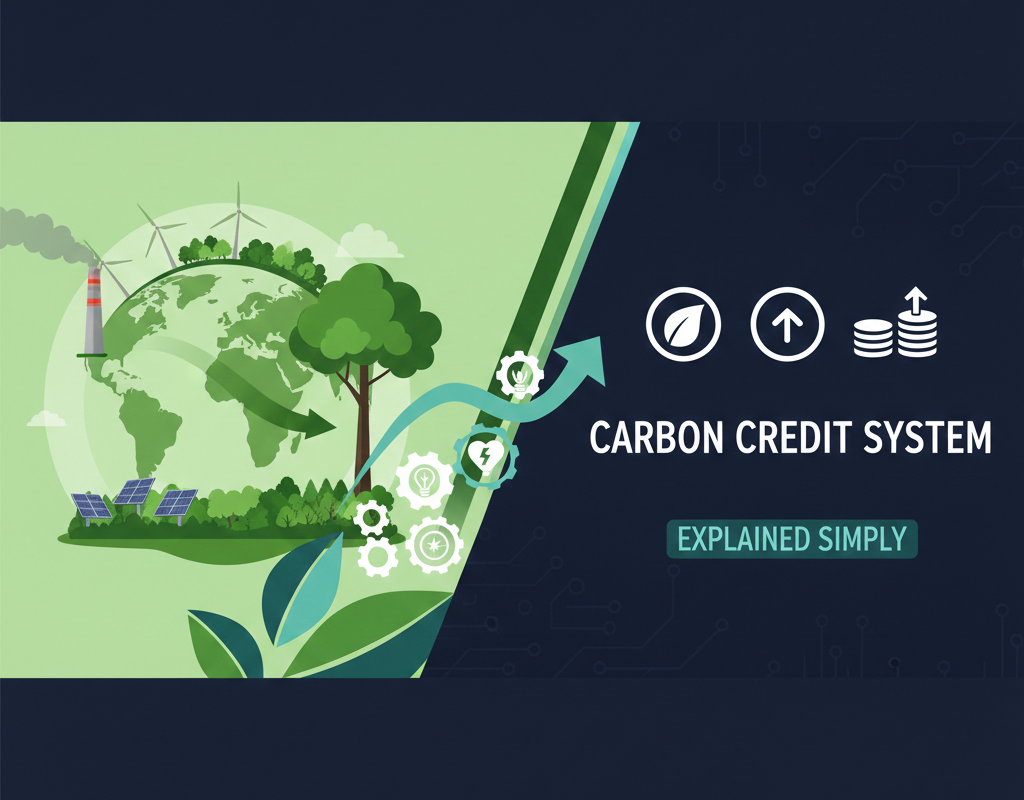
Carbon Credit System Explained Simply
Carbon Credit System Explained Simply
One of the largest problems the world is currently experiencing is climate change. Globally, people, businesses, and governments are being impacted by rising temperatures, harsh weather, melting glaciers, and rising pollution levels. Countries are searching for clever and workable ways to lessen the harm caused by climate change. The carbon credit scheme is one such remedy.
Even though the carbon credit system is frequently covered in news articles, government regulations, and corporate plans, many people still don’t understand it. Anyone may grasp the carbon credit system’s operation, significance, and implications for India and the global economy thanks to this article’s straightforward explanation of it.

A Carbon Credit: What Is It?
A certificate that certifies the removal or decrease of one metric tonne of carbon dioxide or other comparable greenhouse gases from the atmosphere is known as a carbon credit.
To put it simply:
One tonne of carbon pollution eliminated or decreased is equivalent to one carbon credit.
Carbon credits are awarded to governments, businesses, and other groups that lower pollution. To make up for their pollution, those who find it difficult to cut their emissions might purchase these credits.
The Carbon Credit System: Why Was It Developed?
In order to combat climate change in a flexible and economical manner, the carbon credit system was established.
Large volumes of greenhouse gases are released by numerous industries, including transportation, steel, cement, and electricity generation. It is not feasible to stop these emissions entirely at once. The system of carbon credits permits:
- Polluters should be held accountable for their emissions.
- Clean initiatives to generate revenue for pollution reduction
- Nations may achieve climate targets without compromising economic expansion.
Everyone is encouraged to contribute to the reduction of global emissions using this system.
The Carbon Credit System: How Does It Operate?
The basic principle behind the carbon credit system is to either reduce pollution or pay for it somewhere.
This is the step-by-step process:
- There is a cap on the amount of pollution that can occur.
- Businesses track their emissions of greenhouse gases.
- A business receives carbon credits if its emissions fall below the permitted threshold.
- A business must purchase carbon credits if its emissions exceed permitted limits.
- The funds support initiatives aimed at lowering or eliminating emissions.
This makes lowering pollution financially justified.
The Value of Carbon Credits
The reason carbon credits are valuable is
- Governments back efforts to combat climate change.
- Businesses aim to achieve environmental objectives.
- Sustainable businesses are preferred by investors.
- Eco-friendly brands are preferred by consumers.
The market for carbon credits keeps rising as climate regulations get more stringent.
Pricing of Carbon Credits
Numerous factors influence the cost of carbon credits:
- Carbon market type
- Quality of the project
- Supply and Demand
- Policies of the government
- Global climate goals
Prices can fluctuate over time and between geographical areas.
India’s Promises on Climate Change
India has pledged to:
- Lowering the intensity of emissions
- Expanding the capacity of renewable energy
- By 2070, achieving net zero emissions
- Encouraging green growth
Carbon credits aid India in effectively achieving these objectives.
India’s Potential in the Carbon Markets
India’s potential in the carbon markets is enormous due to:
- Plenty of resources for renewable energy
- Large-scale agriculture industry
- Opportunities for forest and land restoration
- Growing uptake of clean technology
Carbon credit initiatives can help Indian farmers and companies.
The Carbon Credit System’s Future
With climate action becoming a global priority, the carbon credit system appears to have a bright future.
Anticipated patterns consist of:
- More stringent government rules
- National carbon markets’ expansion
- Increased demand for superior credit
- Improved emission monitoring technology
- Growing involvement of developing nations
India is anticipated to become into a significant force in the world market for carbon.
The Current Significance of the Carbon Credit System
The reason the carbon credit system is important is
- The rate of climate change is increasing.
- Emissions need to be cut immediately.
- Economic expansion must be sustained.
- International collaboration is crucial.
It offers a workable solution for striking a balance between environmental preservation and development.
Conclusion: Carbon Credit System Explained Simply
One effective weapon in the worldwide battle against climate change is the carbon credit system. It motivates governments and corporations to cut emissions while promoting sustainable projects by placing a cost on pollution.
The carbon credit system presents India with a special chance to integrate environmental responsibility with economic success. Carbon credits can contribute to the creation of a cleaner, greener, and more resilient future with the correct regulations, education, and application.
The first step to taking significant climate action is to comprehend the carbon credit system. Carbon credits will be essential in forming a low-carbon economy as the globe shifts toward sustainability.
How Carbon Credits Work Step by Step: A Simple Guide to Carbon Credit Mechanism
How Carbon Credits Work Step by Step: A Simple Guide to Carbon Credit Mechanism
4 Comments