
 Aksh
Aksh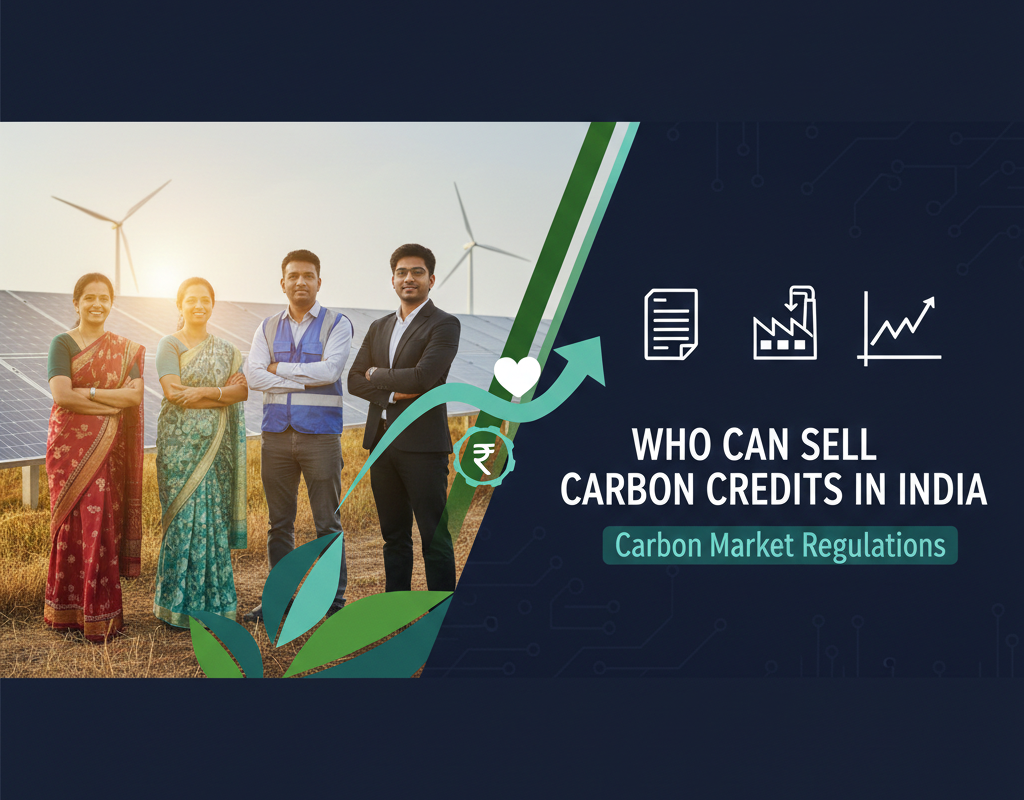
Who Can Sell Carbon Credits in India?
Who Can Sell Carbon Credits in India?
In the worldwide battle against climate change, India is rapidly rising to prominence. Carbon credits are now a potent instrument for both environmental preservation and economic expansion as a result of growing awareness of sustainability, carbon reduction, and clean energy.
Nowadays, a lot of people and companies ask the straightforward but crucial question: Who is allowed to sell carbon credits in India?
Everything is explained in plain, easy-to-read English in this essay. Eligibility, regulations, seller kinds, carbon markets, governmental structures, and upcoming prospects are all covered. This book will assist you in understanding your involvement in India’s carbon credit system, regardless of your occupation—farmer, factory owner, project developer, startup, or organization.

Carbon Credits: What Are They?
A certificate that certifies the removal or reduction of one metric ton of carbon dioxide or its equivalent from the atmosphere is known as a carbon credit.
Earning carbon credits occurs when a project:
- Lowers emissions of greenhouse gases
- Prevents future emissions
- Eliminates carbon from the atmosphere
Businesses or organizations looking to balance their carbon emissions can purchase these credits.
The Significance of Carbon Credits in India
India’s economy is among the fastest-growing in the world. Growth is accompanied by increased emissions and energy demand. Carbon credits assist India in accomplishing several objectives simultaneously:
- Lower emissions and pollutants
- Encourage green initiatives and renewable energy
- Encourage farmers and rural income
- Draw in international climate funding
- Fulfill global climate pledges
By 2070, India aims to achieve net-zero emissions and reduce emission intensity. Carbon credits are essential to achieving this objective.
India’s Carbon Market Types
Understanding India’s two primary carbon markets is crucial before figuring out who can sell carbon credits.
- Market for Voluntary Carbon
Businesses and people purchase carbon credits voluntarily in the voluntary carbon market. These consumers seek to satisfy sustainability objectives, enhance brand image, or lessen their environmental effect.
At the moment, this market provides the majority of India’s carbon credits.
- Market for Compliance Carbon
The government regulates the compliance carbon market. Businesses can utilize carbon credits to meet legal requirements, but they must also meet emission restrictions.
Under the Carbon Credit Trading Scheme, India is creating its own domestic compliance market.
Qualifications for Selling Carbon Credits in India
A project needs to fulfill specific requirements in order to sell carbon credits.
- Furthermore, additionality
There must be an additional reduction in emissions. This indicates that without the carbon credit incentive, it would not have occurred.
- Impact That Can Be Measured
Emissions must be reduced or eliminated using quantifiable techniques that have been approved.
- Confirmation
Independent third-party auditors must validate projects.
- Signing up
Projects need to be registered using a carbon credit framework or standard that has been approved.
- Enduring
Reductions in emissions ought to be permanent and difficult to reverse.
The distinction between Indian Compliance Credits and Voluntary Credits
Credits that are voluntary:
- Purchased willingly
- Private businesses use it the most.
- Frequently traded abroad
- Credits for Indian compliance:
- Utilized to comply with regulations
- Controlled by Indian officials
- Concentrating on domestic emission goals
Both systems enable qualified vendors to generate income.
The Production and Distribution of Carbon Credits
These steps are typically followed in the process:
- Identification of the project
- Calculation of baseline emissions
- Putting the reduction activity into action
- Observation and data gathering
- Verification by third parties
- Issuing of Credit
- Sale to purchasers
Technical complexity frequently necessitates professional assistance.
Conclusion: Who Can Sell Carbon Credits in India
International actors and big enterprises are no longer the only ones with access to carbon credits. If they fulfill eligibility requirements, farmers, industries, project developers, companies, startups, and even government agencies in India are able to trade carbon credits.
Selling carbon credits is turning becoming a potent instrument for generating revenue and addressing climate change thanks to a favorable legislative environment and rising demand.
All industries must actively participate in India’s transition to a low-carbon future. The first step to creating a cleaner, greener, and more sustainable economy is figuring out who can sell carbon credits.
Carbon Credits Explained for Beginners in India: Meaning, Types, Benefits, and How It Works
Carbon Credits Explained for Beginners in India: Meaning, Types, Benefits, and How It Works