
 Aksh
Aksh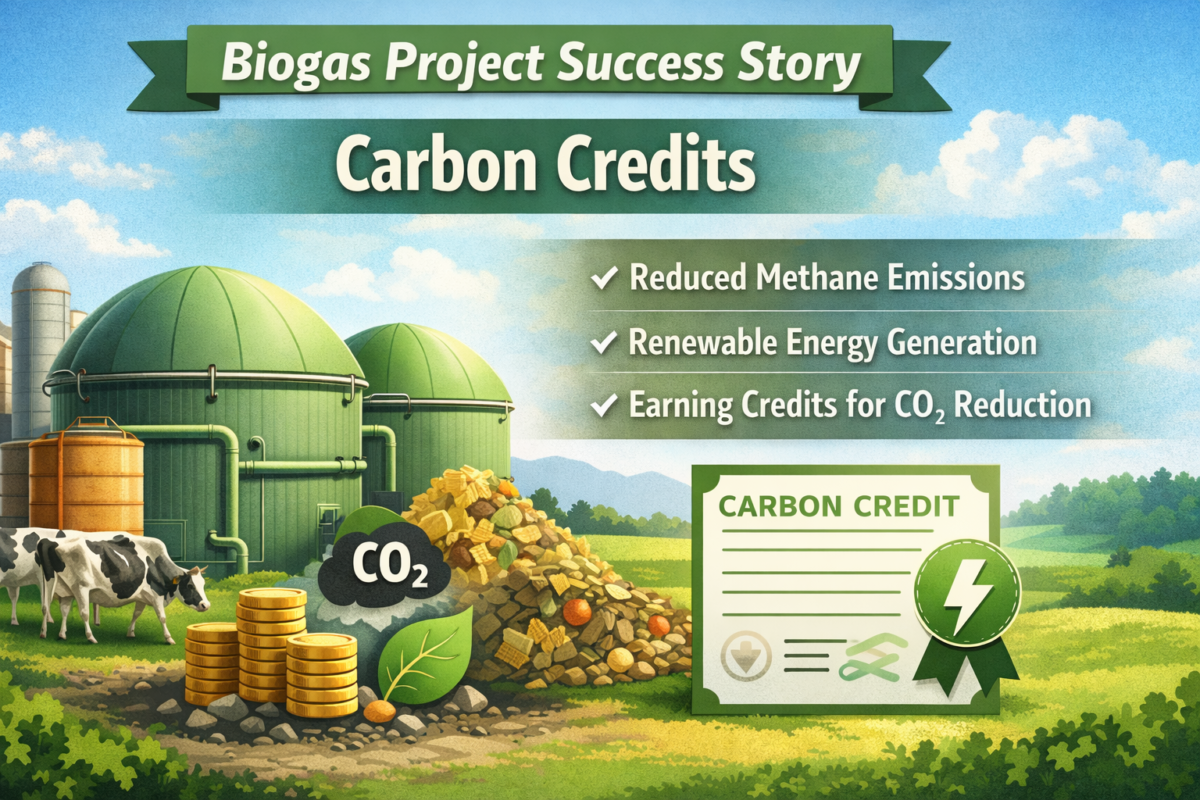
Biogas Carbon Credit Success Stories in India
Biogas Carbon Credit Success Stories in India
Biogas projects have become one of the most efficient and scalable ways to cut greenhouse gas emissions, produce renewable energy, support rural livelihoods, and earn valuable carbon credits in a time when climate change and sustainable development are top global policy priorities. Success stories showcasing the economic, environmental, and social advantages of biogas projects linked to carbon credit incentives are emerging throughout India, from home biogas plants to large-scale compressed biogas (CBG) facilities.

Why Biogas Projects Are Eligible for Carbon Credits
One metric ton of carbon dioxide equivalent (CO2e) emissions is reduced by carbon credits, which are tradable certifications. Measurable emission reductions are produced when biogas projects stop methane emissions or replace fossil fuels with renewable energy. The financial feasibility of biogas plants can be improved and incentives for wider deployment can be created by certifying and trading these reductions as carbon credits.
India is actively participating in international climate finance systems and creating domestic carbon markets. Initiatives like biogas that directly contribute to emission reductions and sustainable energy generation are encouraged by policies like the proposed Carbon Credit Trading Scheme, which is intended to help the decrease of greenhouse gas emission intensity across important sectors.
Historical and Up-and-Coming Biogas Project Success Stories
The dairy industry is one of the most impressive success stories, as biogas projects have improved farm productivity, changed rural energy patterns, and produced thousands of carbon credits. Tens of thousands of home biogas units were built by dairy farmers in several states, according to a recent research compiled by industry stakeholders. These initiatives demonstrated the potential of decentralized biogas systems as carbon mitigation engines and income enhancers for rural communities by producing over 11,000 carbon credits in addition to renewable electricity.
Ongoing CBG projects in Uttar Pradesh serve as an example of how increasing biogas generation may have a significant positive impact on the economy and the environment. Dozens of CBG units have been set up by the state to turn cow manure into premium renewable fuel.
Effects on Farmers and Rural Communities
The advantages of biogas for farmers and rural households go well beyond producing clean energy. Numerous beneficial improvements have been sparked by biogas projects:
- Energy Independence: By having access to dependable, clean lighting and cooking fuel, rural families can lessen their reliance on pricey firewood or liquefied petroleum gas (LPG).
- Better Health: Using biogas instead of harmful fuels greatly reduces indoor air pollution, which immediately benefits respiratory health outcomes.
- Economic Upliftment: Household earnings are increased by carbon credit revenues and cost savings from less gasoline expenditures. Crop yields are increased by organic biofertilizer produced as a byproduct.
- Waste Management: Communities address waste disposal issues in a sustainable manner by turning animal and agricultural waste into electricity.
Large-Scale CBG and Biogas Facilities: Increasing Emission Reductions
Larger infrastructure is becoming more and more crucial to reaching national emission reduction targets, even though home biogas projects have set the groundwork. Government agencies, cooperatives, and organizations are investing in medium-sized and large-scale CBG plants that produce high-quality compressed biogas from substantial amounts of organic waste.
For instance, cooperatively supported projects in agricultural areas have opened multi-feed CBG facilities that can convert tons of organic material into renewable fuel every day. These initiatives, which offer an integrated solution that provides renewable energy, job opportunities, and agricultural by-products, are collaboratively funded by national development agencies and local partners.
The function of institutional support and policy
Without institutional support and enabling regulations, biogas carbon credit initiatives would not be able to succeed. Carbon markets are being developed by governments and regulatory agencies in recognition of the potential for biogas and other renewable energy projects to reduce emissions. The goal of proposed carbon trading legislation is to standardize greenhouse gas intensity objectives across various industries, which will increase demand for carbon credits produced by renewable energy projects.
Low-carbon energy solutions have also been given priority in funding plans by development banks and international climate finance organizations, which promote private investment and public-private partnerships. By offering co-financing, technical standards, and certification processes for the issuing of carbon credits, these frameworks assist in reducing the risk associated with renewable energy projects, including biogas.
Future Prospects for Biogas and Carbon Credits in India
Biogas in India is expected to increase significantly in the future. Biogas is positioned as a key component of India’s climate strategy due to the convergence of renewable energy goals, carbon market development, and rural economic empowerment. Stakeholders from various industries stand to gain as carbon markets develop and biogas technologies advance.
Incorporating organic waste from municipal sources, improving waste-to-energy pipelines, and encouraging private companies to take part in carbon credit initiatives are some of the plans to increase the use of biogas. These advancements will help achieve more general sustainable development objectives and national pledges to reduce emissions.
In conclusion: Biogas Carbon Credit Success Stories in India
A prime illustration of how sustainable energy solutions can boost rural economies, achieve climate goals, and provide quantifiable environmental benefits is the carbon credit biogas project success story. These projects, which range from home digesters to massive compressed biogas facilities, are converting organic waste into renewable energy and income via carbon credits. Scaling these achievements further and guaranteeing a cleaner, greener, and more egalitarian energy future will require sustained policy support, market mechanisms, and community involvement.