
 Aksh
Aksh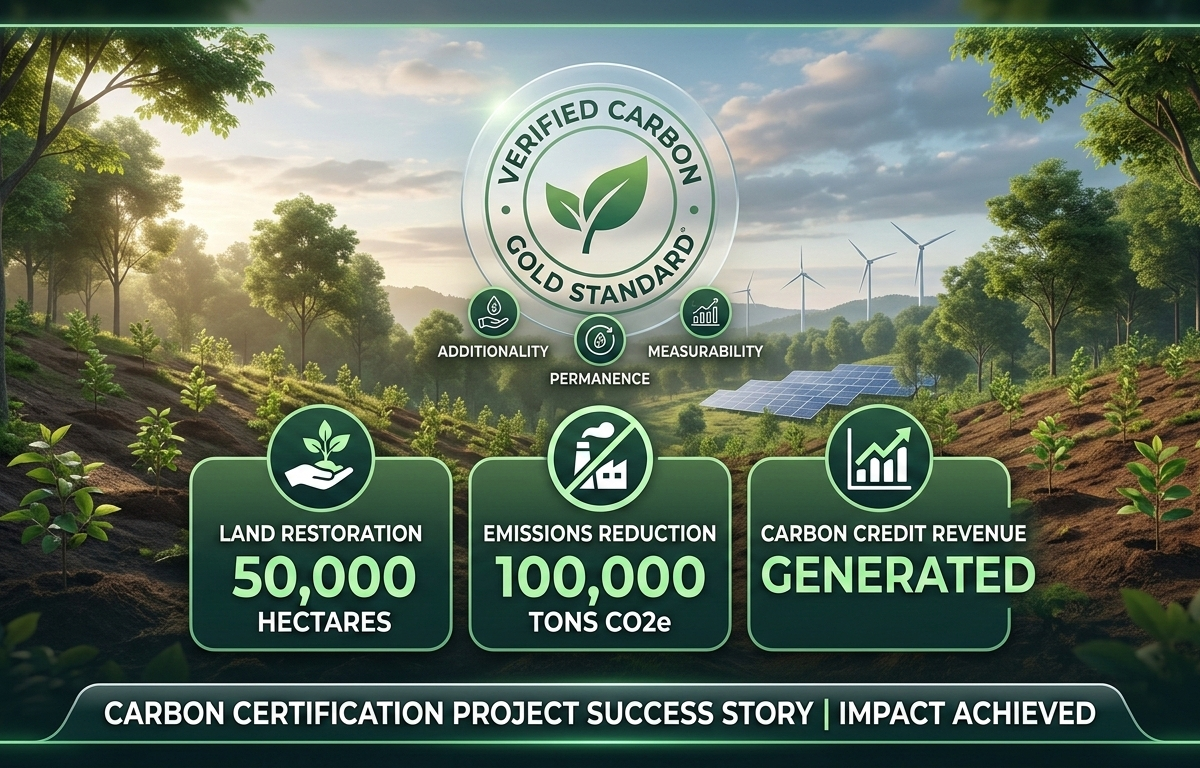
Carbon Certification Project Success Story
Carbon Certification Project Success Story
The most recent carbon certification project success story shows how certified carbon credit initiatives are changing India’s environmental landscape and promoting sustainable development, which is a tremendous step forward for environmental sustainability and climate action. This uplifting story from India represents a major advancement in emissions reduction, economic development, and ecological preservation at a time when the world is focusing on carbon markets, carbon offset systems, and climate-friendly investments.
This carbon credit success story demonstrates how local people, businesses, and ecosystems have benefited from quantifiable decreases in greenhouse gas emissions thanks to targeted carbon certification and strict monitoring procedures. Its accomplishments set a standard for future carbon certification initiatives in India and around the world by combining creative carbon credit techniques, scientific rigor, community involvement, and regulatory compliance in a well-defined roadmap.

Comprehending Carbon Credits and Certification
Independent third-party organizations use the carbon certification process to confirm that a carbon credit project satisfies established international requirements for environmental integrity, emissions reduction, and sequestration. One metric ton of carbon dioxide equivalent (CO2e) that has been either eliminated from the atmosphere or kept from entering it is represented by a carbon credit.
Carbon credits are now a crucial part of voluntary climate action and compliance markets in today’s environmentally conscious world. To offset their emissions, achieve net-zero objectives, and show environmental responsibility, businesses buy carbon credits. Reputable carbon certification guarantees that these credits promote sustainable development and accurately reflect climate benefits.
Project Origins: Connecting Local Impact with Carbon Certification
With the specific goal of lowering greenhouse gas emissions while improving local communities and protecting biodiversity, the carbon certification initiative was launched. Fundamentally, the project combined a number of environmental tactics, such as community-led conservation, clean energy adoption, reforestation, and sustainable agricultural methods.
The team concentrated on high-impact carbon reduction initiatives that might provide verified carbon credits when the project was being conceived. The project team made certain that each ton of CO2 sequestered or reduced was precisely recorded, tracked, and validated by utilizing scientifically approved procedures.
Crucially, the project placed a strong emphasis on community involvement at every turn. Long-term environmental stewardship and economic empowerment were facilitated by training locals in carbon monitoring, renewable energy operations, and sustainable land management.
Implementation Techniques That Produced Outcomes
Strategic implementation, reliable measuring techniques, and careful planning are necessary for successful carbon certification. The following crucial tactics were employed in this carbon certification effort to guarantee verifiable results and environmental success:
- A thorough baseline evaluation
To comprehend pre-project emission levels, land use patterns, current energy practices, and socioeconomic factors, a thorough baseline evaluation was carried out. The standard by which all carbon reductions were evaluated was this baseline.
- Using Tried-and-True Carbon Techniques
The project made use of globally accepted carbon certification techniques that were in line with international carbon standards. These procedures outlined the methods for calculating, tracking, and validating emissions reductions.
- Building Capacity and Empowering the Community
The project’s emphasis on human capital development was one of its unique features. Local communities received training in renewable energy maintenance, natural resource management, and sustainable agriculture.
- Strict Observation and Confirmation
A cutting-edge monitoring system was put in place to keep tabs on developments, confirm findings, and guarantee adherence to carbon certification regulations. Regular field measurements, satellite imaging, and independent audits were all part of the carbon offset monitoring process.
Setting an Example: Impact on the Growth of the Indian Carbon Market
The larger Indian carbon market will be significantly impacted if this carbon certification effort is successful. The growing need for reliable carbon offset options and conscientious climate action is drawing attention to India’s developing carbon credit ecosystem on a global scale.
Other project developers, businesses, and climate investors have been motivated to pursue carbon certification with an emphasis on transparency and community impact by this success story. As a result, verified carbon credit programs that promote climate goals and sustainable development agendas are expanding faster in India.
The project highlights India’s leadership in fusing economic and social concerns with climate-conscious strategies—a paradigm that might soon spark sweeping climate solutions throughout the region.
Difficulties and Acquired Knowledge
There are obstacles in any successful project, and this carbon certification program was no exception. Among the main difficulties were:
- Complexity of Data Management: Coordinating and using sophisticated data systems were necessary to track emissions and carbon sequestration across several locations.
- Behavior Change: Persistent outreach and education were necessary to persuade communities to embrace sustainable behaviors.
- Market Volatility: The pricing of carbon credits in voluntary markets was unpredictable, necessitating careful planning to ensure financial sustainability.
Project managers overcame obstacles by embracing creativity, tenacity, and teamwork in spite of these difficulties. The main takeaways have improved the project’s resilience and provide insightful information for upcoming carbon credit and certification programs.
In conclusion: Carbon Certification Project Success Story
The success story of the carbon certification initiative presented here is a ray of hope for sustainable growth and the environment. This program has produced quantifiable climate benefits and long-lasting social impact through rigorous carbon certification, confirmed emissions reductions, community empowerment, and open monitoring.
Success stories like this highlight how carbon credits may spur good change by combining ecological preservation with economic opportunity, especially as global carbon markets grow and climate urgency increases. India’s increasing participation in reliable carbon certification demonstrates its dedication to sustainable innovation and climate leadership.
This success story is more than just carbon credits; it is evidence of human potential, teamwork, and the revolutionary possibility of climate action based on integrity, science, and shared accountability.