
 Aksh
Aksh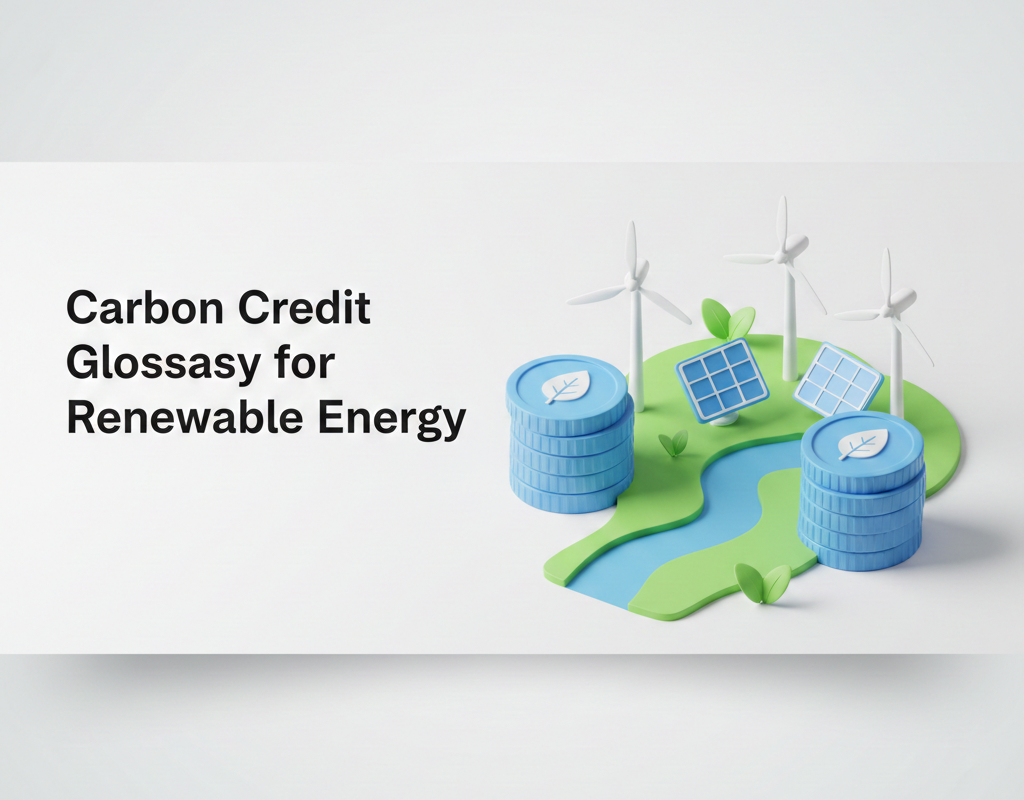
Carbon Credit Glossary for Renewable Energy
Carbon Credit Glossary for Renewable Energy
Understanding carbon credits and related jargon has become essential for companies, investors, and politicians as the world moves toward renewable energy and decarbonization. Carbon credit markets are becoming more and more connected to renewable energy projects like solar, wind, hydro, and biomass, opening up possibilities for financial incentives and emission reductions. This page explains key terms, ideas, and processes that influence the global carbon market, acting as a comprehensive lexicon of carbon credits for renewable energy.

Overview of Renewable Energy and Carbon Credits
An organization or individual is granted permission to emit one metric ton of carbon dioxide (CO₂) or an equivalent greenhouse gas (GHG) through the usage of a carbon credit. With the goal of lowering global emissions, carbon credits are traded assets on carbon markets. Since renewable energy projects directly reduce greenhouse gas emissions by replacing or reducing dependency on fossil fuels, they frequently result in carbon credits.
Carbon Credits’ Significance in Renewable Energy
- Emission Reduction: To cut emissions, businesses are encouraged to invest in renewable energy projects by means of carbon credits.
- Financial Incentives: Developers of renewable energy can generate extra income by selling carbon credits.
- Corporate Social Responsibility (CSR): By investing in renewable energy, businesses can offset their carbon footprint and meet sustainability targets.
Important Terms for Renewable Energy Carbon Credits
This is a comprehensive glossary of important words and ideas associated with carbon credits in the field of renewable energy.
- Extension
The idea that a carbon reduction project must result in emissions reductions that would not have happened otherwise is known as additionality. Installing a new solar plant that produces more energy than is currently needed, for example, is considered extra.
- Initial Emissions
The projected quantity of greenhouse gases that would have been released in the absence of a carbon reduction project is known as baseline emissions. To measure the emission reductions from renewable energy efforts, a precise baseline must be established.
- Offset of Carbon
A carbon offset is a reduction in greenhouse gas emissions used to offset emissions from other sources. Businesses looking to reduce their carbon footprint can buy carbon offsets produced by renewable energy projects like solar or wind farms.
- Trading in Carbon
Buying and selling carbon credits on voluntary or regulated carbon markets is known as carbon trading. One important source of tradable carbon credits that helps businesses fulfill their emission reduction commitments is renewable energy projects.
- The Carbon Footprint
A person, company, or product’s total greenhouse gas emissions, whether directly or indirectly, are measured by their carbon footprint. Adoption of renewable energy lowers carbon emissions, which makes carbon credits a useful mitigation technique.
Carbon Credit-Generating Renewable Energy Projects
Since renewable energy projects replace high-emission energy sources, they are essential to the creation of carbon credits. Important project categories consist of:
- Solar Power Initiatives
Measurable decreases in CO2 are produced by solar power plants and rooftop solar installations, which lessen reliance on coal and gas-fired electricity. Carbon credits can be earned for every megawatt-hour of solar energy produced.
- Projects Using Wind Energy
Wind turbines use the natural flow of wind to generate clean electricity. Because wind projects have a consistent and long-term potential to reduce emissions, carbon credits from these projects are traded extensively.
- Projects Using Hydropower
By using the flow of water to generate energy, hydropower facilities eliminate the need for fossil fuel emissions. Voluntary carbon markets are especially interested in small-scale hydro projects.
Carbon Credits and Renewable Energy’s Future
Carbon credits in renewable energy appear to have a bright future. The market for verified carbon credits is being driven by international agreements such as the Paris Agreement and growing worldwide pledges to net-zero targets. The potential of renewable energy projects to reduce carbon emissions will be further enhanced by emerging technologies like energy storage and smart grids.
Developments in the Production of Carbon Credits
- Blockchain for Carbon Credits: Provides traceability and transparency for carbon credits from renewable energy sources.
- Green hydrogen projects provide new opportunities for carbon offsetting while producing sustainable energy.
- Enhance emission reduction monitoring, reporting, and verification with AI and data analytics.
In conclusion: Carbon Credit Glossary for Renewable Energy
Anyone working in sustainability, renewable energy development, or climate finance must be familiar with the renewable energy carbon credit lexicon. Stakeholders can successfully negotiate the intricate carbon market by being familiar with important terms like carbon offset, baseline emissions, additionality, and renewable energy certificates. In addition to producing carbon credits, renewable energy projects lower greenhouse gas emissions, support the adoption of green energy by offering financial incentives, and contribute to a sustainable future.
Investing in renewable energy and using carbon credits is now a strategic business opportunity that supports global sustainability goals, not merely an environmental obligation. Carbon credits can hasten the shift to a resilient, low-carbon energy ecosystem if they are properly understood and used.
Carbon Footprint Tools Explained for Students | Indian Carbon Credit
Carbon Footprint Tools Explained for Students | Indian Carbon Credit