
 Aksh
Aksh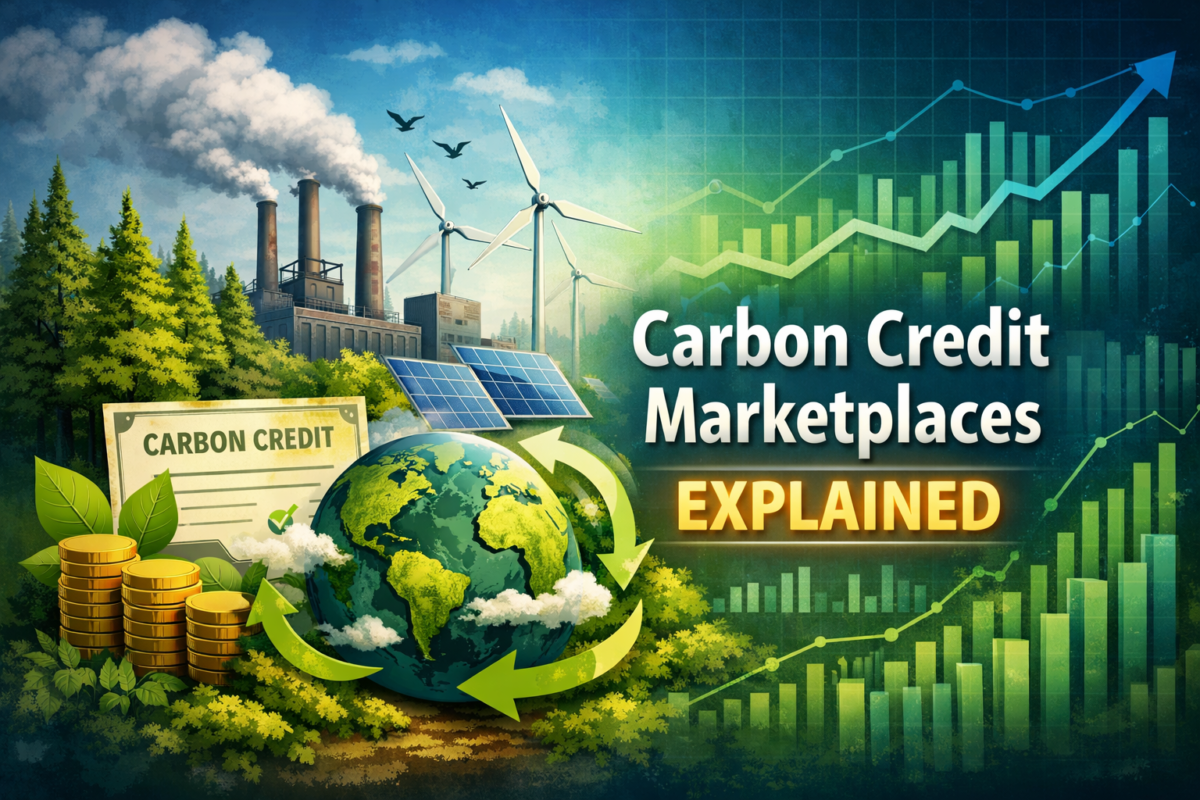
Carbon Credit Marketplaces Explained
Carbon Credit Marketplaces Explained
Carbon credit marketplaces are becoming increasingly important instruments in the battle against greenhouse gas emissions as global concerns about climate change grow. Businesses, governments, and people can use these platforms to promote sustainable behaviors and offset their carbon footprint. Anyone engaged in corporate responsibility, environmental sustainability, or climate action must comprehend the complexities of carbon credit marketplaces.

Carbon Credit Marketplaces: What Are They?
A platform for the purchase, sale, and exchange of carbon credits is known as a carbon credit marketplace. The reduction, avoidance, or elimination of one metric ton of carbon dioxide (CO2) or other comparable greenhouse gases is represented as carbon credits. These credits are given to programs that either eliminate CO2 from the atmosphere or stop emissions from happening.
Similar to conventional financial markets, carbon credit marketplaces allow users to trade carbon credits rather than equities or commodities. While project developers offer credits produced from programs like reforestation, renewable energy, and energy efficiency, companies buy these credits to offset emissions from their activities.
Carbon Credit Marketplaces’ Function in Climate Action
Marketplaces for carbon credits are essential to the international effort to slow down climate change. They encourage investment in sustainable projects and ease the transition to low-carbon economies by establishing a regulated mechanism for trading credits. Carbon credit marketplaces have the following advantages:
- Promoting sustainable investment: Businesses who buy carbon credits are essentially contributing to the financing of reforestation, renewable energy, and other emission reduction initiatives.
- Providing a financial incentive for reducing carbon emissions: Carbon credits provide emissions reductions a monetary value, which makes sustainability profitable.
- Encouraging accountability and transparency: Properly regulated markets guarantee that carbon credits are monitored, confirmed, and retired, lowering the possibility of double counting.
The Mechanism of Carbon Credit Trading
Several crucial phases are involved in carbon credit trading in marketplaces:
- Carbon Credit Issuance: Independent organizations verify accredited projects that cut or eliminate emissions. Carbon credits are given out in proportion to the amount of CO2 that has been lowered after verification.
- Listing on Marketplaces: These credits are listed on carbon marketplaces by project developers or aggregators, who include details on the type, vintage year, and verification standard.
- Purchasing and Selling: To offset their carbon emissions, businesses or individuals buy credits. Buyers and sellers can deal with each other directly or through intermediaries.
- Credit Retirement: A credit is retired, meaning it cannot be sold again, after it has been used to offset emissions. The integrity of carbon accounting is preserved in this step.
Carbon Markets: Voluntary vs Compliant
Businesses thinking about carbon credits must comprehend the distinction between the voluntary and compliance carbon markets:
- Voluntary Carbon Market (VCM): In order to attain net-zero objectives or show environmental responsibility, participants purchase credits voluntarily. The VCM frequently features more inventive projects, such as carbon capture technologies, mangrove restoration, and urban tree planting.
- Compliance Market: It is legally required to participate. Businesses that over emission limits are required by law to acquire compliance credits. Strict reporting and auditing requirements are part of these heavily regulated sectors.
Issues with Marketplaces for Carbon Credits
Although carbon credit markets have a lot of promise, there are still a number of obstacles to overcome:
- Danger of Greenwashing: Some businesses might buy shoddy credits without actually cutting their emissions.
- Lack of uniformity: The voluntary carbon market may be dispersed, with different credit kinds and verification requirements.
- Market transparency: Uncertainty may arise from poor reporting and ambiguous pricing practices.
- Double counting: The legitimacy of carbon offsets is weakened if credits are sold more than once.
Strong regulation, standardized verification procedures, and raised customer and seller awareness are all necessary to address these issues.
How Carbon Credit Marketplaces Can Help Businesses
Companies that actively engage in carbon credit markets stand to gain a number of advantages:
- Offsetting Emissions: Businesses can offset the environmental impact of their operations by acquiring carbon credits.
- Improving Brand Reputation: Showing a dedication to sustainability improves brand perception and draws in eco-aware customers.
- Regulatory Compliance: By taking part in compliance marketplaces, one can guarantee that emission standards are followed and penalties are avoided.
- Investment in Sustainable Projects: Carbon credits direct money toward forestry, renewable energy, and other green projects.
- Financial Opportunities: By creating carbon reduction initiatives and offering credits for sale, businesses can make money.
In conclusion: Carbon Credit Marketplaces Explained
Marketplaces for carbon credits are transforming how governments, corporations, and individuals respond to climate change. They offer a methodical, transparent, and financially feasible way to lower carbon emissions and support sustainable development. Carbon credit marketplaces will play a crucial role in the environmental and commercial landscapes as awareness and international commitments to net-zero targets increase.
Making wise judgments in this dynamic environment requires an understanding of the operation of carbon credits, the distinction between voluntary and compliance markets, and the significance of verification requirements. Stakeholders may help reduce carbon emissions and create a more resilient and sustainable future for the earth by taking part in carbon credit marketplaces.