
 Aksh
Aksh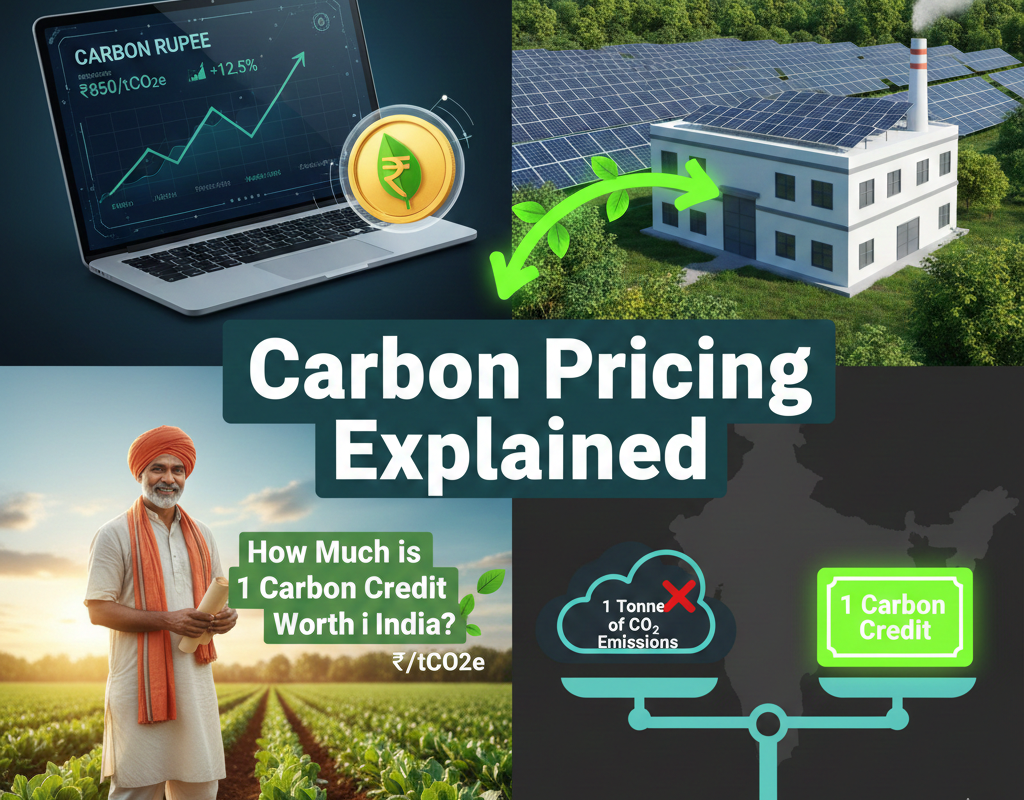
Carbon Credit Price Explained for Beginners
Carbon Credit Price Explained for Beginners
One of the most significant actors in the global climate economy is quickly becoming India. Businesses and individuals alike are increasingly asking the same question as climate action becomes a key component of economic policy: How much does it cost to get carbon credits in India?
This thorough beginner’s tutorial provides a straightforward explanation of carbon credit price in India for those who are unfamiliar with the concept. We’ll look at how carbon credits are made, how much they cost, how the Indian carbon market works, and why carbon pricing is becoming so important to investors, companies, and sustainability experts.

The Significance of Carbon Credit Prices in India
India has pledged to meet aggressive climate targets under international accords and is the third-largest producer of greenhouse gases in the world. In accordance with national climate policy frameworks, the government is aggressively creating a structured carbon market.
In India, the price of carbon credits is important for:
- Motivating companies to cut emissions
- Increasing the competitiveness of renewable energy
- Bringing in Climate Funding
- Endorsing sustainable objectives
- Promoting compliance with ESG (Environmental, Social, Governance)
An effective carbon pricing system facilitates the transfer of capital from high-emission sectors to low-carbon ones.
How Do They Calculate the Price of Carbon Credits?
Like any commodities market, carbon credit price operates. It is affected by several things:
- Demand and Supply
Prices rise if a large number of businesses wish to offset emissions and there aren’t enough high-quality credits available.
Prices decrease as supply outpaces demand.
- Type of Project
Values produced by various initiatives vary:
- Renewable energy initiatives (wind, solar)
- Reforestation and replanting
- Capture of methane
- Enhancements in energy efficiency
- Carbon capture in industry
Because nature-based solutions promote biodiversity and socioeconomic advantages, they frequently fetch higher costs.
- Standards for Certification
Internationally accredited credits are frequently more affordable. Buyer confidence is increased by high-quality verification.
Why Prices for Carbon Credit Vary?
In India, there is no set rate for carbon credits. The following causes price fluctuations:
- Announcements of policies
- Trends in the global carbon market
- Climate pledges made by corporations
- Investment flows for ESG
- Conditions of the world economy
- The cost of energy
For instance, renewable projects gain appeal as the price of fossil fuels rises, which could lead to a spike in the demand for carbon credits.
India vs. Global Carbon Prices Comparison
Carbon prices vary greatly around the world:
- The price per ton in European compliance markets is frequently over $70.
- The price per ton in voluntary marketplaces varies greatly, from $3 to $50.
India is appealing to consumers from around the world looking for affordable offsets because its carbon credit prices are now lower than those of established countries.
However, Indian carbon credit prices are anticipated to rise gradually as local demand increases and regulations become more stringent.
In India, who sells carbon credits?
Among the sellers are:
- Developers of renewable energy
- Developers of forestry projects
- Waste management companies
- Projects to reduce methane in agriculture
- Projects for industrial efficiency
One of the biggest suppliers of carbon credits based on renewable energy in the world is India.
India’s Prospects for Carbon Credit Pricing
By 2070, India aims to achieve net-zero emissions. Carbon markets will be essential to achieving this goal.
Anticipated developments include of:
- Regulation of carbon trading expansion
- Increased openness of prices
- Enhanced involvement of corporations
- Connectivity to international carbon markets
- Increased demand for superior nature-based credits
India’s carbon credit pricing are probably going to catch up to international norms as regulatory frameworks develop.
Hazards and Difficulties with Carbon Pricing
Carbon markets have opportunities, however there are still obstacles to overcome:
- Volatility of prices
- Concerns about greenwashing
- Complexities of verification
- Uncertainty in policy
- Overabundance in marketplaces that are voluntary
Before purchasing or making an investment, it is crucial for novices to comprehend the reliability and quality of carbon credits.
In conclusion: Carbon Credit Price Explained for Beginners
India’s carbon credit pricing is about to undergo a radical change. Businesses, investors, and sustainability experts must comprehend carbon credit prices as the government fortifies its climate pledges and creates a national carbon trading market.
The first step for newcomers is to understand that carbon credits are financial instruments that are propelling India’s low-carbon shift, not just environmental certifications.
India’s carbon credit market is expected to increase significantly due to rising corporate ESG obligations, strengthening regulations, and growing worldwide demand. Businesses and individuals will be better prepared to profit from the climate economy of the future if they understand how carbon credit prices operate today.
Carbon Credit Price for Businesses in 2026: Trends, Market Rates, and Strategic Buying Guide
Carbon Credit Price for Businesses in 2026: Trends, Market Rates, and Strategic Buying Guide