
 Aksh
Aksh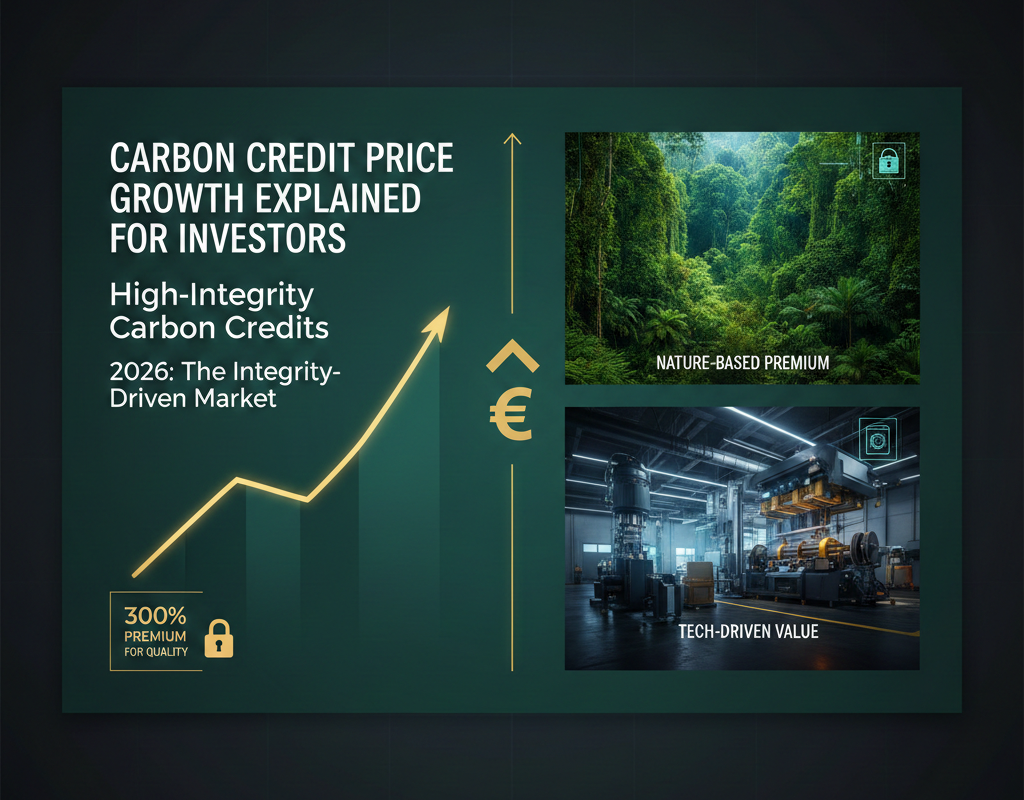
Carbon Credit Price Explained for Investors
Carbon Credit Price Explained for Investors
Investors are increasingly searching for green and sustainable investment options as a result of growing worldwide awareness of climate change. Among these, carbon credits have become an important tool for financial markets and environmental conservation. Investors who wish to make wise choices and profit from this expanding market must comprehend the price of carbon credits. Everything you need to know about market dynamics, investment methods, and carbon credit pricing is covered in this guide.

Carbon Credits: What Are They?
One metric ton of carbon dioxide (CO₂) or other comparable greenhouse gases that have been either eliminated from the atmosphere or kept from entering it is represented by a carbon credit. In essence, it is a certificate that can be traded to encourage businesses and individuals to lower their carbon emissions. Numerous carbon offset projects, including methane capture, renewable energy, reforestation, and energy efficiency programs, can produce carbon credits.
In line with ESG (Environmental, Social, and Governance) investing principles, carbon credits provide investors with a special combination of financial return and environmental effect.
Carbon Credit Types
Pricing and investment analysis require an understanding of the many kinds of carbon credits.
- Compliance Carbon Credits: These are given out under regulatory programs like the Indian Perform, Achieve, and Trade (PAT) scheme or the EU Emissions Trading System (EU ETS), where businesses are required by law to cut emissions. The demand for compliance credits is often steady because of the required reduction targets.
- Voluntary carbon credits are traded in the voluntary carbon market and enable individuals and businesses to voluntarily offset their emissions. Here, prices are more determined by the market and might change according on buyer demand, certification, and project kind.
- Renewable Energy Certificates (RECs): Although not precisely carbon credits, RECs represent the production of renewable energy and help reduce emissions in an indirect way.
Factors Influencing the Cost of Carbon Credits
Numerous factors affect the price of carbon credits, making it a dynamic and somewhat erratic market. Investors can predict market trends by being aware of these elements.
- Demand and Supply
The equilibrium between supply and demand is essential in any market. Prices may increase due to a lack of carbon credits from high-quality projects and rising demand from businesses striving for net-zero targets. On the other hand, low demand or excess supply may cause prices to decline.
- Rules and Regulations
The demand for carbon credits is directly impacted by national emission reduction goals, international accords like the Paris Agreement, and governmental laws. Investors should keep a careful eye on policy changes because new rules frequently cause the price of carbon credits to soar.
- Certification and Project Type
Carbon credits are not all created equal. Reforestation project credits could fetch a different price than methane capture or renewable energy credits. Credibility is added and the market value of credits may rise with certification from reputable organizations such as Verra, Gold Standard, or the Clean Development Mechanism (CDM).
- ESG Trends and Market Attitude
Carbon credit pricing is influenced by investor demand for green assets, corporate sustainability pledges, and ESG-driven investment trends. The voluntary carbon market experiences increased demand as more businesses declare net-zero intentions, which drives up prices.
Current Trends in Carbon Credit Prices
Prices for carbon credits have fluctuated significantly as of 2026, although they have generally been rising, which reflects the increasing global commitment to climate action. Prices are frequently higher in compliance markets, such as the EU ETS, because of mandated restrictions. The voluntary carbon market, on the other hand, exhibits diversity, with costs varying according to project kind, location, and certification.
Investors should be aware that estimates for carbon credit prices frequently indicate growth in the upcoming years as a result of growing corporate net-zero commitments and stricter emissions standards around the world.
How Can Carbon Credits Involve Investors?
- Buying Carbon Credits Directly
Carbon credits can be purchased by investors directly from project developers or via approved exchanges. Control over the kind of credits owned and their effects on the environment is possible with direct investment.
- ETFs and Carbon Funds
Exchange-traded funds (ETFs) and carbon-focused funds combine investments in carbon credits or businesses that are actively working to reduce emissions. Professional management and diversity are offered by this strategy.
- Business Collaborations and Offsetting Initiatives
As part of their sustainability plans, some investors work with businesses to buy carbon credits. These collaborations frequently provide long-term agreements that could stabilize profits.
Techniques to Increase Profits
Astute investors use the following tactics to control risk and seize expansion opportunities:
- Diversify Across Project Types: To lower concentration risk, combine energy efficiency, renewable energy, and reforestation programs.
- Prioritize High-Quality Certified Credits: Credits that have been validated by reputable standards are frequently more stable and fetch higher rates.
- Track Regulatory Changes: To predict changes in the market, keep up with national and international carbon policies.
- Leverage Market Data: To find trends and the best places to enter the carbon market, use analysis tools.
The Price of Carbon Credits in the Future
The price of carbon credits is expected to rise in the upcoming ten years, according to experts. This expectation is influenced by multiple factors:
- Increasing the pace of business net-zero pledges
- More stringent international climate laws
- Market expansion for carbon trading in developing nations
- Technological developments in renewable energy and carbon capture projects
Investors may profit from both financial gains and a good environmental impact if they comprehend these dynamics and take calculated action.
In conclusion: Carbon Credit Price Explained for Investors
It is crucial for investors looking for sustainable investment options to comprehend the fluctuations of carbon credit prices. Price changes are influenced by a number of factors, including supply and demand, market attitude, project type, certification, and regulatory laws. Investors can successfully manage the carbon market by combining meticulous study, diversification, and trend tracking.
A growing opportunity for long-term, significant investments is indicated by the growth of voluntary carbon markets and ESG investing. Carbon credits provide a route to income as well as a means of supporting a sustainable future as the global effort to combat climate change intensifies.
Carbon Credits Income Benefits: How Indian Businesses and Farmers Can Profit from Carbon Trading
Carbon Credits Income Benefits: How Indian Businesses and Farmers Can Profit from Carbon Trading
3 Comments