
 Aksh
Aksh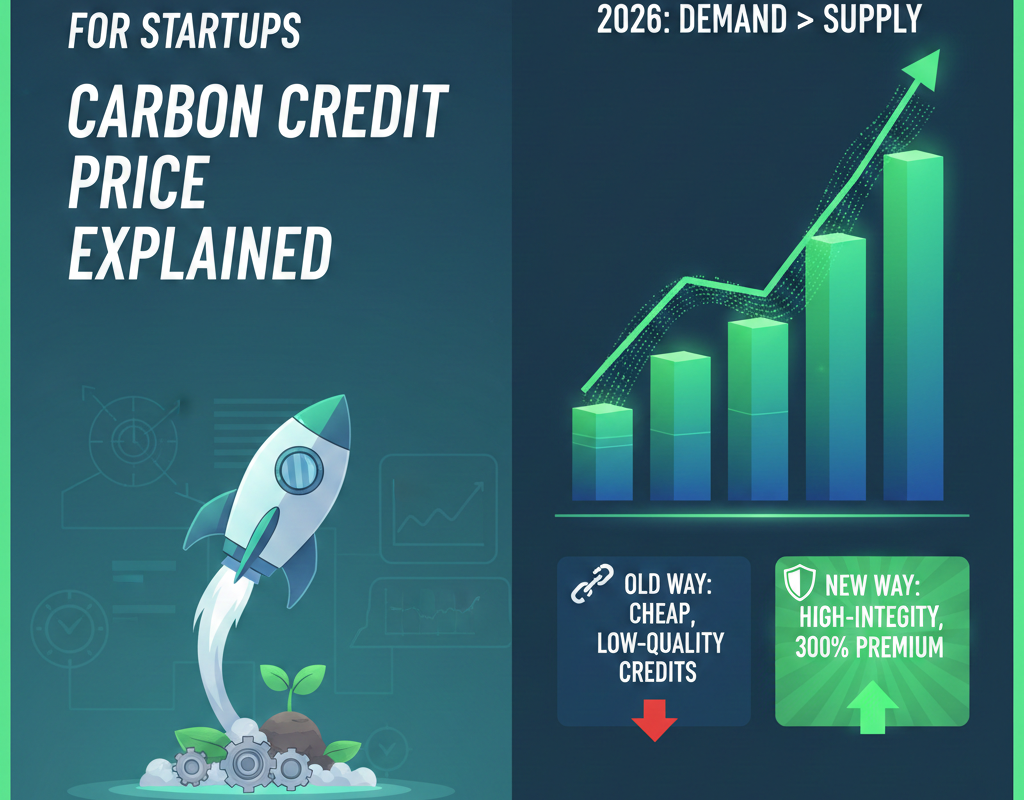
Carbon Credit Price Explained for Startups
Carbon Credit Price Explained for Startups
Sustainability has emerged as a crucial consideration for businesses in the current global economy. Businesses are being held to a higher standard of environmental responsibility by investors, consumers, and regulatory agencies. The carbon credit market is one of the most useful instruments for accomplishing sustainability objectives. Startups looking to lower their carbon footprint and take advantage of new green investment opportunities must comprehend the price of carbon credits.

Carbon Credits: What Are They?
One metric ton of carbon dioxide (CO₂) or an equivalent quantity of greenhouse gas (GHG) that is avoided, decreased, or eliminated from the atmosphere is represented by a carbon credit. Companies, including startups, can offset their emissions by using these credits, which are a component of carbon trading markets.
Carbon credits are useful for companies for two reasons:
- Compliance: Fulfilling legal obligations pertaining to the reduction of emissions.
- Voluntary Offsetting: Showing a dedication to sustainability in order to draw in clients and investors.
Numerous initiatives, including waste management, energy efficiency, reforestation, and renewable energy, can provide carbon credits. The economic worth of these environmental advantages is reflected in the price of carbon credits.
Factors Affecting the Cost of Carbon Credits
Carbon credit prices are not set and are determined by a number of factors, including:
- Demand and Supply
The pricing of carbon credits is determined by the fundamental law of supply and demand. Higher prices are usually the result of limited credit and excessive demand. For example, the demand for credits increases as more startups seek to offset emissions, which raises the cost per ton.
- Carbon Credit Type
Carbon credits are not all made equal. Governments control compliance credits, whereas businesses utilize voluntary credits for corporate social responsibility. The cost of voluntary credits frequently varies according to the impact, certification, and type of initiative.
- Standards and Certification
Higher pricing are frequently associated with certified credits from reputable standards as the Verified Carbon Standard (VCS), Gold Standard, or CDM (Clean Development Mechanism). Buyers are reassured by verified projects that emission reductions are genuine, quantifiable, and long-lasting.
- Project Site
The cost of carbon credits may be higher for projects with substantial co-benefits (such as community development) or those in established areas. On the other hand, credits from resource-rich areas might be less expensive.
- Trends in the Market
The price of carbon credits may be impacted by international initiatives like the Paris Agreement and governmental policy regarding carbon pricing. In order to determine the best moments to buy or sell, startups need to keep an eye on market trends.
The Significance of Carbon Credit Prices for Startups
Startups must comprehend the cost of carbon credits for a number of reasons.
- Financial Planning: Knowledge of current market prices is necessary for accurate budgeting for sustainability efforts.
- Investor Relations: Environmental, social, and governance (ESG) considerations are becoming more and more important to investors. Credibility can be increased by disclosing carbon offset actions that are supported by appropriate credits.
- Brand Image: Businesses that exhibit carbon neutrality can win over eco-aware customers.
- Regulatory Compliance: Future emissions reduction requirements may apply to some industries; entrepreneurs should get ready for compliance by knowing credit prices.
Current Indian Trends in Carbon Credit Prices
With both voluntary and compliance-based carbon credits available, the Indian carbon market is developing quickly.
- Voluntary Market: To demonstrate sustainability, Indian startups are increasingly purchasing voluntary carbon credits. Depending on the project type and certification, carbon credits in this market might cost anywhere between ₹700 and ₹3,000 per ton.
- Renewable Energy Projects: Indian startups are particularly interested in solar, wind, and biomass projects. Because of their scalability and tried-and-true methods, credits from these projects typically have moderate prices.
- Afforestation Projects: Because of their long-term effects and environmental co-benefits, reforestation and tree planting projects sometimes command higher pricing.
Startups can more effectively manage their sustainability budgets by being aware of these trends.
Carbon Credits’ Advantages for Startups
Purchasing carbon credits offers strategic benefits in addition to being a marketing or regulatory move.
- Cost Savings: Investing in carbon credits is frequently less expensive than carrying out extensive internal emission reduction initiatives.
- Market Differentiation: In ESG-conscious markets, entrepreneurs can gain a competitive advantage by proving they are carbon neutral.
- Getting Funding: Startups with quantifiable sustainability policies are preferred by ESG-focused investors.
- Risk Mitigation: Startups should get ready for upcoming carbon price rules by using carbon credit techniques early on.
- Positive Environmental Impact: In addition to the advantages for businesses, funding carbon credit initiatives helps with international efforts to reduce emissions.
Startups’ Obstacles with Carbon Credit Pricing
Although carbon credits present opportunities, startups may face obstacles:
- Price volatility: Changes in market supply, regulatory changes, or increases in demand can all affect the price of carbon credits.
- Verification Complexity: Careful due diligence is necessary to comprehend certification standards and guarantee the legitimacy of initiatives.
- Integration into Business Models: Startups must match their financial and operational plans with their carbon credit initiatives.
- Limited Knowledge: A lot of new businesses don’t know how to properly negotiate the carbon credit market.
It will take a combination of study, professional counsel, and strategic planning to overcome these obstacles.
In conclusion: Carbon Credit Price Explained for Startups
It is strategically necessary for Indian startups to comprehend the price of carbon credits; it is not an option. Carbon credits can be used as a tool for sustainability, cost effectiveness, and brand distinctiveness with careful planning, market understanding, and astute purchasing techniques. Startups that purchase carbon credits not only reduce their emissions but also show leadership in a society where environmental responsibility is becoming more and more important.
Startups are better positioned to prosper in the changing green economy if they keep a close eye on carbon credit pricing, select certified projects, and incorporate offsets into their business plan.
Carbon Credits Income Benefits: How Indian Businesses and Farmers Can Profit from Carbon Trading
Carbon Credits Income Benefits: How Indian Businesses and Farmers Can Profit from Carbon Trading