
 Aksh
Aksh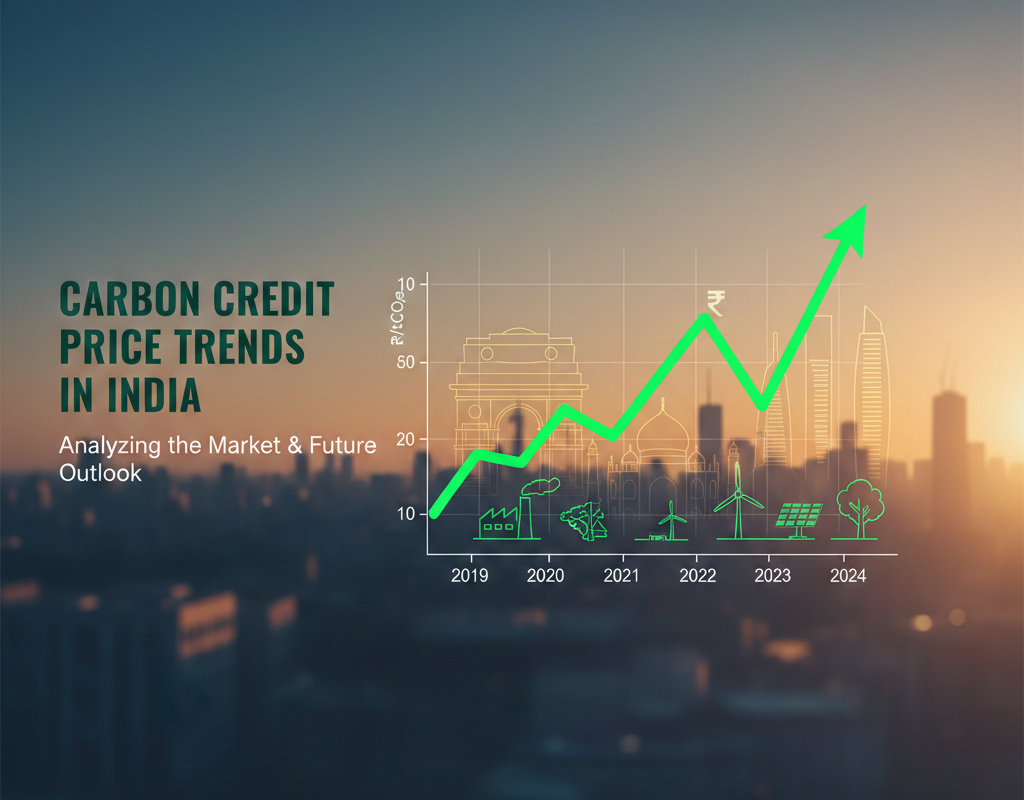
Carbon Credit Price Market Trends 2026
Carbon Credit Price Market Trends 2026
One of Asia’s most important venues for climate finance and environmental sustainability is the carbon market in India. Carbon credits are becoming more and more important in encouraging emission reduction initiatives across businesses as the nation approaches its net-zero emissions target by 2070. Policymakers, investors, and businesses looking to meet their sustainability goals are paying attention to India’s carbon credit price movements as a result of the carbon market’s evolution and shifting regulatory frameworks.

Recognizing the Value of Carbon Credits in India
One metric ton of carbon dioxide (CO2) or its equivalent in other greenhouse gases is represented by a carbon credit, which is a tradable certificate. Energy efficiency programs, waste-to-energy projects, afforestation initiatives, and renewable energy projects are the main drivers of carbon credits in India.
The market is divided into two main segments:
- Compliance Market: Required by regulatory bodies, where businesses must fulfill certain emission reduction goals.
- Companies can voluntarily buy carbon credits through the Voluntary Carbon Market (VCM) to offset their emissions and show their commitment to corporate social responsibility.
Government regulations, global carbon markets, and corporate sustainability pledges all have an impact on the price of carbon credits, which is a reflection of the supply and demand for these certificates.
Current Indian Trends in Carbon Credit Prices
The cost of carbon credits in India has been steadily rising as of early 2026. According to analysts, the global demand for verifiable emission reductions and growing corporate commitments to net-zero objectives have caused prices in the voluntary carbon market to rise. The market supply is steadily increasing as a result of the continued dominance of renewable energy projects, especially solar and wind, in the issue of carbon credits.
- Average Market Price: In recent years, the average cost of carbon credits in India has steadily increased, ranging from INR 300 to INR 500 per ton of CO2 equivalent.
- Sector-Specific Trends: Energy efficiency initiatives are priced moderately, but renewable energy projects are more expensive because of their proven ability to reduce emissions.
- Demand Drivers: In order to comply with their ESG (Environmental, Social, and Governance) pledges, big international firms doing business in India are investing more and more in carbon credits, which is pushing up costs.
Factors Influencing India’s Trends in Carbon Credit Prices
- Government Regulations and Policies
To support carbon trading and advance sustainable development, the Indian government has put in place a number of policies. Market-based trading of energy-saving certificates has been made possible by programs like the Perform, Achieve and Trade (PAT) scheme run by the National Mission on Enhanced Energy Efficiency (NMEEE), which has successfully laid the groundwork for a strong carbon market.
- Influence of Global Markets
International carbon markets have an impact on India’s carbon credit prices as well. Indian carbon credits have emerged as a desirable investment choice due to the growing demand for carbon offsets worldwide, particularly from nations with strict emission reduction regulations. International standards such as the Verified Carbon Standard (VCS) and Gold Standard are frequently met by verified projects in India, assuring legitimacy and promoting international trade.
- Commitments to Corporate Sustainability
Trends in carbon credit prices in India have been significantly influenced by the growth of ESG-conscious businesses. The demand for voluntary carbon credits has increased as a result of businesses in industries including manufacturing, IT, and pharmaceuticals embracing carbon neutrality targets.
- Developments in Technology
The transparency and legitimacy of carbon credits in India have been improved by technological advancements in monitoring, reporting, and verification (MRV) of emission reduction programs. Accurate project verification is now possible thanks to blockchain-based tracking systems and remote sensing technologies, which lower investor risk and promote market expansion.
Issues Impacting the Stability of Carbon Credit Prices
Despite potential for expansion, a number of obstacles influence India’s carbon credit pricing trends:
- Absence of Standardized price Mechanism: Although the voluntary carbon market is growing, there is still no completely established national price system for carbon credits. Price volatility may result from this.
- Project certification Bottlenecks: Supply-demand dynamics may be impacted by delays in the registration and certification of emission reduction projects, which may restrict the supply of new carbon credits.
- Market Awareness: Overall market liquidity is limited because smaller businesses and sectors currently lack the knowledge and experience necessary to engage in the carbon credit market successfully.
- Policy Uncertainty: Modifications to tax laws or environmental rules may have an immediate effect on the availability and cost of carbon credits.
Opportunities for Investment in the Carbon Credit Market in India
Purchasing carbon credits in India offers several advantages:
- Renewable Energy Projects: High-quality credits from solar, wind, and biomass projects are in high demand both domestically and abroad.
- Afforestation and Reforestation Projects: These initiatives support biodiversity and environmental preservation in addition to producing carbon credits.
- Energy Efficiency Initiatives: Tradeable energy-saving certificates are produced by investments in energy-saving initiatives for industrial and manufacturing operations.
- Carbon Credit Funds: A number of funds currently provide exposure to the Indian carbon markets for investments, offering a range of risk and possible returns.
Regional Perspectives: India’s Carbon Credit Market
Depending on industrial activity, the ability for renewable energy, and government backing, different parts of India have made varying contributions to the carbon market:
- Northern India: Solar energy projects are most prevalent in states like Rajasthan and Gujarat, which produce a significant amount of carbon credits.
- Western India: Maharashtra’s industrial centers make contributions through waste management and energy efficiency initiatives.
- Southern India: Karnataka and Tamil Nadu provide a variety of carbon credit portfolios and are leading states for wind and biomass projects.
- Eastern India: States like Odisha and West Bengal are dominated by forestry and reforestation projects, which support the carbon market’s environmental impact section.
In conclusion: Carbon Credit Price Market Trends 2026
The market for carbon credits in India is at a turning point, representing the meeting point of financial possibility, corporate sustainability, and environmental legislation. Government assistance, business demand, worldwide market integration, and technological developments are all contributing to the rising price of carbon credits.
Overall, the future for carbon credit pricing patterns in India is positive, despite obstacles including market awareness and regulatory uncertainty. The importance of carbon markets as a tool for achieving climate goals and promoting sustainable economic growth is becoming more widely acknowledged by businesses, investors, and politicians.