
 Aksh
Aksh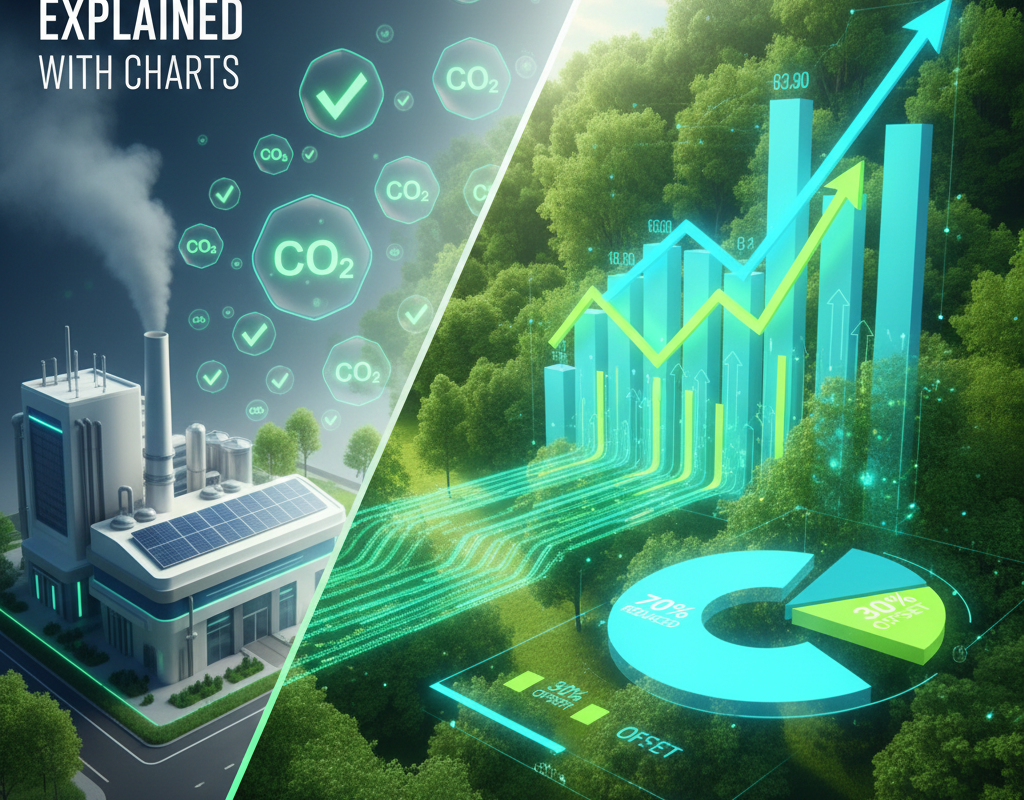
Carbon Credit Trading Explained with Market Charts
Carbon Credit Trading Explained with Market Charts
Reducing greenhouse gas emissions and promoting environmental sustainability have gained international attention in recent years. Carbon credits have become one of the most effective weapons created to fight climate change. They provide a means for governments, corporations, and individuals to lessen their carbon footprint and support sustainable initiatives throughout the world.
The procedures, trading systems, advantages, difficulties, and prospects of the carbon market are all thoroughly explained in this article. In order to assist you better grasp the landscape, we also present charts and visual data.

The Operation of Carbon Credits
The following is the general structure of the carbon credit allocation and utilization process:
- Emission Cap: The maximum amount of emissions that businesses in particular industries are permitted to emit is set by governments or regulatory agencies.
- Allocation of Credit: Businesses are given carbon credits equal to their permitted emissions.
- Trading: Businesses that don’t meet their emissions targets can sell extra credits to companies that do.
- Offset Projects: Initiatives like reforestation, renewable energy, or energy efficiency can also produce carbon credits by lowering or eliminating emissions.
Businesses are encouraged to invest in cleaner technology and develop by this market-based strategy.
Carbon Credit Types
Two major categories can be used to classify carbon credits:
- Carbon Credits for Compliance
Businesses employ these to adhere to government-imposed regulated emission caps. The Perform, Achieve, and Trade (PAT) program in India and the European Union Emission Trading Scheme (EU ETS) are two examples.
- Carbon Credits That Are Voluntary
Businesses and individuals voluntarily buy these to reduce their carbon footprint. Multinational firms frequently employ voluntary carbon credits to improve their brand image and reach sustainability targets.
The advantages of carbon credits
The carbon credit system benefits people, companies, and the environment in a number of ways.
- Environmental Benefits: Encourages initiatives like solar, wind, and reforestation that lower greenhouse gas emissions.
- Financial Incentives: Businesses can sell extra credits to generate income.
- Corporate Responsibility: Assists companies in enhancing their corporate social responsibility (CSR) credentials and reaching sustainability goals.
- Global Impact: Promotes global collaboration in the fight against climate change.
In India, carbon credits
As part of its climate policies, India has been adopting carbon credits more and more. Key initiatives include:
- The Perform, Achieve, and Trade (PAT) scheme incentivizes businesses to trade excess carbon credits and increase energy efficiency.
- Renewable Energy Certificates (REC): Encourage the production and exchange of renewable energy.
- Voluntary Carbon Market: In support of sustainability measures, Indian businesses are taking part in international voluntary carbon markets.
Due to industrial demand, the expansion of renewable energy, and international sustainability commitments, India’s carbon market is expanding quickly.
How Your Carbon Footprint Can Be Offset?
By buying carbon credits, people and companies can reduce their carbon footprint. Typical projects consist of:
- Trees remove CO2 from the atmosphere through reforestation and afforestation.
- Renewable Energy Projects: Projects using hydro, solar, and wind power lessen dependency on fossil fuels.
Programs for energy efficiency include supporting green habits, cutting down on energy waste, and upgrading equipment.
Carbon Credit Difficulties
Carbon credits have a number of drawbacks despite their advantages:
- Problems with Verification: It’s crucial to make sure credits reflect real emission reductions.
- Market Volatility: Profitability may be impacted by changes in carbon credit pricing.
- Double Counting: Multiple entities cannot claim the same credit.
- Limited Knowledge: A lot of companies and people still don’t know how to properly use carbon credits.
Carbon Credits’ Future
As companies commit to net-zero goals and governments tighten rules, the market for carbon credits is predicted to expand rapidly. Transparency and efficiency will probably be improved by innovations like international carbon trading agreements, blockchain verification, and AI-powered carbon tracking.
According to experts, the carbon market will not only be essential in reducing the effects of climate change, but it will also emerge as a significant financial asset class in the next ten years.
In conclusion: Carbon Credit Trading Explained with Market Charts
With their advantages for the environment and the economy, carbon credits are an essential weapon in the fight against climate change. Businesses and individuals can make well-informed decisions to lessen their carbon footprint and promote sustainable development by being aware of their types, workings, trading mechanisms, and difficulties.
India’s increasing participation in renewable energy initiatives and carbon trading points to a bright future for the nation’s carbon markets. Carbon credits can contribute to a more sustainable and environmentally friendly future for everybody if they are planned for and used actively.
What Is One Carbon Credit Worth in India? Price, Value, and Market Explained
What Is One Carbon Credit Worth in India? Price, Value, and Market Explained
2 Comments