
 Aksh
Aksh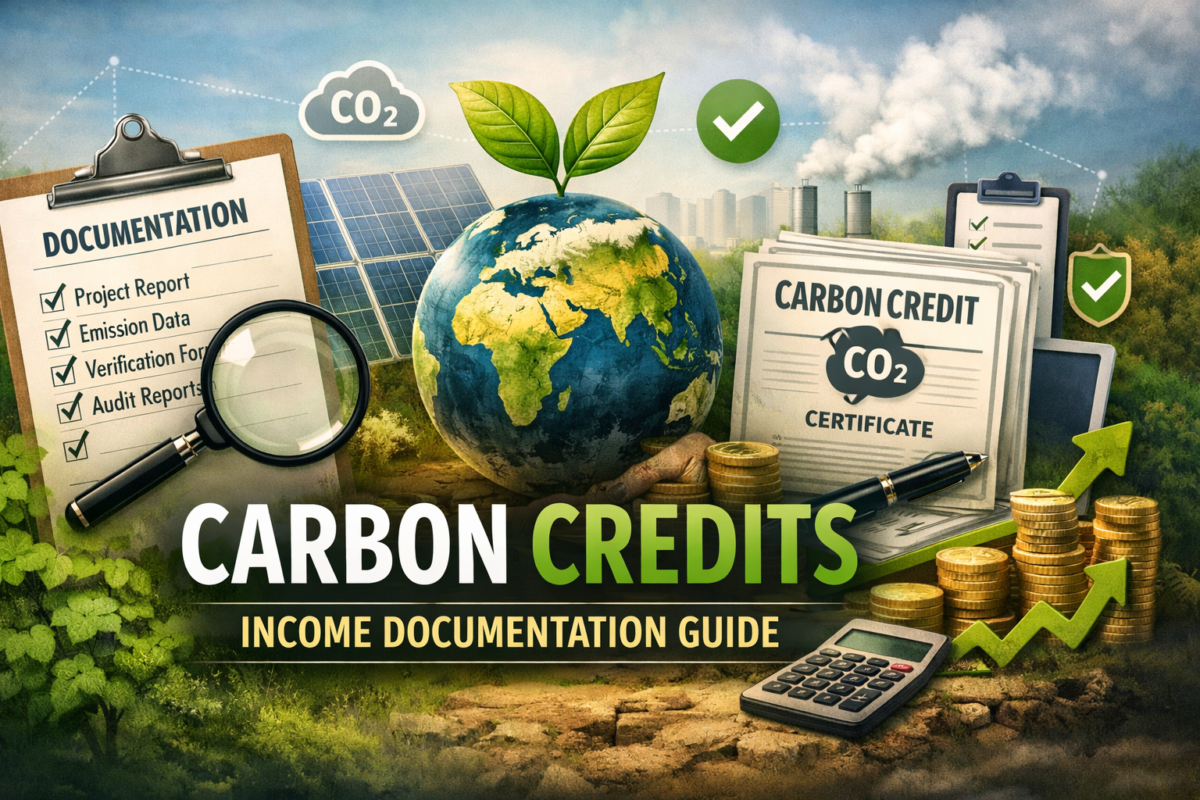
Carbon Credits Income Documentation Guide
Carbon Credits Income Documentation Guide
Carbon credits are becoming a vital tool for companies and individuals looking to lower their carbon footprint as the globe moves toward sustainable practices. Many businesses are looking into carbon credit projects in an effort to increase their revenue as a result of India’s rising emphasis on carbon trading and emission reduction initiatives. Nonetheless, accurate recording and reporting of carbon credit income is a critical component that frequently confounds participants.
The intricacies of carbon credit income paperwork, adherence to Indian tax regulations, optimal record-keeping techniques, and methods to optimize your carbon credit profits will all be covered in this extensive guide. Knowing these processes is crucial for transparency and regulatory compliance, regardless of how big or small your company is.

Comprehending Income Generation and Carbon Credits
Knowing what carbon credits are and how they are used to produce revenue is crucial before beginning any documentation. One ton of carbon dioxide (CO2) or its equivalent that has been decreased or eliminated from the atmosphere is represented by a carbon credit. Companies, sectors, and project planners can obtain carbon credits by putting green projects like:
- Projects involving renewable energy
- Waste-to-energy initiatives
- Afforestation and forest conservation
- Methane extraction from farms or landfills
- Enhancements in industrial energy efficiency
These carbon credits can be earned and then sold on carbon markets to make money. The Clean Development Mechanism (CDM) of the government and various voluntary initiatives have propelled the steady growth of the carbon credit market in India.
The Value of Accurate Documentation
In addition to ensuring compliance, recording your carbon credit income makes your initiatives audit-ready, reputable in the carbon market, and eligible for further funding or incentives. Appropriate documentation fulfills multiple functions:
- Tax Compliance: Carbon credit income is classified as taxable revenue. To file taxes, accurate records are required.
- Market Credibility: When selling your carbon credits in domestic or foreign markets, verified paperwork increases consumer confidence in them.
- Project Validation: To confirm the legitimacy and significance of carbon reduction initiatives, regulatory bodies frequently need supporting evidence.
- Audit Readiness: Accurate documentation facilitates audits and lowers the possibility of fines and penalties.
Detailed Procedure for Documenting Carbon Credit Income
Step 1: Registration and Approval of the Project
Your project must be registered and approved under recognized carbon credit programs before any revenue is earned. Popular schemes in India include:
- Mechanism for Clean Development (CDM)
- Carbon Standard Verified (VCS)
- The Gold Standard (GS)
You will obtain project approval papers upon registration, which becomes the basis for all subsequent revenue.
Important Documents:
- Certificate of Project Registration
- Letters of approval from the appropriate carbon credit authorities
- Plans for reducing emissions
Step 2: Monitor the Production of Carbon Credits
Carbon credits must be tracked accurately. Every credit obtained needs to be linked to quantifiable decreases in emissions. This includes:
- Using established procedures to measure the reduction of emissions
- Noting resource or energy savings
- Creating a report on the issuance of carbon credits from the certifying authority
Top Techniques:
- To make tracking easier, keep a digital ledger.
- Note the date, amount, and confirmation of each carbon credit that is given out.
- Connect each credit to the particular project task.
Step 3: Keep Up with Supporting Records
The validity of your carbon credit income is demonstrated by supporting documents. This could consist of:
- Invoices for sales
- Bank records attesting to the payment’s receipt
- Contracts or agreements with purchasers
- Carbon credit authorities’ verification reports
Maintaining the organization of these records guarantees that they can be verified and defended in the event of regulatory inspections.
Step 4: Calculating Income from Carbon Credits
In your accounting records, carbon credit income should be listed under other income or business revenue. To guarantee accurate financial reporting, businesses frequently adhere to generally accepted accounting principles or Indian Accounting Standards (Ind AS).
Accounting Advice:
- If carbon credit income is a component of your primary company, record it as “Other Operating Income.”
- For clarity, separate accounting for operating revenue and carbon credit revenue
- Balance income against carbon credit certificates and bank receipts.
Advice for Effective Documentation of Carbon Credit Income
- Utilize Digital Tools: Make use of tools to monitor the issue, sales, and revenue of carbon credits. Errors are decreased, and efficiency is increased.
- Separate Accounts: Keep distinct accounting records or bank accounts for carbon credit transactions.
- Frequent Reconciliation: Continually compare carbon credit income to buyer invoices and certificates.
- Employ Experts: Hire experts or accountants with knowledge in reporting and taxing carbon credits.
- Keep All Proofs: As part of your permanent records, keep all contracts, invoices, and verification reports.
- Keep Up: Tax laws and carbon credit restrictions are subject to change. To stay compliant, keep up with Indian authorities’ updates.
Common Errors to Steer Clear of
- Combining Revenue Streams: Avoid combining carbon credit earnings with other company revenue without the appropriate separation.
- Unfinished Records: Verify that all carbon credits produced and sold have supporting paperwork.
- Ignoring Tax Obligations: The majority of carbon credit income is taxable, therefore don’t make any assumptions regarding tax exemptions.
- Delayed Reporting: Financial reporting and audits may become more difficult with delayed documentation.
- Absence of Verification: Before selling or reporting, be sure all credits have been confirmed by reputable organizations.
Benefits of Accurate Carbon Credit Records
- Increased Credibility: Buyers are more trusting of verified and recorded income.
- Audit Readiness: Having well-organized records makes audits easier.
- Financial Clarity: Accurate financial planning and forecasting are made possible by proper tracking.
- Compliance assurance makes sure that environmental and tax laws are followed.
- Investor Confidence: Attractiveness to financing agencies and investors is enhanced by clear documentation.
In conclusion: Carbon Credits Income Documentation Guide
Participating in India’s expanding carbon market now requires proper documentation of carbon credits earning; it is no longer an option. Businesses and project developers can guarantee compliance, maximize tax benefits, and preserve reputation in the carbon trading ecosystem by adhering to the above-mentioned procedures.
The foundation of any successful carbon credit initiative is careful record-keeping, from project registration to income reporting. Consistent documentation protects your profits and provides access to long-term sustainability options, regardless of whether you are making money from forestry, renewable energy, or energy efficiency projects.
Carbon Credit Trading Best Practices: A Complete Guide to Maximizing Impact and Returns
Carbon Credit Trading Best Practices: A Complete Guide to Maximizing Impact and Returns