
 Aksh
Aksh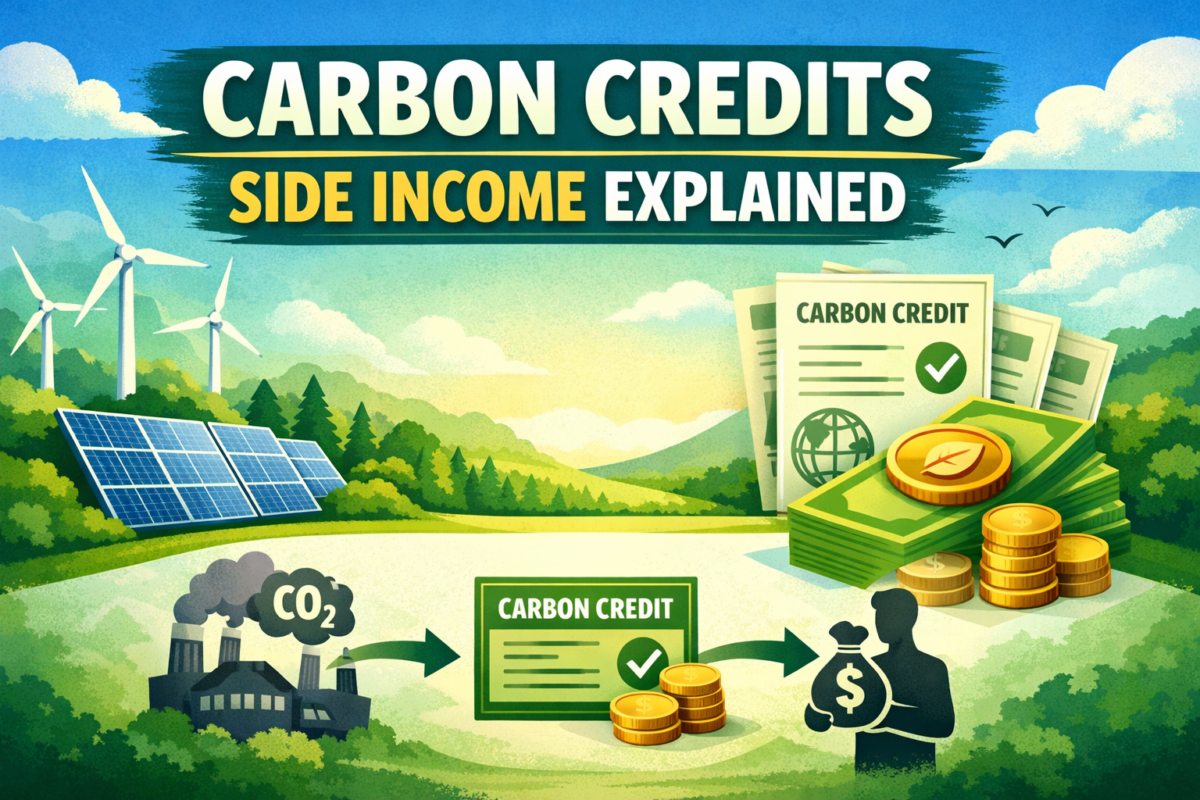
Carbon Credits Side Income Explained
Carbon Credits Side Income Explained
The global trend toward sustainability has evolved into an economic revolution rather than only an environmental movement. People, businesses, and governments are all actively looking for methods to cut carbon emissions. Carbon credits are a potent financial tool at the heart of this shift.
Carbon credits are more than just an environmental duty for many Indians; they are a respectable and expanding source of additional revenue. Knowing how carbon credits operate can open up new revenue sources for everybody involved in the agricultural industry, including farmers, landowners, investors, entrepreneurs, and developers of renewable energy.
Specifically designed for the Indian market, this extensive guide provides a detailed explanation of carbon credits as a source of side income.

Carbon Credits: What Are They?
The decrease or removal of one metric ton of carbon dioxide (CO₂) or its equivalent greenhouse gas from the atmosphere is represented by a tradable certificate known as a carbon credit.
Carbon credits can be produced by projects that lower emissions, such planting trees, putting in solar panels, or absorbing methane. Companies or individuals wishing to offset their emissions can purchase these credits.
There are two main markets where carbon credits are traded:
- Governments regulate compliance markets.
- Voluntary Carbon Markets: Businesses buy credits on their own initiative to achieve environmental targets.
India is quickly becoming a major player in both areas.
The Reasons Behind India’s Growing Interest in Carbon Credits as a Side Source of Income
India has pledged to meet aggressive climate targets, such as reaching net-zero emissions by 2070. Demand for carbon reduction initiatives across industries is increased by this shift.
Opportunities for carbon credit income are being driven by a number of factors:
- Increasing business commitments to ESG
- Demand for verified carbon offsets worldwide
- Growth of renewable energy
- Raising awareness in rural communities and among farmers
- Framework of supportive policies from the Indian government
Because of this, carbon credit side income is now available to individuals and small businesses rather than only big organizations.
How Side Income Is Produced by Carbon Credits?
It’s critical to dissect the earning method in order to comprehend the explanation of carbon credits side income:
- Step 1: Put a Carbon-Reduction Initiative into Action
This could entail enhancing soil health, putting in renewable energy systems, or planting trees.
- Step 2: Calculate and Confirm Reductions in Emissions
The amount of carbon that has been eliminated or reduced is evaluated by an impartial verification authority.
- Step 3: Carbon Credits are issued
Carbon credits are created from verified emission reductions.
- Step 4: Sell the Credits
Buyers looking for offsets purchase credits in voluntary or compliant marketplaces.
- Step 5: Get Paid
The quantity of credits sold and the current market pricing determine how much money is made.
Carbon Farming: A Significant Source of Supplementary Revenue
In India, carbon farming is becoming more and more popular. It includes farming methods that sequester carbon in vegetation and soil.
Typical techniques consist of:
- Farming without tillage
- Using cover crops
- Agroforestry
- Organic agriculture
These techniques create carbon credits while increasing soil fertility. Carbon farming provides resilience and extra income for Indian farmers who deal with erratic weather patterns.
Principal Advantages of Carbon Credit Supplementary Revenue
- A Variety of Revenue Sources
Carbon credits enhance revenue without taking the place of essential operations.
- Long-Term Economic Prospects
Credits from many carbon initiatives last for ten to thirty years.
- Effects on the Environment
Direct contributions to climate mitigation are made by participants.
- Increased Land Value
Long-term production can be raised by sustainable land practices.
- Business Collaborations
Aggregators or developers may collaborate with farmers and small enterprises.
How to Begin Earning Extra Money in India with Carbon Credit?
Take these actions if you want to profit from carbon credits:
- Determine Eligibility
Find out if your business, project, or land is eligible.
- Perform a feasibility analysis
Analyze the financial feasibility and possible volume of carbon reduction.
- Sign up for the project
Register under a national program or an authorized carbon standard.
- Observation and Confirmation
Keep thorough records and submit to outside audits.
- Strategically Sell Credits
Select the appropriate market and bargain for advantageous prices.
Concluding Remarks: Carbon Credits Side Income Explained
Carbon credits convert environmental stewardship into economic gain. This developing market provides a scalable, long-term side income source for Indian farmers, companies, landowners, and investors.
Participants create tradable assets by cutting emissions or removing carbon from the environment, which businesses throughout the world are keen to buy.
Carbon credit income is expected to become a key component of green financing in India as the nation’s carbon trading system is strengthened and its commitments to the global climate expand.
You may put yourself at the forefront of this expanding opportunity by being aware of the steps involved, assessing the dangers, and working with knowledgeable experts.
Carbon credits have evolved from a climate answer to an untapped business potential.
Carbon Credit Buying Checklist: A Complete Guide for Sustainable Investment
Carbon Credit Buying Checklist: A Complete Guide for Sustainable Investment