
 Aksh
Aksh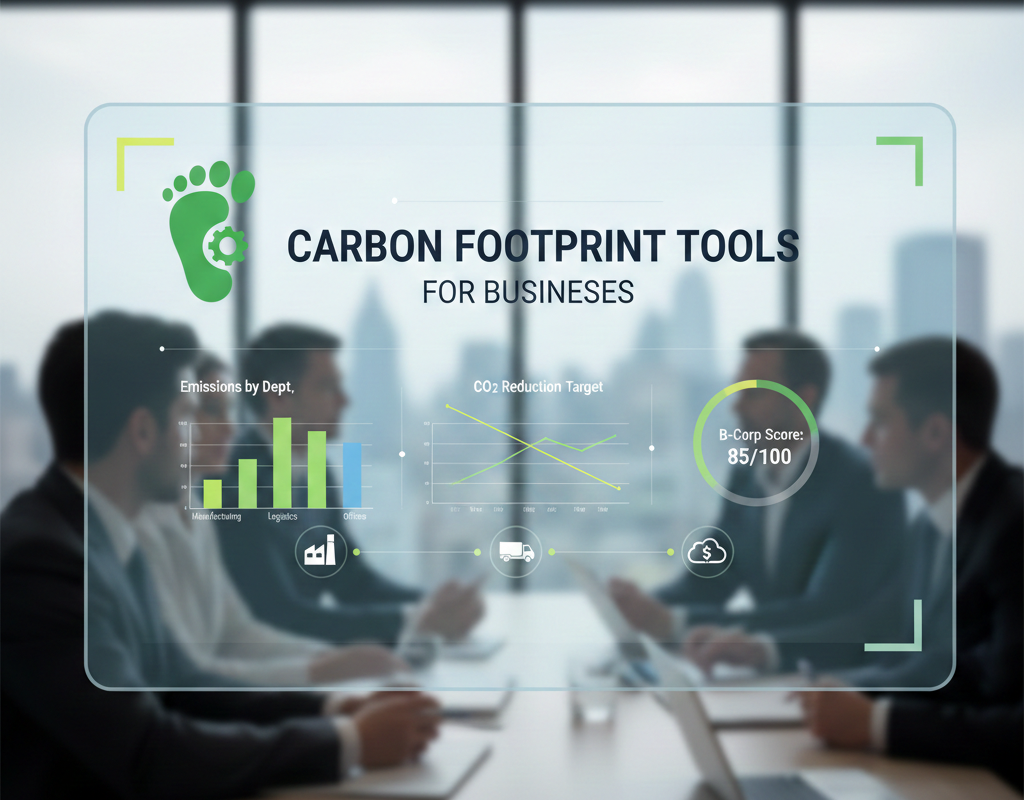
Carbon Footprint Tools Explained for Businesses
Carbon Footprint Tools Explained for Businesses
Sustainability is becoming a key strategy for expansion, reputation, and compliance in today’s business environment. Knowing and controlling one’s carbon footprint is one of the most crucial things a company can do to lessen its environmental effect. In order for organizations to properly measure, track, and minimize greenhouse gas (GHG) emissions, carbon footprint tools have become indispensable.

A Carbon Footprint: What Is It?
A carbon footprint is the entire amount of greenhouse gas emissions that a person, business, product, or activity produces, either directly or indirectly. In order to account for different greenhouse gases, such as methane (CH4), nitrous oxide (N2O), and fluorinated gases, these emissions are usually measured in carbon dioxide equivalents (CO2e).
Businesses must comprehend their carbon footprint for the following reasons:
- Finding hotspots for emissions
- Using efficiency to save operating expenses
- Fulfilling ESG and regulatory requirements
- Increasing brand recognition among environmentally minded customers
The Need for Carbon Footprint Tools in Businesses
Manually managing a company’s carbon footprint is difficult and prone to mistakes. Companies work in a variety of areas, including supply chain operations, manufacturing, transportation, and energy use. Carbon footprint technologies offer a methodical, data-driven way to precisely monitor emissions.
Businesses should use these tools for the following main reasons:
- Accuracy and Standardization of Data
Carbon footprint tools provide standardized methods for calculating greenhouse gas emissions in accordance with accepted standards like ISO 14064 and the GHG Protocol. Better decision-making and compliance reporting are made possible by accurate data.
- Adherence to Regulations
Globally, governments are enforcing more stringent environmental laws. Businesses can use tools to monitor emissions and make sure they’re in compliance with international agreements like the Paris Agreement, local laws, and reporting requirements.
- Reducing Carbon Strategically
Organizations can apply focused tactics including supply chain optimization, energy efficiency, and the use of renewable energy by locating emission hotspots.
- Stakeholder and Investor Confidence
ESG (Environmental, Social, Governance) compliance is becoming more and more important to investors. Credibility and stakeholder confidence are increased when a quantified carbon reduction approach is demonstrated.
The Advantages of Carbon Footprinting Tools
Using carbon footprint tools has both concrete and abstract advantages.
- Efficiency-Based Cost Savings
By identifying energy-intensive activities, businesses can put efficiency measures in place that lower operational costs and emissions.
- Improved Reporting on Sustainability
Tools assist in producing reports that are in line with frameworks such as the Sustainability Accounting Standards Board (SASB), Global Reporting Initiative (GRI), and Carbon Disclosure Project (CDP). For customers, regulators, and investors, accurate reporting is essential.
- An edge over competitors
Businesses that exhibit quantifiable sustainability efforts frequently benefit from improved brand uniqueness, customer loyalty, and market placement.
- Making Decisions Based on Data
Strategic planning, risk assessment, and well-informed investment in sustainable technology are all made possible by accurate carbon data.
Difficulties with Carbon Footprint Instruments
Despite the fact that carbon footprint tools have several advantages, organizations may encounter difficulties:
- Data Complexity: Accurate data collection across all vendors and business units can be challenging.
- Measurement of Scope 3: It is difficult to measure indirect emissions from the supply chain.
- Cost of Implementation: Investing heavily in enterprise-level software may be necessary.
- Standardization: Careful calibration is necessary to ensure alignment with international standards such as ISO 14064 or the GHG Protocol.
New Developments in Carbon Footprint Instruments
The measurement of carbon footprints is a rapidly developing field. Important trends consist of:
- Integration of AI and Machine Learning
AI is now used by sophisticated algorithms to forecast emission patterns, optimize energy use, and pinpoint high-impact reduction tactics.
- Blockchain Technology for Openness
Blockchain technology lowers the danger of data manipulation by ensuring transparent tracking of emissions throughout the supply chain.
- Connectivity to ESG Platforms
For easier reporting and compliance, carbon footprint technologies are being included into larger ESG management systems more and more.
- Monitoring in Real Time
Businesses can track emissions in real time and take prompt corrective action thanks to IoT-enabled sensors and cloud-based solutions.
In conclusion: Carbon Footprint Tools Explained for Businesses
It is now essential for businesses to comprehend and control their carbon footprint. As investors’ expectations, regulatory pressure, and climate-conscious consumers have increased, carbon footprint techniques have become essential for attaining sustainable growth.
Businesses can lessen their environmental footprint while simultaneously gaining operational efficiencies, improved reputation, and long-term resilience by choosing the appropriate tools, gathering precise data, and putting focused reduction initiatives into practice.
Businesses that implement carbon footprint management strategies now will lead the way in sustainability tomorrow as India transitions to a greener economy.
Carbon Credit Price Explained: Market Insights, Trends, and Future Outlook for 2026
Carbon Credit Price Explained: Market Insights, Trends, and Future Outlook for 2026