
 Aksh
Aksh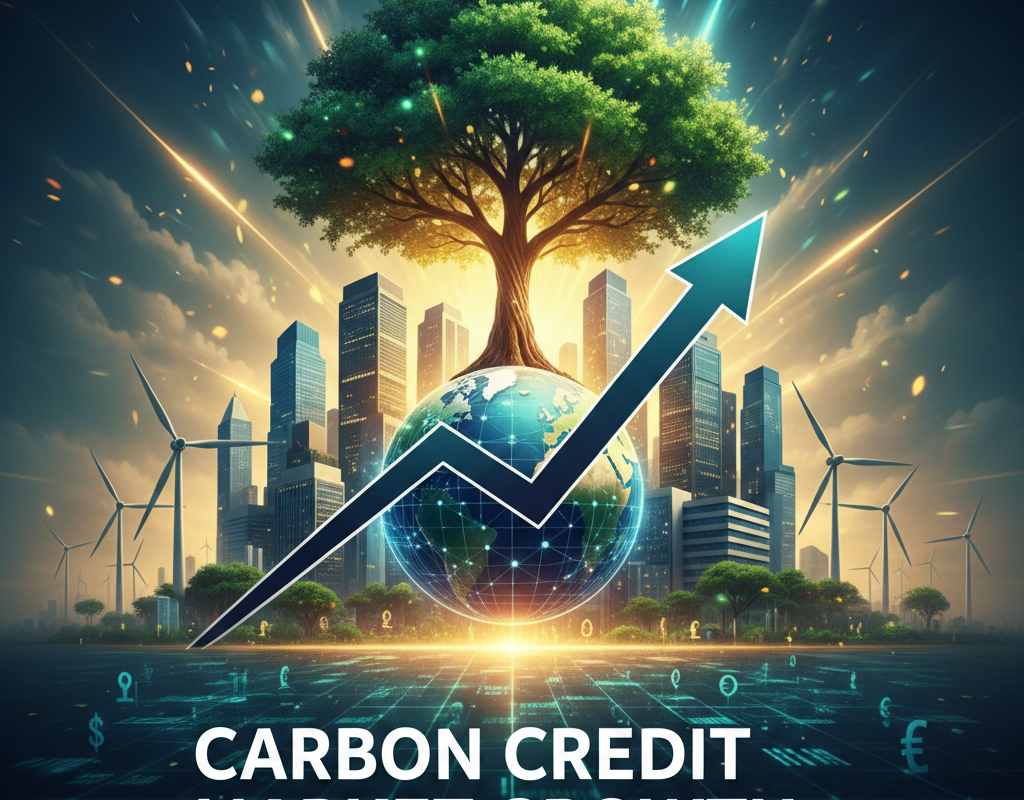
Comprehensive Carbon Credit Trading Market Growth
Comprehensive Carbon Credit Trading Market Growth
One of the most significant trends in global climate finance and sustainability strategy is the expansion of the carbon credit trading market. The carbon market is fast evolving from a specialized climate policy tool to a mainstream asset class and environmental compliance mechanism due to growing regulatory frameworks, corporate net-zero commitments, and technology that facilitates transparent transactions. Both government-regulated compliance markets and voluntary carbon markets used by businesses to offset emissions are expected to grow significantly. The expansion of this sector has significant ramifications for global efforts to mitigate climate change, environmental investments, and corporate strategy.

Market Size and Projection: Growing to Value Trillions
According to analysts, the global market for trading carbon credits, which includes both voluntary and compliance segments, is presently worth hundreds of billions of dollars and is predicted to expand rapidly over the next ten years. According to market research, the carbon market is expected to reach a value of USD 576.4 billion by 2035, from USD 132.9 billion in 2025. This development will be driven by corporate decarbonization commitments and higher regulatory adoption, resulting in strong compound annual growth rates.
According to some thorough projections, the market might rise to multi-trillion dollar levels by 2033 or later, indicating the growing demand for carbon credits as crucial instruments for mitigating climate change.
Factors Influencing the Growth of the Carbon Credit Trading Market
- Initiatives in Regulation and Policy
Global regulatory framework improvement is one of the main factors propelling the rise of carbon trading. To accomplish national and international climate goals, governments are progressively enacting cap-and-trade schemes, emissions intensity targets, and mandatory carbon footprint reporting requirements. These frameworks directly drive market demand by forcing major greenhouse gas emitters to engage in carbon credit trading or risk penalties for noncompliance.
- Net-Zero Goals and Corporate ESG Commitments
In addition to compliance, the voluntary carbon market is being driven by a rise in Environment, Social, and Governance (ESG) investment and net-zero commitments from large firms. Businesses from a variety of industries, including manufacturing, consumer products, and technology, are pledging to lower their carbon footprints by buying carbon credits to make up for emissions they are unable to completely eradicate.
- Platforms for Trading and Technological Innovation
Technology is essential for improving accessibility, transparency, and market efficiency. Smart contracts, automated auditing systems, and blockchain-based carbon credit trading platforms are transforming the issuance, verification, and selling of credits. These developments lower transaction costs, boost confidence in the quality of carbon offsets, and allow both smaller market players and institutional investors to participate more widely.
Market Segments for Carbon Credit Trading
The voluntary and compliance markets make up the two main segments of the carbon credit market; each has its own growth dynamics, structures, and motivations.
- Carbon Markets for Compliance
Emitters are legally required to lower their emissions or buy carbon credits to make up for excess emissions in compliance markets, which are government-regulated trading platforms. North American and emerging market compliance programs, as well as regional cap-and-trade systems like the EU ETS and Chinese ETS, are a few examples.
- Markets for Voluntary Carbon
Even in the lack of a statutory need, businesses, non-governmental organizations, and individuals can buy carbon credits through the voluntary carbon market. Usually, nature-based solutions like reforestation, soil carbon sequestration, renewable energy projects, and cutting-edge carbon removal technologies are the source of these credits.
Prospects for the Future: Strategic Forecasts and Opportunities
Several convergent tendencies that indicate steady expansion will determine the carbon credit trading market’s future.
- Combining Sustainable Finance with Integration
Green bonds, ESG-linked loans, and climate risk portfolios are examples of sustainable finance products that are becoming more and more connected to carbon markets. Liquidity is improved, institutional capital is drawn in, and carbon credits are positioned as investable assets in mainstream finance through integration with financial markets.
- Adoption of Advanced Technology
Digital registries, blockchain, and AI-driven verification will all keep enhancing market transparency, lowering the risk of fraud, and expediting trading procedures. These technological advancements increase the inclusivity of the carbon market by lowering entry barriers, especially for SMEs and emerging market participants.
- Harmonization and Coordination Worldwide
More market integration and price harmonization will be made possible by international coordination on carbon pricing, verification standards, and cross-border trading agreements. Major trading regions can lessen friction and increase global liquidity in carbon markets by working to unify ETS systems and standards.
- Technological Innovation in Carbon Removal
Future carbon credit supply is anticipated to be greatly influenced by emerging carbon removal technologies, such as direct air capture, biochar, and ocean-based sequestration. This is particularly true in voluntary markets where high-integrity removal credits fetch premium prices.
In conclusion: Comprehensive Carbon Credit Trading Market Growth
One characteristic that distinguishes the global climate finance scene is the expansion of the carbon credit trading market. Carbon markets are quickly becoming into crucial tools for reducing emissions and combating climate change, driven by more robust climate regulations, business sustainability requirements, technical breakthroughs, and growing market infrastructure. Carbon trading is a vibrant nexus of economic opportunity and environmental responsibility, with forecasts showing continued growth in both international and Indian markets. Unlocking long-term growth and establishing carbon credits as significant tools in the path to net zero will require addressing issues with credibility, improving uniformity, and encouraging widespread market involvement.
Where to Buy Carbon Credits in India: A Complete Guide for Businesses and Investors
Where to Buy Carbon Credits in India: A Complete Guide for Businesses and Investors