
 Aksh
Aksh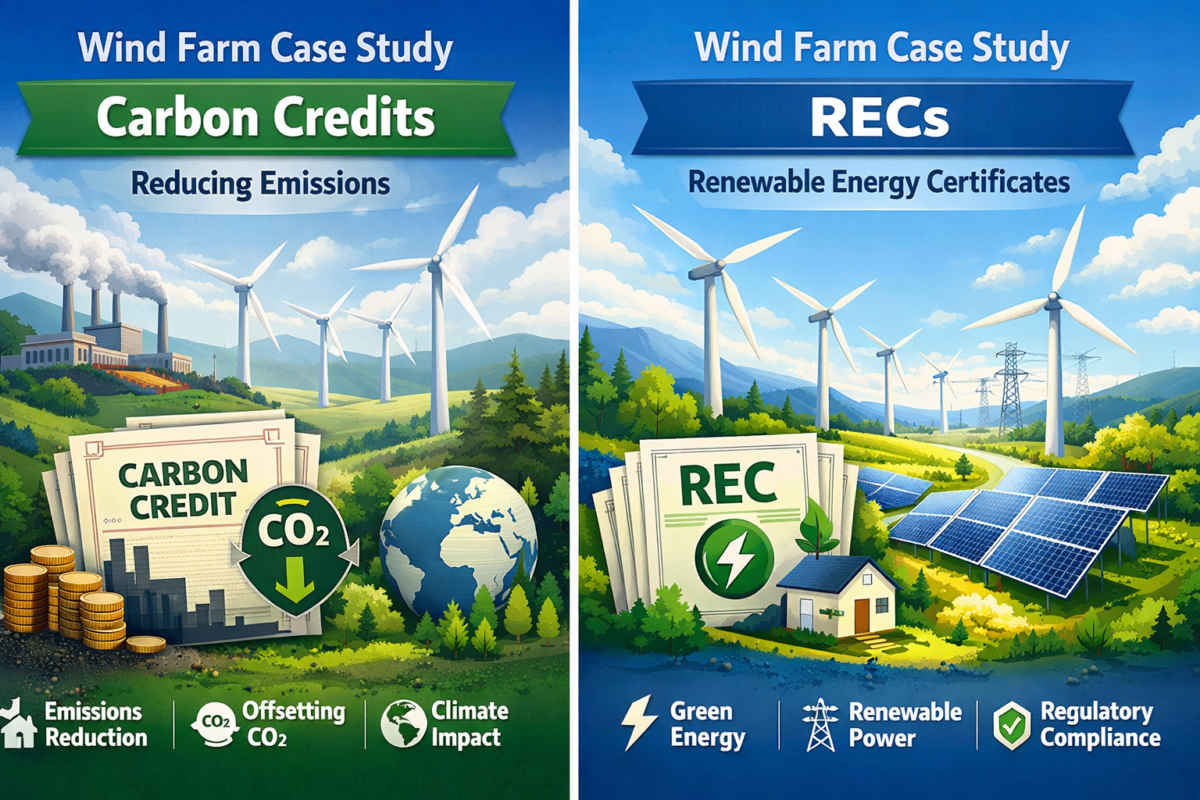
Exploring Wind Energy Projects in India
Exploring Wind Energy Projects in India
Wind energy is becoming more and more important as India moves on with its transition to renewable energy. In addition to producing clean electricity, wind farms support environmental sustainability through programs like Renewable Energy Certificates (RECs) and carbon credits. Businesses, investors, and legislators wishing to use renewable energy projects for both financial and environmental advantages must comprehend the distinctions between these two systems. This article provides a thorough case study of a wind farm in India, analyzing the advantages, difficulties, and real-world uses of carbon credits as opposed to renewable energy certificates.

Overview of Wind Power in India
With more than 40 GW of installed capacity as of 2025, India is one of the world’s leading producers of wind energy. Wind energy is a key component of sustainable development since the nation’s commitment to lowering greenhouse gas (GHG) emissions is in line with the objectives of the global Paris Agreement. Wind farms contribute to a cleaner energy mix by using the kinetic energy of the wind to create power without emitting carbon dioxide.
In order to encourage wind energy, the Indian government has implemented a number of incentives, such as tax breaks, feed-in tariffs, and eligibility for carbon credits and renewable energy certificates. Although RECs and carbon credits are both tools for promoting renewable energy, they function differently and have distinct uses in financial and environmental accounting.
Comprehending Carbon Credits
One metric ton of carbon dioxide equivalent (CO2e) is reduced or removed from the atmosphere in the form of tradable certificates known as carbon credits. In order to lower global greenhouse gas emissions, they are a part of both national and international frameworks. Businesses that surpass their emission reduction goals can sell extra carbon credits to groups that are having trouble reaching their goals, generating a financial incentive for environmentally friendly behavior.
Programs like the United Nations Framework Convention on Climate Change’s Clean Development Mechanism (CDM) regulate carbon credits (UNFCCC). Because wind energy projects produce electricity without releasing CO2, they can be used to replace energy that would otherwise come from fossil fuels, making them eligible for carbon credits.
Understanding Certificates of Renewable Energy (RECs)
Market-based instruments known as Renewable Energy Certificates, or RECs, attest to the bearer’s ownership of one megawatt-hour (MWh) of electricity produced from a renewable energy source. RECs monitor the production of renewable energy and encourage the use of clean energy, in contrast to carbon credits, which concentrate on reducing emissions.
The Central energy Regulatory Commission (CERC) oversees RECs in India, and they are essential to helping energy distribution firms fulfill their Renewable Purchase Obligations (RPOs). When clean electricity is fed into the grid by wind energy installations, RECs are created. These can subsequently be sold to organizations that are required to meet RPO targets.
GreenWind Energy Project: A Case Study of Wind Farms
The GreenWind Energy Project, a 50 MW wind farm in Tamil Nadu, India, serves as an example of how carbon credits and RECs are used in real-world situations.
Overview of the Project:
- 50 MW of installed capacity
- There are 25 turbines total, each with a capacity of 2 MW.
- 150 million kWh of energy are generated annually.
- An estimated 120,000 tons of CO2e are avoided annually.
The goal of the GreenWind project was to maximize financial and environmental gains by taking part in the carbon credit and REC markets.
Implementation of Carbon Credits:
With strict monitoring and reporting to verify emission reductions, GreenWind Energy registered their project under the Clean Development Mechanism. The project generated carbon credits by replacing coal-based electricity, which could be sold to buyers worldwide, including businesses looking to reduce their carbon footprint.
- 120,000 CERs (Certified Emission Reductions) were produced annually.
- The annual revenue from carbon credits is approximately ₹8 crores.
Implementation of REC:
GreenWind Energy registered with India’s REC system at the same time. Under the Renewable Purchase Obligation scheme, a REC was produced for each megawatt-hour that was put into the grid and sold to obligated firms.
- 150,000 RECs are generated annually.
- Revenue from RECs: around ₹3 crores annually
Comparative Perspectives:
- Financial Impact: While RECs gave steady, domestic income, carbon credits offered a larger revenue stream because of worldwide market rates.
- Environmental Impact: While RECs verified the production of renewable energy indirectly assisting emissions reduction, carbon credits directly measured reductions in CO2 emissions.
- Market Flexibility: RECs were more suited for local compliance with Indian legislation, but carbon credits offered the possibility of international commerce.
Important Takeaways from the Case Study on Wind Farms
- Dual Participation Maximizes Returns: By utilizing both carbon credits and RECs, initiatives such as GreenWind may maximize both revenue and environmental effect.
- Regulatory Awareness Is Essential: To optimize the advantages of carbon credits and RECs, it is essential to comprehend national and international frameworks.
- Sustainability as a Business Model: Project profitability can be increased and climate goals can be met by incorporating environmental assets into financial planning.
Active market monitoring is crucial for financial planning because both carbon credits and RECs are prone to price swings.
Future Prospects for India’s Wind and Carbon Markets
India’s lofty government plans of 500 GW of renewable energy capacity by 2030 are expected to propel the country’s renewable energy sector’s exponential growth over the following ten years. In order to meet these goals, wind energy will remain essential. Wind farms can anticipate the following as the carbon credit and REC market develops:
- Growing Demand for Carbon Credits: Verified carbon reductions will be in high demand due to global business sustainability ambitions and carbon neutrality aspirations.
- Improved REC Market Mechanisms: By stabilizing REC pricing, regulatory changes may promote increased domestic investments in renewable energy.
- Hybrid Financing Models: By combining RECs, carbon credits, and other incentives, wind projects can become more appealing to investors and more financially feasible.
In conclusion: Exploring Wind Energy Projects in India
The concrete advantages of incorporating carbon credits and renewable energy certificates (RECs) into wind energy projects are illustrated by the GreenWind Energy case study. RECs offer steady income and domestic regulatory compliance, while carbon credits offer global recognition and a direct impact on the climate. Wind farms may maximize their financial performance and support India’s clean energy objectives by carefully utilizing both techniques.
Developers, investors, and legislators can make well-informed decisions that balance financial gains with environmental stewardship by being aware of the distinctions, advantages, and difficulties between carbon credits and renewable energy certificates. Wind energy continues to be a vital component of India’s shift to a low-carbon, sustainable future, providing quantifiable climate benefits as well as economic prospects.