
 Aksh
Aksh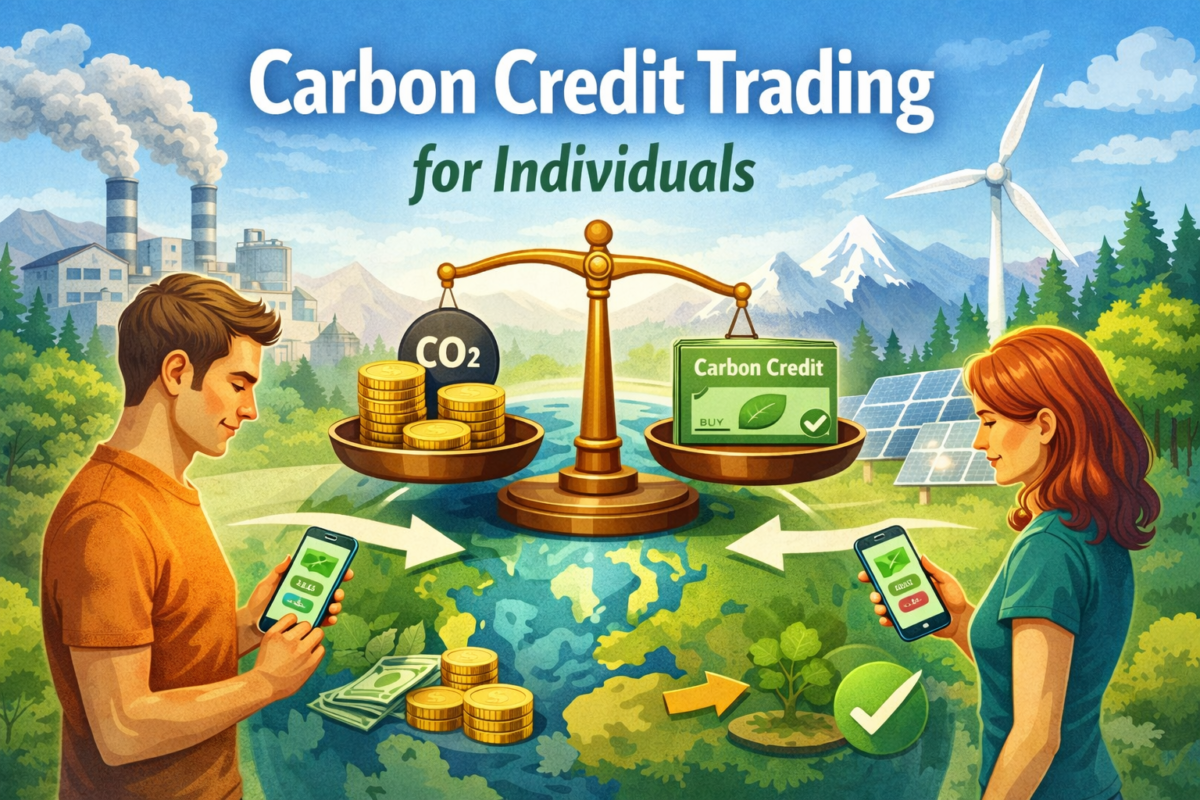
How Individuals Can Participate in Carbon Credit Trading?
How Individuals Can Participate in Carbon Credit Trading?
Carbon credit trading has become a key financial and environmental tool in the global battle against climate change. Carbon markets, which have historically been controlled by governments and businesses, are now open to individuals. This presents exciting chances for individual involvement in climate action and emissions reduction, as well as possible financial gains. This in-depth article describes carbon credit trading for individuals, breaks down the complexities of important ideas, talks about the legal and practical environment in India and throughout the world.

Carbon Credits: What Are They? An Introduction
One metric ton of carbon dioxide equivalent (CO2e) or other greenhouse gases being reduced or removed from the atmosphere is represented as a carbon credit. Setting a price on carbon emissions is the main goal of carbon credit trading, which encourages organizations to monetarily lessen their greenhouse gas footprint.
Carbon markets can be divided into two main categories:
- Compliance markets are regulated markets where firms must store carbon credits in order to comply with national or international legislation, and governments set emission limitations.
- Voluntary Carbon Markets: To offset their emissions, fulfill environmental obligations, or take part in sustainability initiatives, people, businesses, and organizations voluntarily purchase carbon credits.
Comparing Personal Carbon Trading with Personal Carbon Credits
It is crucial to differentiate between two notions that are closely related:
- Individual Carbon Trading
A speculative or developing idea is personal carbon trading, in which each person is given a per capita allowance for carbon emissions. Depending on their real emissions and demands, people could exchange these allowances with other people. With trade generating financial incentives for lesser emitters, this type of carbon market handles individual emissions much like a rationing system.
- Individual Carbon Credits
Individuals who cut their own carbon emissions in verified ways can earn personal carbon credits. Although they operate on a smaller, private scale, these personal credits adhere to the same fundamental principles as conventional carbon credits.
The Significance of Carbon Credit Trading for People
One of the most important issues of our day is climate change. Although governments and businesses must take the lead, broad public involvement can greatly speed up development. Trading individual carbon credits is important for a number of reasons:
- Self-Empowerment to Lower Your Carbon Footprint
Everyday activities including heating, power use, transportation, and consumer habits all contribute to carbon emissions. People can directly contribute to climate action and accept responsibility for their emissions by taking part in carbon markets.
- Endorsing the Goals of Global Sustainability
Engaging in carbon credit trading on a personal level supports national net-zero commitments and global climate goals like those set forth in the Paris Agreement. People may hasten the shift to a low-carbon economy by funding initiatives that lower emissions or sequester carbon.
- Possible Monetary Rewards
Personal carbon credits might present financial opportunities in the future, even though carbon markets are not now popular with individual investors. Participants may be able to profit from trading as markets develop because improved supply-demand dynamics may provide value for premium carbon credits. As the market grows, early involvement may pay off.
Carbon Credit Trading’s Advantages for People
There are numerous concrete and intangible advantages to exchanging carbon credits:
- Individual Contribution to Climate Objectives
In addition to national policy initiatives and corporate sustainability programs, individuals can directly contribute to the reduction of global greenhouse gas emissions.
- Adoption of Sustainable Practices
Carbon credits encourage people to support environmental causes, invest in renewable energy sources, embrace cleaner technologies, and use less energy.
- Possible Financial Gains
There may be a rise in demand for premium carbon credits as markets develop and requirements rise. Future trading opportunities may be advantageous for those with verifiable personal carbon credits.
- Increased Knowledge of the Environment
Monitoring emissions and comprehending carbon markets promotes long-term behavioral shifts, motivating individuals to make more environmentally friendly decisions.
Individual Risks and Difficulties in Trading Carbon Credits
Individual carbon credit trading has risks and difficulties notwithstanding its advantages:
- Quality assurance and verification
Making sure that carbon credits reflect real, additional, and long-lasting emission reductions is one of the main issues with carbon markets. The environmental integrity of a credit may be compromised by inadequate verification, double counting, or dubious project quality.
- Accessibility and Market Complexity
Because carbon markets were first created for institutional traders, it was difficult for individuals to participate. Barriers may include register regulations, brokerage costs, and verification challenges.
- Absence of Individual Standard Regulations
Voluntary markets, particularly those involving individual participation, may not always be regulated, in contrast to compliant markets that have clear legal foundations. People need to be cautious and look for trustworthy platforms and guidelines.
New Developments in Individual Carbon Trading
The carbon market is evolving quickly, and a number of variables are influencing future individual involvement:
- Tokenization and Digital Platforms
Carbon credit issuing, tracking, and trading are becoming more transparent and accessible because to innovative digital platforms, such as blockchain-enabled systems. Fractional ownership, immediate settlement, and lower transaction costs are all made possible by these technologies.
- Apps for tracking one’s own carbon footprint
People can more efficiently manage their climate impact and earn personal carbon credits by using apps that measure and validate their own carbon savings.
- Enhanced Awareness and Voluntary Engagement
Individual voluntary engagement is rising as a result of greater global awareness of sustainability and climate change, with more people looking for methods to help carbon reduction initiatives and offset emissions.
Conclusion: How Individuals Can Participate in Carbon Credit Trading?
Governments and big businesses are no longer the only entities that can trade carbon credits. People can take an active role in carbon markets through trading, voluntary offset purchases, or the creation of personal credits if they have the necessary resources, knowledge, and assistance. As global frameworks and India’s carbon market develop, people will become more crucial to climate action, sustainability, and even green finance.
In addition to promoting healthier living and a wider culture of environmental responsibility, participation lowers global emissions. Even though there are still obstacles to overcome, the future of individual carbon credit trading holds promise for empowerment, inclusivity, and creativity in the push for a low-carbon society.
Carbon Credits Explained for Eco Projects: A Complete Guide to India’s Green Economy
Carbon Credits Explained for Eco Projects: A Complete Guide to India’s Green Economy