
 Aksh
Aksh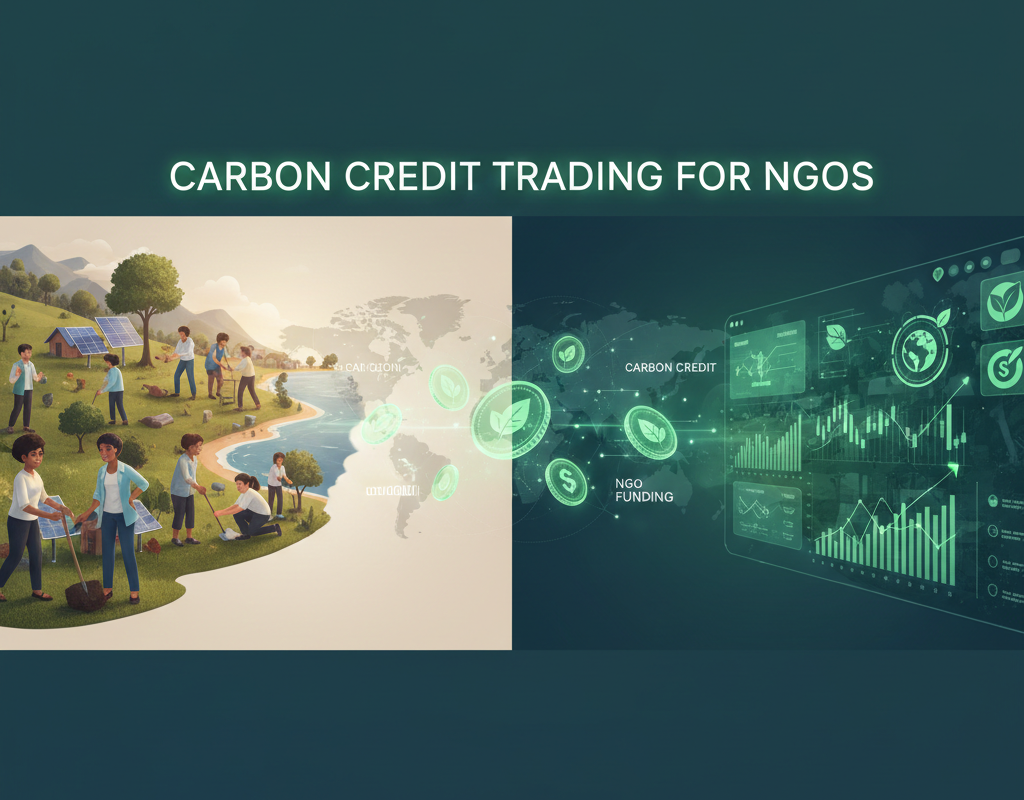
The Role of NGOs in Carbon Credit Trading
The Role of NGOs in Carbon Credit Trading
Carbon credit trading is becoming a key tactic for accelerating climate action and gaining access to sustainable funding in 2026 as global climate commitments increase. The strategic significance of carbon credit markets is becoming more widely acknowledged by non-governmental organizations (NGOs), ranging from local community organizations to international environmental champions. These markets provide NGOs with a revolutionary means of supporting vulnerable people, funding climate mitigation initiatives, and influencing environmental policy. This article examines the changing environment of carbon credit trading, significant advancements in India and around the world, and workable strategies for NGOs to successfully participate in carbon markets.

The Significance of Carbon Credit Trading for Nonprofits
Carbon credits serve as a spur for sustainable development in addition to being a tool for climate finance. NGOs engaged in community development, climate justice, environmental preservation, and sustainable lives can use carbon markets to:
- Raise Money for Climate Initiatives
Carbon credits generate income for initiatives aimed at lowering or storing greenhouse gas emissions. This grant can help NGOs with reforestation, sustainable agriculture, ecosystem restoration, renewable energy installations, and more. When properly set up, carbon revenues give charity projects long-term financial viability.
- Encourage Economic Gains and Community Involvement
Community-based carbon projects can improve local capacity building, income, and skills, particularly in rural areas. For instance, carbon finance increases local resilience and diversifies livelihoods by compensating small farmers for soil carbon sequestration or agroforestry.
- Increase the Impact of Climate Advocacy and Policy
NGOs can leverage their experience to promote transparent governance, fair benefit-sharing schemes, and strong carbon market regulations. This guarantees that carbon trade produces real environmental results rather than empty platitudes.
- Comply with Government and Business Climate Goals
NGOs can serve as partners and watchdogs to make sure that carbon credit programs are legitimate, moral, and in line with larger climate aims as governments enact carbon price regulations and corporations pursue net-zero targets.
Important Changes in the Carbon Credit Trading Environment in India
The quickly changing carbon credit market in India presents NGOs and community organizations with a number of opportunities.
- The Carbon Credit Trading System in India (CCTS)
Under the Energy Conservation (Amendment) Act, the Indian government launched the Carbon Credit Trading Scheme (CCTS) in 2023. This created the framework for a national carbon market with voluntary and compliance elements.
- Expanding the Market voluntarily
The voluntary carbon market is now open to non-obligated entities, such as private organizations and non-governmental organizations, according to recent changes to the framework. These organizations can create tradable carbon credits, register projects, and use carbon trading tactics that are specific to their goals.
Risks and Difficulties for NGOs in Trading Carbon Credits
Although carbon markets have potential, NGOs must also overcome some obstacles:
- Issues with Credibility and Quality
Not every carbon credit has a positive impact on the environment. Over-crediting, in which credits overstate real emissions reductions, can be caused by lax regulations or badly planned projects. Transparent reporting and high-integrity credits must be given a priority by NGOs.
- Cost and Market Complexity
Carbon project development and certification require technical know-how, a one-time financial commitment, and adherence to strict guidelines. Larger partners or technical consultants may be required to assist smaller NGOs.
- Danger of Greenwashing Allegations
If credits are used to support ongoing emissions without significant decarbonization activities, then claims of carbon neutrality will be scrutinized by both NGOs and corporate purchasers. Nonprofits should make sure their initiatives show more climate
Examples of How NGOs Are Having an Effect?
- Forest Restoration Under Community Leadership
NGOs that collaborate with local people have successfully carried out carbon-credit-generating forest conservation and restoration initiatives in a number of regions. These programs improve biodiversity, rebuild vital ecosystems, and generate income for local development.
- Carbon in the Soil and Sustainable Agriculture
Projects run by NGOs that promote regenerative farming techniques help soil store carbon while boosting resilience and agriculture productivity. To maintain credibility, these initiatives frequently include thorough training, technical assistance, and MRV procedures.
- Deployment of Clean Energy
Household emissions can be decreased by nonprofit organizations that support solar microgrids, biogas systems, or clean cookstoves. These interventions can draw carbon finance that facilitates scale and replication if they are organized as carbon projects.
Global Patterns and the Functions of NGOs in 2026 and Later
NGOs are progressively establishing themselves as standards champions, project developers, and climate financing intermediaries as carbon markets expand:
- Growing Voluntary Carbon Markets: In order to achieve net-zero targets, governments and corporations are driving up demand for carbon credits, which opens doors for NGOs to provide premium credits based on community impact.
- Standardization and Integrity: NGOs can offer thought leadership and firsthand viewpoints in the fight for more verification and transparency being waged by international alliances and standards organizations.
- Climate Justice and Equity: Nonprofit organizations are emphasizing the necessity of climate finance in order to give vulnerable communities priority and guarantee that carbon revenue is converted into local development results.
Conclusion: The Role of NGOs in Carbon Credit Trading
The market for carbon credits offers a special opportunity to combine sustainable financing, community impact, and climate action. For NGOs, this is a strategic tool to scale climate solutions, create long-term funding, and promote a fair shift to a low-carbon future. It is more than just a market mechanism.
NGOs can realize the potential of carbon credit trading and contribute to ensuring that climate finance results in tangible change for people and the environment by comprehending carbon markets, putting project integrity first, forming alliances, and participating in policy discussions.
Carbon Credits Explained for Eco Projects: A Complete Guide to India’s Green Economy
Carbon Credits Explained for Eco Projects: A Complete Guide to India’s Green Economy