
 Aksh
Aksh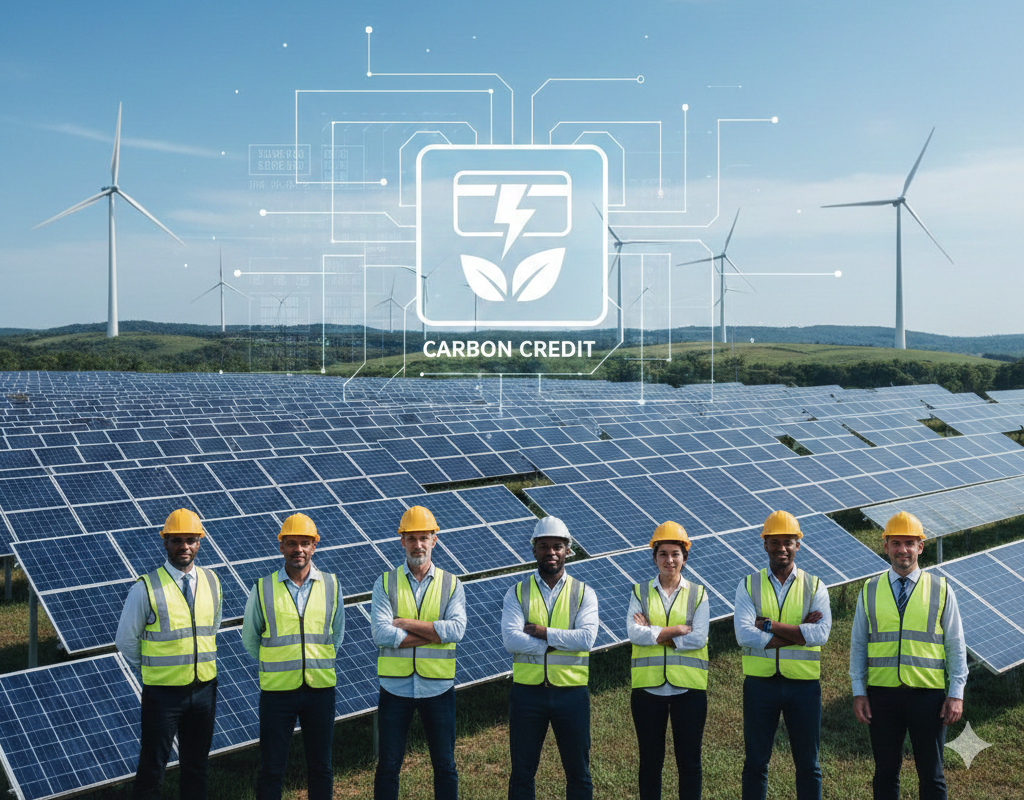
Indian Carbon Credit Renewable Energy Success Story
Indian Carbon Credit Renewable Energy Success Story
The prosperity of renewable energy firms has emerged as the key to sustainable growth and environmental stewardship in a time when climate change is the top global priority. The transition of a dynamic renewable energy company, hereafter referred to as the Company, that used carbon credit tactics to optimize effect, accelerate growth, and redefine climate action in India is one noteworthy success story coming out of the Indian renewable industry.
This in-depth news story examines how the company became a leader in clean energy, influenced the carbon market, and produced quantifiable environmental benefits while attracting the interest of investors and stakeholders by combining the deployment of renewable energy with the creation of carbon credits.

Setting the Scene: Renewable Energy’s Rise to Climate Priority
Globally, renewable energy has evolved from a specialized substitute to an essential remedy for climate change. To lessen reliance on fossil fuels and cut greenhouse gas emissions, governments, businesses, and communities are placing a greater emphasis on sustainable energy sources including solar, wind, hydro, and biomass. Given the nation’s commitments under international climate accords and ambitious climate targets, renewable energy is both an economic opportunity and a strategic imperative in nations like India.
Carbon Credits’ Ascent in Climate Policy
One metric ton of carbon dioxide equivalent (CO2e) emissions can be reduced via carbon credits, which are tradable certifications. With the ability to finance green projects, offset emissions, and engage in voluntary or compliant carbon markets, they have swiftly emerged as essential instruments for climate strategy. Carbon credits provide renewable energy developers a significant revenue stream and a means of expanding their effect beyond electricity production.
Strategic Execution: Carbon Credit-Eligible Renewable Projects
The company has created and implemented a number of renewable energy projects that satisfy the strictest requirements for carbon credit eligibility over the last ten years:
- The use of distributed generation with solar farms
Together, the company’s major solar farms in Gujarat, Maharashtra, and Rajasthan have added hundreds of megawatts of clean power capacity. More significantly, they produced quantifiable emission reductions that qualified for the issuance of carbon credits by dislodging considerable amounts of electricity generated by fossil fuels.
- Installations of Wind Power
Consistent sustainable energy generation was made possible by wind energy projects in high-potential areas of India. Through accurate emissions baseline calculations, efficient turbine operations, and uptime maximization, these projects were designed to maximize carbon credit yields.
Success with Carbon Credits: Measuring Economic and Environmental Benefits
The company’s involvement in carbon markets produced quantifiable outcomes as it expanded operations:
- Significant Emission Reductions Acknowledged
The Company’s initiatives have received thousands of certified carbon credits, which are equivalent to millions of tons of CO2e emissions that were prevented. The environmental integrity of the company’s climate initiatives was strengthened by the rigorous verification and authentication of these credits by recognized organizations.
In addition to supporting India’s national climate goals, this degree of confirmed emission reduction is in line with international accords’ global climate ambitions.
- New Sources of Income for Long-Term Development
Beyond power purchase agreements, the company received recurrent revenue via the selling of carbon credits to institutional investors and corporate buyers. The money earned from these carbon credits is put back into innovation and new clean energy projects, creating a positive feedback loop that benefits the environment and industry.
- Improved Market Recognition and Business Partnerships
The company’s carbon credit performance attracted interest from global firms seeking to meet environmental, social, and governance (ESG) standards as sustainability becomes a boardroom necessity. Partnerships made possible by the company’s reputable carbon credit portfolio expanded its market reach and bolstered investor confidence.
The Indian Carbon Market’s Leadership
Over the past ten years, India’s carbon market has undergone substantial development. The voluntary carbon markets, where businesses look for premium carbon credits to fulfill their voluntary climate commitments, have expanded quickly.
The company became a reputable carbon credit issuer and industry leader in this changing environment. Its procedures, reporting policies, and open disclosure have inspired industry-wide adoption of strict climate accounting and established standards for others.
- Market Education on the Value of Carbon Credits
Beyond project execution, the company educated stakeholders on the role carbon credits play as instruments for sustainable development and climate finance. Policymakers, investors, and other innovators were assisted in understanding carbon markets and responsibly utilizing their potential through workshops, whitepapers, and community engagements.
- Influencing Standards and Policy
Policy discussions were also impacted by the company’s thought leadership. In order to promote uniform carbon credit standards, reliable verification procedures, and incentives that facilitate the expansion of high-impact renewable energy projects that produce carbon credits, it interacted with government agencies.
International Acclaim and Honors
The company has received recognition in sustainability and renewable energy forums for its triple bottom-line performance, which includes economic, environmental, and social outcomes. Its visibility was raised by national prizes for innovation in climate finance and renewable deployment, which encouraged other businesses to follow suit.
Since credible carbon credits are becoming more and more important to multinational corporations as part of their climate action portfolios, this recognition has been especially significant.
In conclusion: Indian Carbon Credit Renewable Energy Success Story
The company’s success shows that developers of renewable energy may prosper while aggressively addressing climate change. This sustainable energy company has revolutionized markets and communities with its astute carbon credit methods, steadfast dedication to data integrity, and solid stakeholder connections.
The company now serves as a model for sustainable economic success, demonstrating that clean energy and carbon finance can speed up global climate action and provide long-term benefits to people and the environment as climate urgency increases and carbon markets become more complex.