
 Aksh
Aksh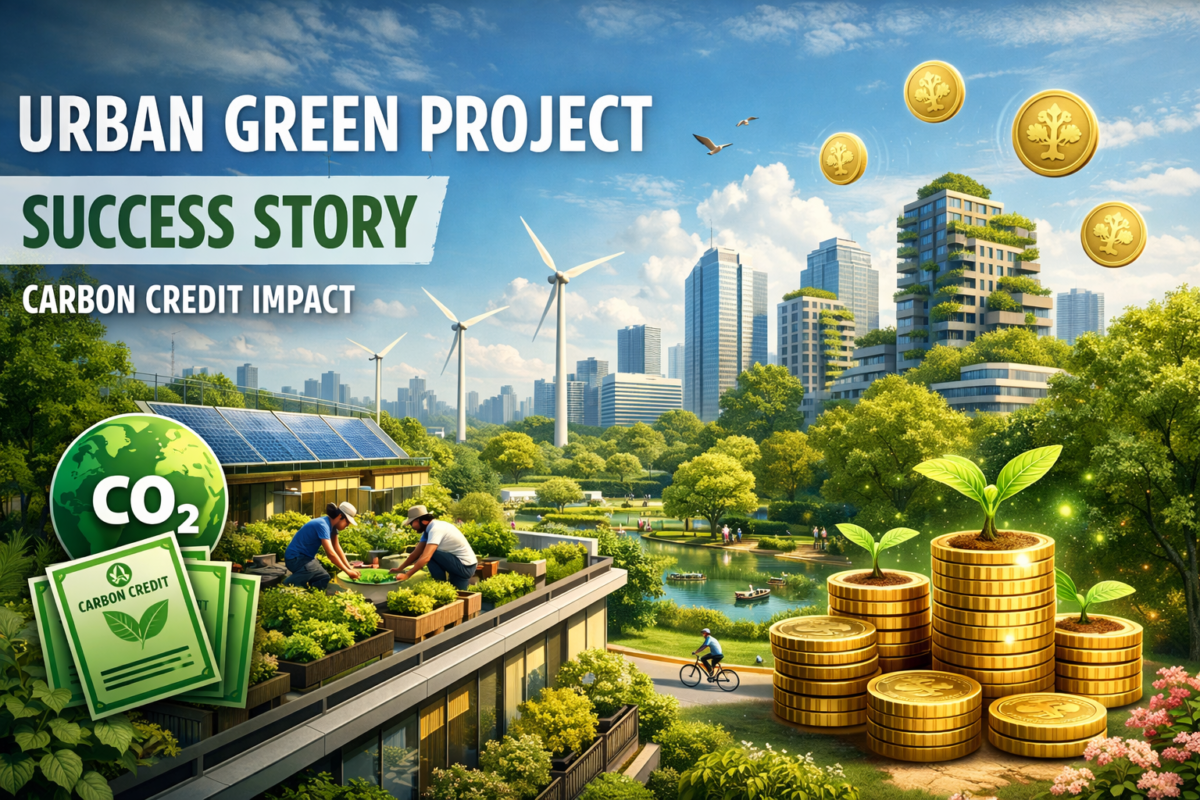
India’s Urban Green Project Success Story
India’s Urban Green Project Success Story
Around the world, urbanization is continuing at a rate never seen before. India’s rapid urbanization has brought with it both potential and environmental problems that call for creative solutions. One of these programs, the Urban Green Project success story, stands out for its compelling narrative and quantifiable results. This project, which is being carried out in a number of Indian towns, contributes to global climate mitigation efforts by promoting urban sustainability and enabling the collection of significant carbon credits.
The Urban Green Project’s journey from concept to reality, its function in producing carbon credits, its transformative advantages for communities, urban ecosystems, city planning, and how it is becoming a model for future climate-resilient cities are all covered in this article.

The Significance of Urban Green Projects in the Current Climate Environment
While rapid urbanization has led to infrastructure development and economic progress, it has also increased environmental pressures. These days, cities struggle with declining green cover, rising temperatures brought on by urban heat islands, worsening air quality, and rising greenhouse gas emissions. Urban regions are responsible for more than one-third of global emissions, making them crucial battlegrounds in the fight against climate change.
Megacities like Delhi, Mumbai, Bengaluru, and Kolkata in India are plagued by ongoing air pollution problems. Long-term climate resilience requires comprehensive green infrastructure solutions, even though clean transportation initiatives and legislative changes only partially address the problem. This is where urban green initiatives become effective tools, fusing socioeconomic benefits with environmental rehabilitation.
The Origins of India’s Urban Green Initiative
Growing urban environmental concerns prompted a cooperative response that gave rise to the Urban Green Project. Indian environmental experts, city planners, community organizations, and climate finance specialists collaborated to develop a project that would be inspired by international best practices in sustainable urban development and climate mitigation.
- Boost the amount of green space in cities and towns.
- Verified sequestration can produce measurable carbon credits.
- Encourage ecological resilience and biodiversity.
- Encourage jobs and education to strengthen local communities.
- Improve public health outcomes and air quality.
The project’s fundamental idea was straightforward yet audacious: rethinking cities as climate-positive environments where infrastructure and wildlife coexist together.
Getting to Know Carbon Credits in an Urban Setting
It is crucial to comprehend what carbon credits signify in an urban context before delving into the project’s results.
A verifiable reduction or removal of one metric ton of carbon dioxide equivalent (CO2e) from the atmosphere is represented by a carbon credit. Carbon credits, which have historically been linked to renewable energy or forestry initiatives, are currently becoming more popular in urban afforestation and ecosystem restoration initiatives.
Urban green initiatives generate carbon credits by doing things like:
- Establishing and caring for trees that store carbon throughout time.
- Restoring urban green spaces that have been damaged in order to improve soil carbon stores.
- Putting in place carbon-absorbing vertical gardens and green roofs.
- Increasing greenhouse gas-storing parks, urban wetlands, and natural corridors.
Methods of the Urban Green Project: Planning and Execution
The Urban Green Project took a data-driven, phased strategy, emphasizing community involvement and scientific confirmation.
- Identification of the Site and Baseline Evaluation
Public properties, parks, riverfronts, school campuses, and vacant lots that could be greened were all highlighted by city officials. Existing vegetation, soil conditions, air quality, and carbon stock levels were documented in a baseline environmental assessment. Later on, these readings were crucial for calculating carbon credits.
- Ecological Planning and Species Selection
The selected plant species had a high potential for sequestering carbon, were native, and could withstand drought. Experts in urban biodiversity made sure the mixture will benefit regional insects, birds, and microhabitats. Low water requirements and resilience to climate change were also taken into consideration in the ecological design.
- Local Workforce Development and Community Involvement
Local communities took part in maintenance projects, environmental education seminars, and tree planting events to guarantee ownership and long-term upkeep. Planning and implementation were aided by school groups, youth volunteers, and environmental NGOs, which fostered a sense of ownership.
Impact Metrics: What Contributes to the Success of This Project
The Urban Green Project has produced remarkable results in the social, economic, and environmental spheres.
- Carbon Credits and Carbon Sequestration
Tens of thousands of trees were planted throughout metropolitan environments over several phases. Together, these trees store a substantial amount of CO2 each year, which is equal to thousands of carbon credits that have been validated using accepted carbon accounting methods. The project’s economic sustainability was improved when the carbon credits it produced were turned into tradable climate assets.
- Increased Biodiversity and Green Cover
Ecological balance was restored when metropolitan areas were greened. Insects flourished, long-extinct bird species reappeared, and microhabitats were restored. Urban heat island intensities were lessened by green pathways’ cooling effects in city centers.
- Enhancement of Air Quality
Particulate matter was reduced by urban forests next to industrial zones, parks close to residential areas, and green buffers along traffic routes. Although trees cannot eliminate air pollution on their own, their presence improved air filtering and supported larger initiatives to manage air quality.
Connecting India’s Climate Goals with Urban Green Initiatives
In accordance with international accords, India has pledged to meet challenging climate targets. Urban green initiatives help achieve these goals by:
- Lowering emissions of net carbon.
- Enhancing climate change resilience.
- Improving public health and air quality.
- Supporting the objectives of sustainable development.
India is getting closer to realizing its nationally decided objectives and vision for clean, inclusive growth as cities embrace green planning and carbon credit systems.
Final Thoughts: India’s Urban Green Project Success Story
The success story of the metropolitan Green Project demonstrates how climate finance, community involvement, and strategic environmental planning can turn metropolitan areas into resilient, green, carbon-sequestering ecosystems. This effort establishes a standard for urban climate action in India and abroad by producing carbon credits that are socially significant, economically useful, and scientifically verified.
Integrating green infrastructure with carbon finance provides a route toward sustainability as well as vibrant, inclusive, and climate-positive futures as cities continue to change.
This success story serves as a movement, a paradigm, and evidence of what can happen when communities adopt sustainability with creativity and purpose.
Investors Tips for Carbon Credits vs RECs | Indian Carbon Credit Insights
Investors Tips for Carbon Credits vs RECs | Indian Carbon Credit Insights