
 Aksh
Aksh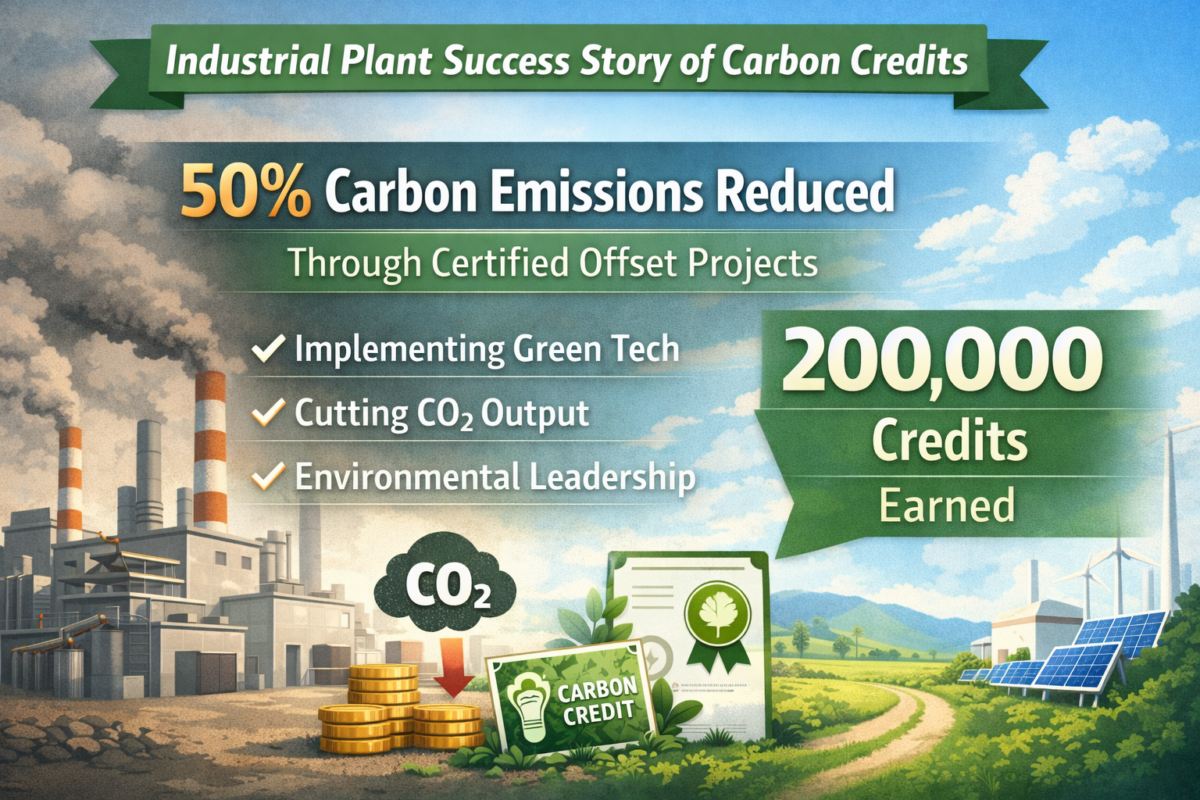
Industrial Carbon Credit Achievements in India
Industrial Carbon Credit Achievements in India
A number of Indian industrial facilities are now being honored for their Industrial Plant Success Story of Carbon Credit accomplishments, which is a powerful example of how climate responsibility and industrial expansion can coexist. This achievement is indicative of a larger shift in sustainable manufacturing brought about by the strategic application of carbon credits, technological advancements in emissions control, and an increasing dedication to environmental stewardship among business executives.
Carbon credits have become a powerful weapon that encourages emission reduction while paving the road for economic sustainability as a result of increased awareness of climate change and carbon pollution on a worldwide scale. India has quickly become at the forefront of this movement thanks to its extensive industrial base.

The Development of Carbon Credit in India’s Manufacturing Sector
One metric ton of carbon dioxide or its equivalent in other greenhouse gases can be reduced, eliminated, or avoided with the use of carbon credits, which are tradable certifications. Carbon credits are now essential for encouraging investment in clean technology and environmental initiatives as governments, businesses, and civil society step up efforts to achieve net-zero emissions.
Industrial facilities in India, a nation juggling economic expansion and climate obligations, are using carbon credit schemes more frequently to lower their carbon footprints and spur sustainable innovation. Organizations in a variety of industries, including steel mills, chemical plants, and providers of renewable energy, have implemented carbon credit schemes for both compliance and competitive advantage.
Benefits of Carbon Credits: Economic and Environmental Effects
Adoption of carbon credits has advantages that go beyond environmental compliance. Industrial facilities that get carbon credits frequently see significant increases in revenue, technical advancement, and employee empowerment. The following are some of the main advantages of carbon credits:
- Lowering Emissions of Greenhouse Gases
Through fuel switching, process optimization, and energy efficiency measures, industrial plants claim notable decreases in carbon dioxide and methane emissions. These accomplishments improve local communities’ air quality and directly support international climate action goals.
- Financial Gains from Carbon Credits
Industrial facilities can make more money by obtaining carbon credits. This financial incentive promotes ongoing investment in low-emission technologies, resulting in a profitable and sustainable cycle.
- Savings on Operational Expenses
Operational cost reductions are often accompanied by environmental gains. Improved energy efficiency frequently leads to decreased fuel consumption and maintenance costs, which boosts competitiveness over the long run as well as short-term savings.
- Availability of Clean Technology
Through carbon credit programs, industrial facilities can improve their ability to manage emissions and comply with regulations by gaining access to state-of-the-art technologies including waste heat recovery systems, solar power installations, and sophisticated measurement and reporting tools.
The Function of Industry Cooperation and Policy in the Implementation of Carbon Credits
It is no coincidence that the number of successful carbon credit projects in India’s industrial sector has increased so quickly. Partnerships with carbon credit auditors and verifiers, cooperation with environmental organizations, and strategic policy support from government agencies have all been crucial.
The federal and state governments of India have put in place structures that make it easier to register, verify, and trade carbon credits. These regulations have encouraged industrial establishments to implement decarbonization strategies, modernize their infrastructure, and keep an open eye on emissions.
Working together with trade groups has also made it easier to share best practices, standardize reporting procedures, and offer technical support to establishments that are new to carbon credit schemes. Small and mid-sized plants now have access to resources that were previously exclusive to major enterprises because to these agreements.
Evaluating Performance: Data-Driven Monitoring and Reporting of Emissions
Accurate measurement and reporting of emissions is essential to every industrial plant’s carbon credit journey. Successful plants have made significant investments in environmental monitoring systems that can track greenhouse gas emissions in real time.
Facility managers can identify regions with high energy use and carbon intensity thanks to sophisticated sensors, digital reporting dashboards, and automated compliance systems. Continuous development is made possible by these instruments, which also guarantee that emission reductions are traceable and adhere to international carbon credit criteria.
In addition to making it easier to obtain carbon credits, data openness also makes it possible for business executives to update stakeholders on their progress, which enhances confidence and the company’s reputation.
Problems and How They Were Solved by Plants
Although there are many success stories, obtaining carbon credits is not without its difficulties. Typical challenges faced by industrial plants include the following:
- Initial Investment Expenses
Making the switch to greener technologies frequently costs a lot of money. By using financing mechanisms linked to carbon credit revenue estimates, a number of plants were able to overcome this. They obtained capital, which was partially reimbursed through carbon credit revenues, by making strong business propositions to lenders and investors.
- Deficits in Technical Knowledge
Numerous establishments lacked internal knowledge of carbon credit schemes and emissions control. Companies collaborated with carbon auditors and sustainability consultants to address this, offering technological roadmaps, verification services, and training.
- Complexity of Regulation
It can be difficult to navigate the regulatory environment for carbon credits. Governmental organizations and industry associations were crucial in providing clear rules and streamlining compliance procedures.
Final Thoughts: Industrial Carbon Credit Achievements in India
A paradigm shift in how industry views environmental responsibility can be seen in the Industrial Plant Success Story of Carbon Credit. What was formerly viewed as expense or compliance is now a strategic investment in long-term resilience, innovation, and competitiveness.
Carbon credit implementation can yield quantifiable environmental advantages, economic rewards, and social value, as demonstrated by India’s industrial leaders. These success examples show how industrial expansion and sustainable manufacturing will coexist in the future.
The country’s dedication to climate action through carbon credits will continue to be a defining characteristic of industrial success as it rises up the ranks of the world’s economic superpowers.
Green Business Strategies in India: Carbon Credits vs RECs for Sustainable Growth
Green Business Strategies in India: Carbon Credits vs RECs for Sustainable Growth