
 Aksh
Aksh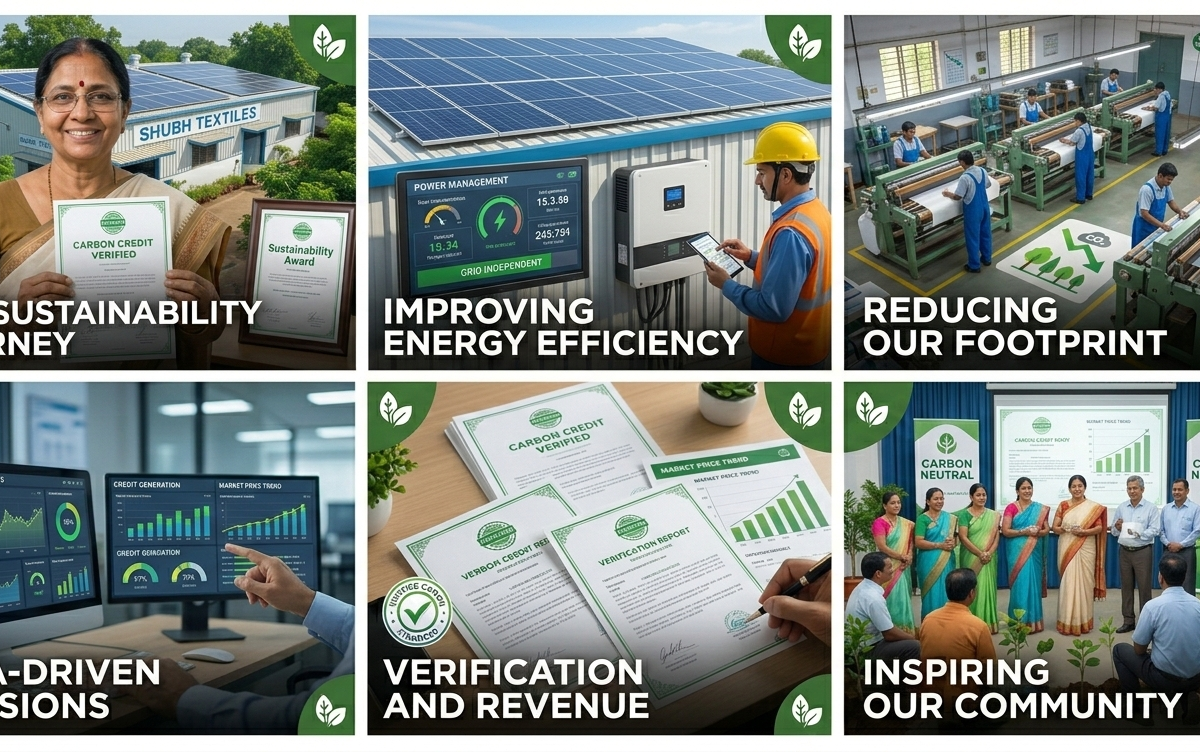
MSME Carbon Credit Success Case Study
MSME Carbon Credit Success Case Study
Micro, small, and medium-sized businesses (MSMEs) in India have undergone a remarkable transformation in recent years. They are no longer limited to conventional cost-based manufacturing models but are instead becoming advocates for environmental sustainability and climate-smart business practices. The MSME carbon credit success story, where astute businesses are utilizing carbon credit frameworks to open up new revenue streams, reduce their environmental effect, and establish themselves as competitive contributors to a global green economy, is one of the most striking revolutions.
The evolution of carbon credit uptake among Indian MSMEs is examined in this article, along with actual success stories, an explanation of the advantages and methods, and an outlook on the future of carbon market integration in the MSME sector.

Comprehending MSMEs’ Carbon Credit Revolution
The reduction of one metric ton of carbon dioxide or its equivalent in other greenhouse gases is represented by tradable certificates known as carbon credits. Carbon markets, which were previously mostly used by national governments and big businesses, are now quickly opening up to MSMEs, who previously lacked the funds or know-how to take advantage of climate finance opportunities.
Long acknowledged as catalysts for economic growth, innovation, and job creation, Indian MSMEs are now leading the way in sustainability initiatives including resource-efficient operations that qualify for carbon credits, waste reduction plans, renewable energy installations, and energy efficiency improvements. Sustainability projects might gain a new commercial dimension by selling these carbon credits in voluntary or regulated carbon markets.
The Business Case: The Importance of Carbon Credits for MSMEs
Adoption of carbon credits has benefits for MSMEs that go far beyond their effects on the environment. Among the main advantages are:
- Additional Revenue Stream: By providing MSMEs with a new way to monetize emission reductions, carbon credits improve cash flow and profitability.
- Sustainability Branding: MSMEs that participate in carbon credit schemes improve their brand’s image and attract eco-aware customers and business associates.
- Operational Cost Savings: Initiatives like adopting renewable energy and improving energy efficiency lower utility costs and boost competitiveness.
- Access to Climate Finance: Carbon credit frameworks provide access to funding from impact investors, climate funds, and sustainability-focused investors who place a high value on quantifiable environmental results.
- Regulatory Readiness: Early involvement in the carbon market puts MSMEs in a position to adhere to future carbon regulations and reporting requirements as global climate policies tighten.
For MSME owners and operators, these advantages create a strong business case for devoting time and resources to carbon reduction plans and certification procedures.
Highlight of a Success Story: TechFab Industries Leads the Way
Through methodical waste heat recovery and energy optimization, TechFab Industries, a mid-sized automotive components supplier with headquarters in Gujarat, became one of the first MSMEs to profitably sell carbon credits. Prior to implementing a carbon credit plan, the business faced difficulties due to excessive energy expenses and production process inefficiencies.
TechFab developed waste heat recovery units that dramatically reduce greenhouse gas emissions with the help of climate specialists and involvement in carbon standard programs. The business was certified for carbon credits following stringent oversight and independent verification, and those credits were offered for sale on a voluntary carbon market.
Breaking Down Barriers: How MSMEs Handle Difficulties
The adoption of carbon credits by MSMEs is not without difficulties, notwithstanding its potential. Among the obstacles are:
- Technical Complexity: Small business owners may find it difficult to comprehend carbon accounting methodology, verification standards, and measurement procedures.
- Upfront Costs: Without focused assistance, it may be challenging to finance the upfront investment needed to install new technologies or upgrade equipment.
- Documentation and Reporting: Teams lacking sustainability experience may find it difficult to meet the strict documentation, monitoring, and regular reporting requirements of carbon certification.
- Market Access: MSMEs need to establish connections with purchasers in carbon markets that place a premium on verified and authentic emissions reductions.
Industry groups, government initiatives, sustainability consultants, and cooperative platforms are stepping forward to help MSMEs overcome these obstacles by offering them resources, technical assistance, funding choices, and capacity-building.
Carbon Credit Certification: An Overview of the Process
The following major steps are usually included in the transition from carbon reduction to carbon credit monetization:
- Calculating present greenhouse gas emissions as a baseline is known as baseline emissions assessment.
- Project planning: Finding ways to reduce carbon emissions, like adopting renewable energy sources, upgrading energy efficiency, or switching fuels.
- Implementation: Putting the project into action with quantifiable results in terms of lowering emissions.
- Monitoring and Reporting: To show carbon reductions, performance metrics should be regularly tracked.
- Verification and Certification: To certify carbon credits, an impartial third party evaluates them in accordance with globally accepted criteria.
- Credit Issuance and Sales: Obtaining and offering tradable carbon credits for sale in voluntary or regulated marketplaces.
In order to assure credible and lucrative results, these processes require organized planning and execution, which is increasingly backed by specialized carbon consultancies working with MSMEs.
Government Programs and Assistance with Policies
The Indian government is becoming more interested in helping small firms participate in the carbon market. A more supportive ecology is being created by policies that encourage energy audits, provide tax breaks for environmentally responsible investments, and incentivize renewable energy.
Climate-focused programs that expedite the approval process for sustainability certifications and offer subsidized finance for the adoption of clean technologies are also helping MSMEs. Policymakers hope to democratize access to climate finance and increase participation by incorporating carbon credit preparedness into standard MSME assistance frameworks.
In order to inform MSMEs about carbon credit opportunities and to expedite procedures like data collecting, documentation, and verification, local governments and state authorities are actively collaborating with trade associations.
Conclusion: MSME Carbon Credit Success Case Study
There is considerably more to the MSME carbon credit success story than a few solitary triumphs. It represents a paradigm change in which profitability and sustainability are mutually reinforcing rather than antagonistic. Indian MSMEs are proving that innovation, market access, and company expansion can all coexist with climate action.
In addition to lowering carbon footprints, small and medium-sized businesses are creating a more robust and successful business ecosystem with perseverance, wise investments, and the appropriate frameworks. MSMEs’ carbon credit journey is still developing, and as more success stories surface, the influence on India’s green economy will only grow.