
 Aksh
Aksh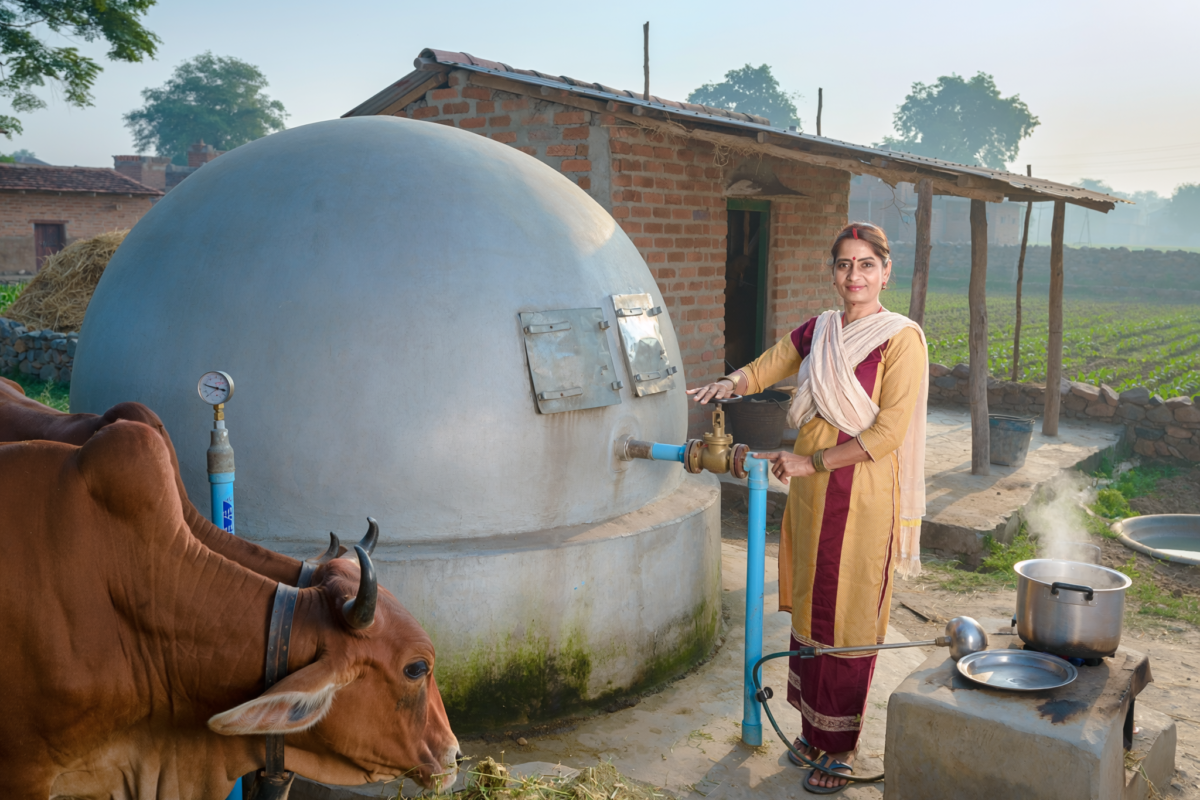
Rural Biogas Plant Success Story
Rural Biogas Plant Success Story
A straightforward yet effective concept—converting organic waste into sustainable energy—started a life-changing adventure in a peaceful rural Indian town. What began as a modest community project to handle livestock manure developed into a flourishing biogas facility that produced substantial revenue through carbon credits in addition to meeting local energy demands. The success of this village biogas plant has emerged as a potent illustration of how rural India may use climate finance and renewable energy to promote social empowerment, environmental sustainability, and economic progress.
Decentralized biogas plants in communities are becoming viable alternatives for reducing methane emissions, producing clean cooking fuel, and generating carbon credits as India advances its renewable energy targets and fortifies its commitment to climate action under the Paris Agreement.

The Start: Issues with Waste Management in India’s Rural Areas
The majority of Indian villages rely largely on livestock and agriculture. Since many homes own cattle, a significant amount of organic waste and cow manure are produced every day. This waste was traditionally burned as dried dung cakes for cooking or left in open fields. Both actions exacerbated health issues and environmental deterioration.
Methane, a greenhouse gas far more powerful than carbon dioxide, is released when cattle dung decomposes openly. When biomass is burned indoors for cooking, indoor air pollution results, which can lead to respiratory ailments in children and women.
The village community made the decision to invest in a centralized biogas plant after realizing these difficulties. The goal was straightforward: increase quality of life while turning waste into cash.
The Community Biogas Plant’s establishment
A carbon credit advice agency, a renewable energy expert, and local farmers worked together to launch the initiative. The town generated enough organic waste each day to support a medium-sized biogas plant, according to a feasibility study.
Cattle manure and agricultural waste were intended to be processed by the factory. Through pipelines, the produced biogas would be sent to homes for cooking. The leftover slurry would be applied to crops as premium organic fertilizer.
How Carbon Credits Were Granted to the Biogas Plant
Experts’ discovery of the project’s ability to generate carbon credits marked a turning point. One way to mitigate greenhouse gas emissions is to extract methane from biological waste. The project decreased quantifiable carbon emissions by avoiding methane emissions and substituting conventional biomass fuel.
Emission reductions under accepted carbon criteria were measured using:
- Avoiding methane emissions from the decomposition of open dung
- Decrease in the use of firewood
- Reduced indoor air pollution and the replacement of fossil fuels
The project was registered under a carbon credit system following appropriate documentation, validation, and monitoring. Carbon credits that could be exchanged on voluntary carbon markets were produced for each confirmed ton of carbon dioxide equivalent reduced.
Revenue from Carbon Credits: A Revolution for the Village
The local biogas plant started producing carbon credits every year after it was certified. Environmentally conscious businesses looking to reduce their carbon footprint purchased these credits.
The proceeds from the carbon credit were used in a number of significant ways:
- Upkeep and development of the biogas infrastructure
- Cooking gas subsidies for households with lower incomes
- Financing the renovation of local schools
- Putting up solar-powered street lights
- Enhancing sanitary facilities
The initiative became financially sustainable as a result of the extra income. This concept offered recurrent income that was directly linked to environmental performance, in contrast to conventional government subsidy-driven schemes.
The Biogas Carbon Credit Project’s Social Effects
The biogas plant’s success went far beyond just making money. The village’s social and health conditions were greatly enhanced.
- Better Health Results
Smoky conventional chulhas were replaced by clean biogas. Children and women reported less eye irritations and respiratory issues. The quality of indoor air significantly increased.
- Empowerment of Women
Hours were no longer spent by women gathering firewood. The time that was spared was used for education, self-help organizations, and income-generating endeavors.
- Productivity in Agriculture
The plant’s bio-slurry turned into a nutrient-rich natural fertilizer. Farmers reported higher agricultural yields and better soil health. Input costs decreased as the use of chemical fertilizers decreased.
Benefits to the Environment: Climate Action and Methane Reduction
Over a 100-year span, methane is about 25 times more potent than carbon dioxide. The biogas facility greatly decreased greenhouse gas emissions by using anaerobic digestion to capture methane.
Among the major environmental accomplishments are:
- Decrease in methane emissions from livestock manure that is not properly managed
- Decrease in deforestation as a result of using less firewood
- Reduced carbon dioxide emissions as a result of replacing fossil fuels
- Better methods for managing garbage
Decentralized renewable energy systems can directly support India’s climate pledges, as this single village initiative showed.
Carbon Finance for Economic Sustainability
Revenue from carbon credits changed the biogas plant’s financial sustainability. Many rural renewable energy projects struggle with long-term sustainability in the absence of carbon funding.
A structured financial approach was implemented by the village:
- Participation of the community during setup
- Government funding for infrastructure related to renewable energy
- Revenue from carbon credits as a steady source of income
- Minimal monthly plant operations user fees
Scalability and operational continuity were guaranteed by this mixed financing strategy.
Carbon Markets’ Function in Rural Development
Climate projects at the grassroots level now have more options thanks to the voluntary carbon market. Businesses from a variety of industries are purchasing carbon offsets in order to fulfill their ESG and sustainability pledges.
Village-scale biogas initiatives provide:
- High-impact reduction of emissions
- Strong co-benefits for society
- Clearly visible monitoring systems
- Conformity to the Sustainable Development Objectives
Rural biogas carbon projects are quite appealing in the carbon credit market because of this combination.
Conclusion: Rural Biogas Plant Success Story
This Indian village’s biogas plant is more than just a green energy initiative. It’s a tale of creativity, civic engagement, and climatic adaptability. The town turned a waste management issue into a sustainable source of income by utilizing carbon credit methods.
Rural India has enormous potential to take the lead in climate action, as this success story shows. The combination of carbon markets, technology, and local communities creates a potent example of inclusive green growth.
A scalable, significant, and profitable route to sustainable village development is provided by biogas plants connected to carbon credits. India is getting closer to accomplishing its environmental objectives and empowering its rural populace as more villages embrace this concept.
Renewable Energy Project Success Story: Carbon Credits vs RECs in India’s Clean Energy Market
Renewable Energy Project Success Story: Carbon Credits vs RECs in India’s Clean Energy Market